Try five January decorating ideas after the holidays: pack thoughtfully, clear everyday surfaces, clean awkward corners and refresh the room with what you own.
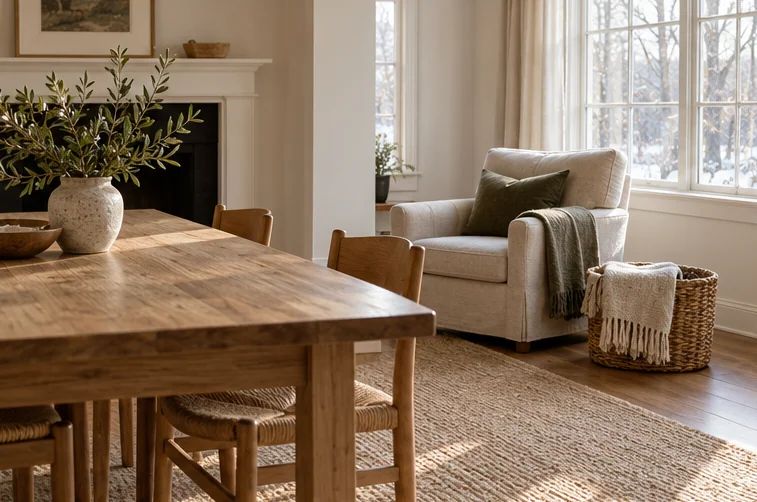
Small home after Christmas with clear oak table and folded blanket
January decorating ideas do not need to begin with a shopping trip. Once holiday decorations come down, first recover the surfaces and routines that December temporarily borrowed: the dining table, the entry cupboard and a clear route to the window.
The sequence matters. Pack and edit before cleaning, clean before rearranging, and spend a few evenings using the room before buying anything new. These five steps work as separate short sessions, so there is no need to make the whole home presentable in a single weekend. Keep useful winter blankets and lamps; the seasonal celebration may be finished while the cold evenings continue.
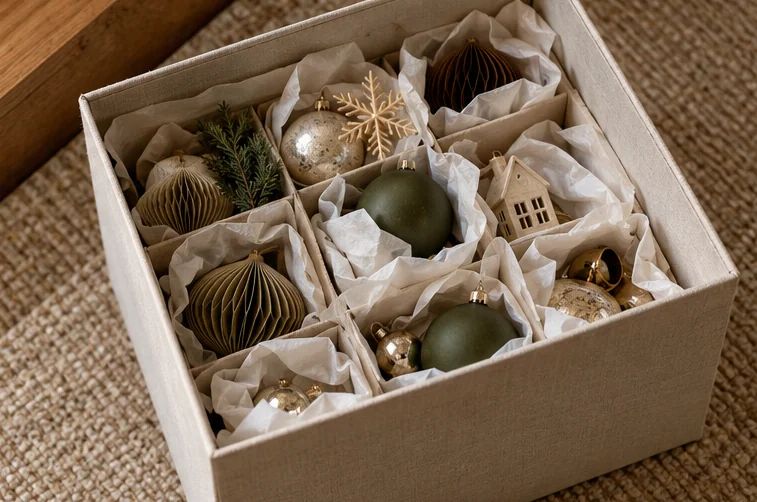
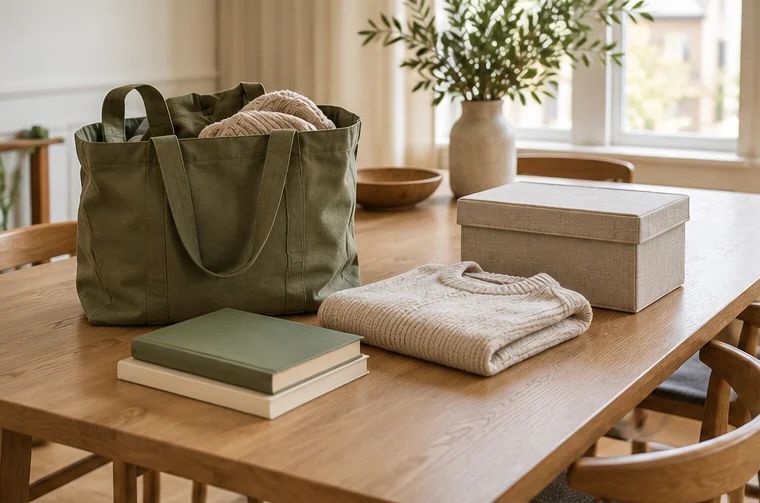
Seasonal ornaments carefully packed in a plain storage box
Bring one empty box or container to the first decorated area and finish that area before starting another. Separate pieces you would happily use again from broken lights, deteriorated greenery, and items you no longer want. Check local disposal guidance for real trees and electrical products. Do not put a damaged light set back in storage with a vague plan to repair it next year.
Pack fragile pieces with suitable protection and coil lights loosely according to the product’s directions. Label the contents by location or purpose rather than writing only “Christmas” on every container. Put the items used earliest near the top. Where instructions advise removing batteries for storage, do so, and keep batteries safely out of children’s reach. Make sure damp outdoor pieces are appropriately cleaned and dry before packing.
Limit retained decorations to storage the home can actually spare. If there are extras in good condition, choose an accepted donation route or a willing recipient rather than leaving bags indefinitely beside the door. The seasonal edit should free the living area and have a definite finish. A smaller, legible collection makes the next December easier to begin.
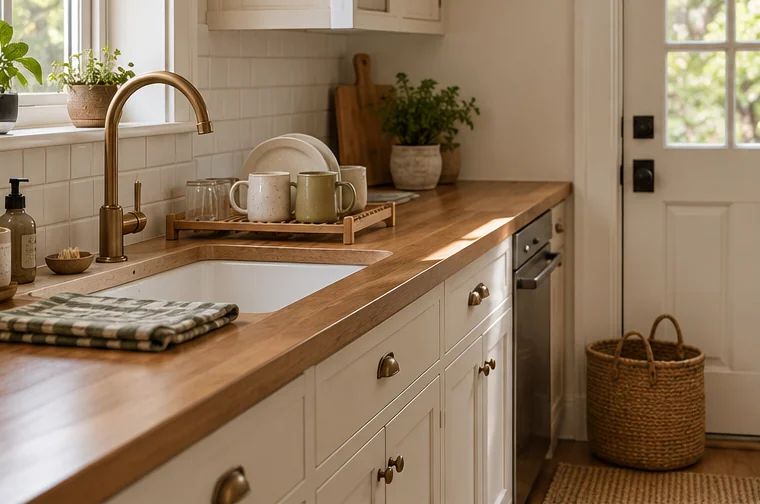
Clean oak sideboard with one bowl and folded cloth
Choose the dining table, kitchen counter, or entry console: whichever has accumulated the most things that belong elsewhere. Remove everything, return belongings to their actual homes, and identify objects with no clear destination. A pile moved into the bedroom is still unfinished work. Use a temporary sorting tray only if you can set a specific time to empty it.
Then put back the things the surface needs for daily life. On a kitchen counter, this may be the kettle and the coffee supplies used every morning. On an entry ledge, it may be a key dish and a place for outgoing mail. Leave the remainder clear for several days before adding a vase. This pause shows whether the empty space solves a problem you had stopped noticing.
If the same objects return immediately, adjust the storage instead of blaming the household. A basket nearer the door or a reachable drawer may be more useful than stricter tidying rules. Small-space organization systems can help establish those destinations. The decorative improvement here is a surface with room to work, not a perfectly styled tray surrounded by unresolved piles.
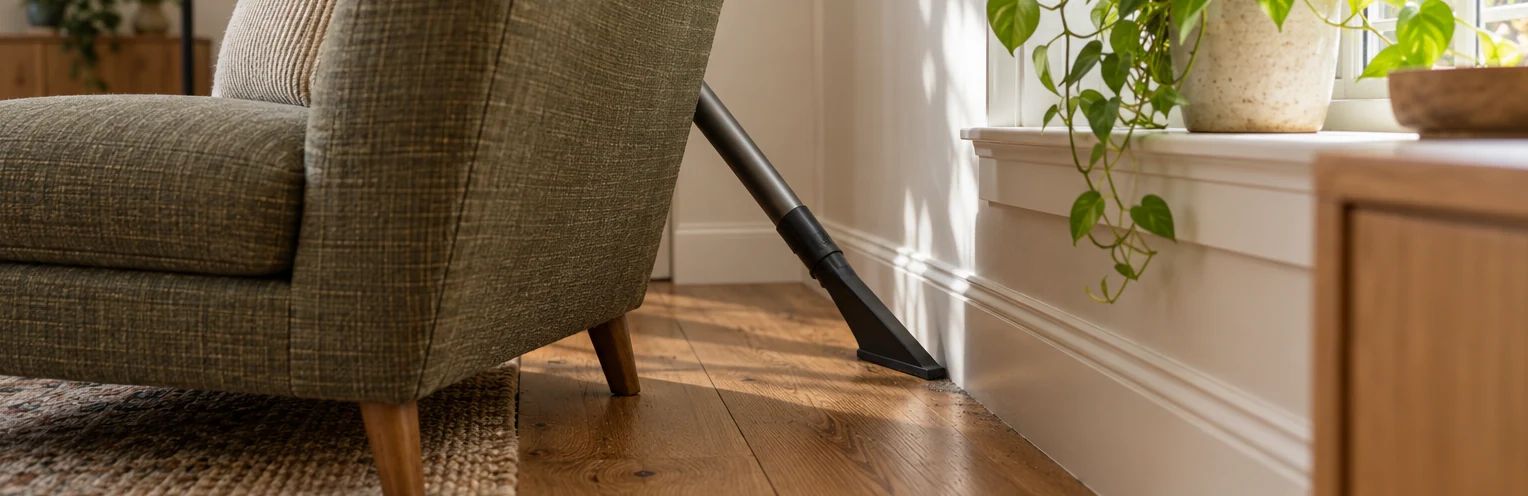
Narrow vacuum nozzle reaching the floor behind a moved armchair after Christmas.
After the tree and extra furniture are gone, use the access while it is available. Vacuum or sweep the exposed floor, remove dust from accessible skirting, and wipe the window ledge. Check underneath protective mats for trapped moisture. If a rug needs washing or specialist cleaning, follow its care requirements and arrange drying space before starting.
Use products appropriate to the material and follow label directions. Routine cleaning with soap or detergent is generally the first step; disinfecting every decorative object is unnecessary in a healthy household. Never mix bleach with other cleaners, including vinegar or ammonia, and keep the area ventilated as directions require. A scented room spray is not a substitute for removing dust or dealing with a spill.
Choose one defined cleaning zone at a time. Moving every cupboard into the center of a small apartment can make the home unusable before the work is finished. Handle heavy furniture only when you can do so safely, protect the floor, and get help where needed. The room-by-room method in the spring cleaning checklist also works for this smaller January pass; use only the sections relevant to the space you have just recovered.
Reading chair angled toward a winter window and shaded lamp
Look at the cleared room before replacing every piece in its old position. Perhaps the chair was too far from a lamp, the side table occupied a doorway, or the plant blocked access to a curtain. Choose one problem and test a specific change: exchange two side tables, angle the chair, or turn a small dining table if the available footprint permits.
Mark larger pieces with removable floor markers before moving them, then check door swings, drawers, heating clearances, and the route through the room. Furniture should not obstruct exits or vents. Test the arrangement by doing an ordinary task, such as carrying a tray or making the bed, rather than judging it only from the doorway. What looks balanced may still be inconvenient when the room is in use.
Give the new arrangement several days. If it improves the routine, keep it; if it makes another task awkward, return it without treating the experiment as a failure. Taking a quick photo of the old position makes this easy. A January rearrangement can provide a noticeable change at no cost, but only the people using the room can determine whether it is actually better.
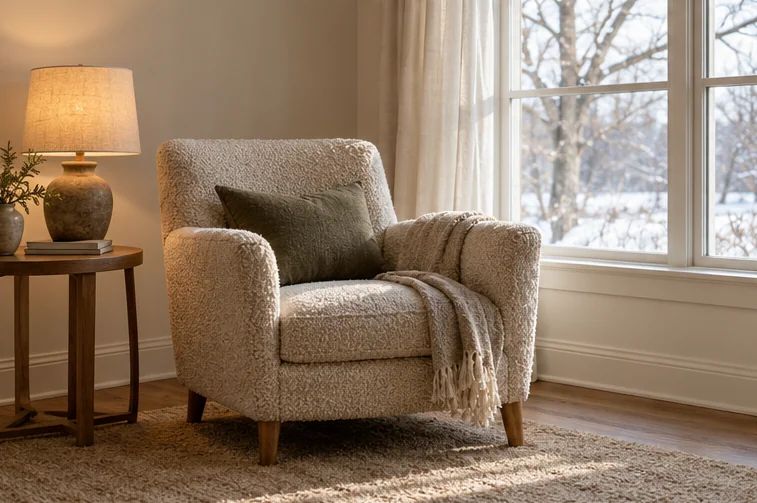
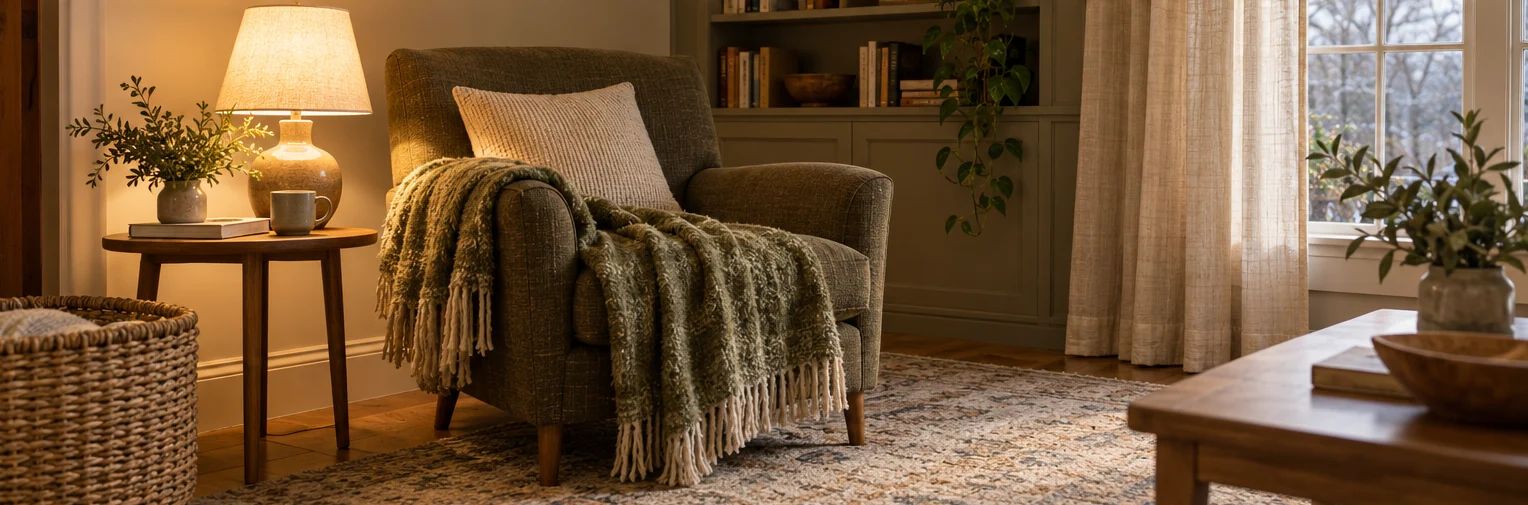
Quiet winter chair with a wool throw and shaded lamp illuminating a formerly dark corner.
Once festive red, metallic ornaments, and garlands have gone, keep the useful winter ingredients: a washable throw, a comfortable rug, and enough light beside the seating. The room does not need to look like spring in January. A plain blanket in cream, olive, or brown often connects to the furniture better than replacing all seasonal color with stark white.
Sit in the room after dark and locate the place that feels unfinished. It may need a lamp moved from another room rather than a new object. Check that the light is adequate for the activity, that cords are routed safely, and that compatible bulbs suit the fixture. Open curtains when useful daylight is available and close them as appropriate for evening privacy and comfort.
If a decorative gap still bothers you after a week, fill it with one existing piece: a wood bowl, a framed photograph, or a simple vase. Avoid rebuilding the density of the holiday display. Use winter decor that supports everyday comfort as a guide to what earns space. January can feel refreshed through more usable light and less visual interruption, even when every object in the room was already there.
End each session by returning the room to use, even if another cupboard remains for tomorrow. A refreshed home should support the week you are living, with the next task small enough to begin without another clear-out.
Declutter seven useful categories before the New Year, with clear keep-or-pass-on decisions and responsible routes for clothes, electronics and medicines.
Make winter evenings more comfortable with seven practical decor ideas, from layered lamps and washable throws to curtains, rugs, and restrained greenery.
May we use Google Analytics cookies to understand visits and which ideas readers find useful? It is optional. You can change your choice below at any time. Privacy details