A Simple Spring Cleaning Checklist for Small Homes
Use this spring cleaning checklist for small homes to tackle each room in manageable sessions, with clear priorities, sensible time blocks, and product safety.
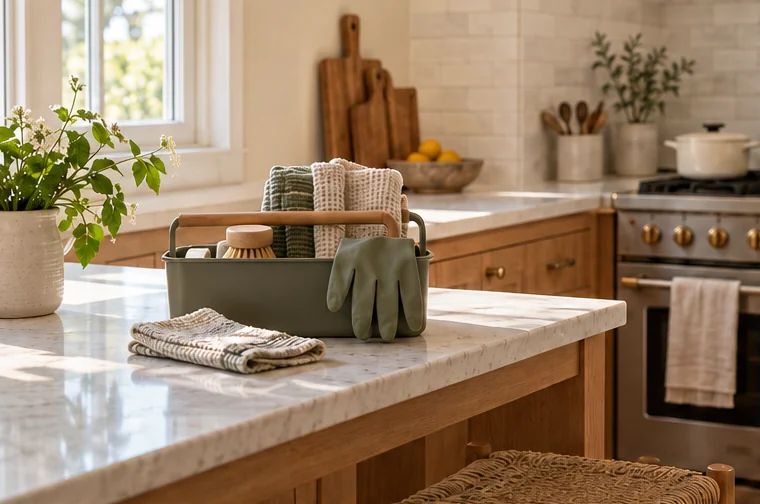
Cloths, gloves and brushes in a cleaning caddy on a small kitchen counter
A spring cleaning checklist for small homes needs to account for the awkward part: there is nowhere to put the contents of three cupboards while you clean them. Work in small zones, finish one before opening the next, and keep the kitchen and bathroom usable throughout. The checklist below separates worthwhile cleaning from optional projects so the work can fit around ordinary life.
The suggested time blocks are planning estimates for a lightly to moderately soiled small home with accessible surfaces, not tested completion times. Heavy buildup, mobility needs, clutter, and drying time will change them. Split a block in half whenever needed. Routine daily jobs still matter, but this pass concentrates on the dust, grease, and forgotten corners that the usual quick clean misses.
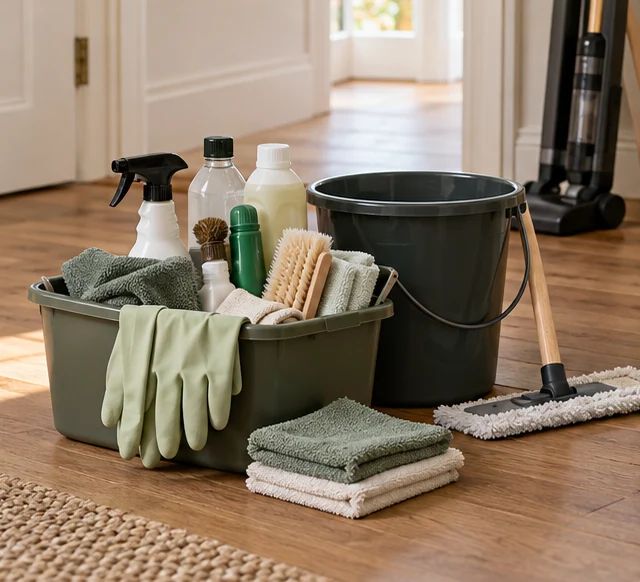
Small cleaning caddy with cloths, gloves and original opaque product containers beside clear floor.
Gather a vacuum or broom, washable cloths, a mop suited to your floor, a soft brush, a bucket, household detergent, and any material-specific cleaner the home requires. Use separate cloths for the toilet, kitchen, and other surfaces. Choose gloves and other protection according to product labels. More products do not automatically produce a cleaner home.
Read instructions before combining tasks. Never mix bleach with another cleaner, including vinegar or ammonia. Keep products in their original labeled containers, secure them from children and pets, and provide ventilation as directed. Routine cleaning is usually enough unless illness or another specific circumstance calls for disinfection. If disinfecting is needed, clean first and follow the label’s wet contact time; a quick wipe may not do the stated job.
Extendable dry duster beside a tall shelf with cleared floor and vacuum ready.
Spend roughly 20–40 minutes on reachable dust and frequently handled surfaces before detailed room work. Use a lightly damp cloth where suitable or a vacuum attachment that will not scratch. Dry feather-dusting often moves visible dust from a shelf to the floor; the useful step is removing it. Work top to bottom so crumbs and dust are collected at the end.
Only clean what you can reach safely. Use a suitable step stool according to its instructions, rather than standing on a chair or leaning out of a window. Keep electrical fittings dry and follow equipment instructions. If a high fitting cannot be reached without unsafe stretching, leave it for appropriate help. Do not dismantle building ventilation or electrical components as part of an ordinary spring clean.
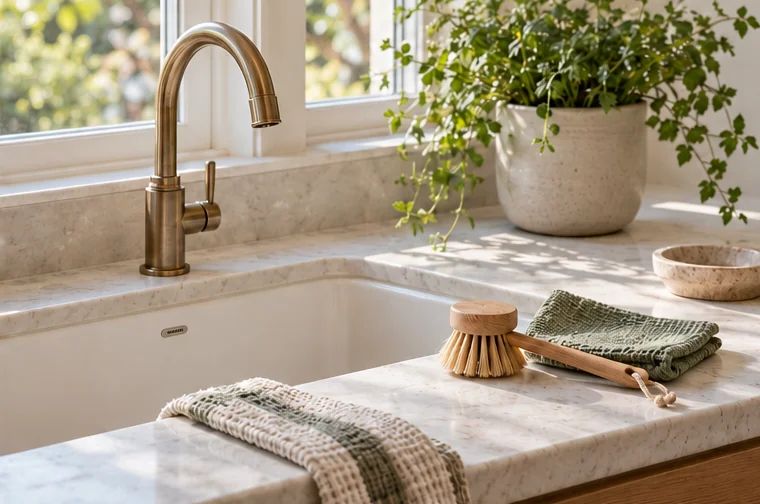
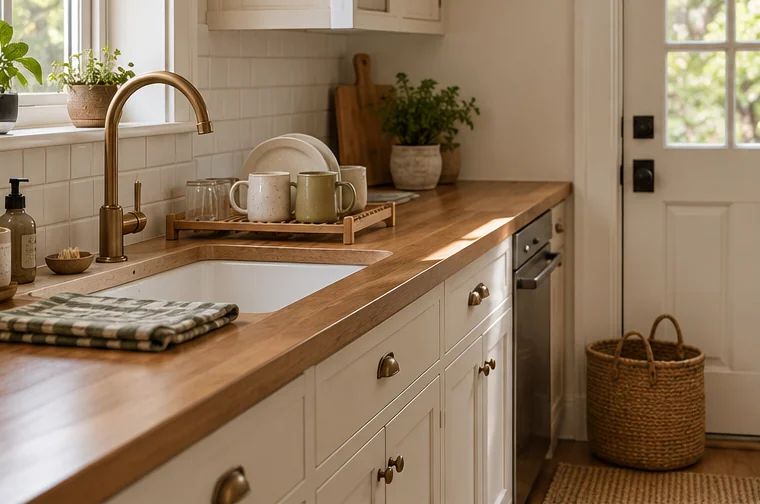
Clean kitchen sink with a separate cloth and dish brush
Allow a first session of about 30–45 minutes for counters, the hob, sink, and one refrigerator shelf. A complete oven clean or the whole refrigerator can become a separate project. Keep food safely stored while cleaning: work one shelf at a time and avoid leaving perishables on the counter through a long cupboard sort.
Let hot appliances cool and follow their cleaning instructions. A degreaser suitable for one hob or worktop may damage another. Do not use acidic homemade cleaners on stone unless the material’s guidance permits it. Clean the surface beneath a counter appliance only after disconnecting and moving it safely; do not pull out heavy built-in appliances to meet a checklist deadline.
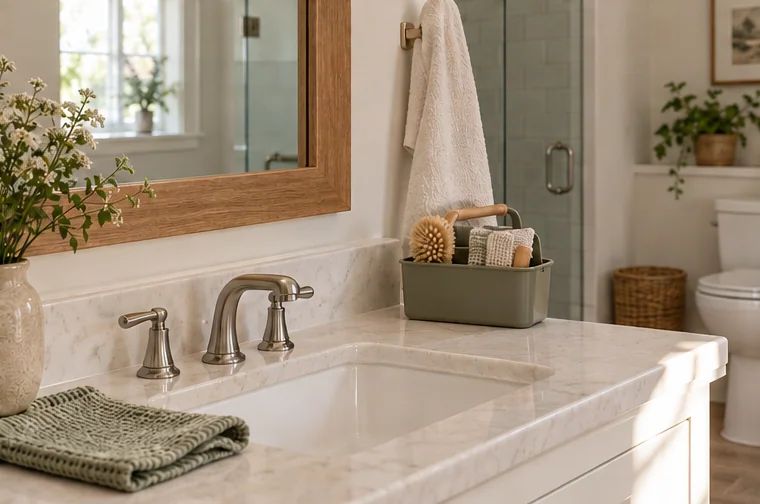
Cleared bathroom basin with a cloth and compact caddy
Plan about 25–40 minutes, allowing the product’s stated dwell time where needed. Clear bottles from the bath or shower base and remove hair before wet cleaning. Keep the extractor operating as intended or ventilate appropriately; do not rely on fragrance to hide a damp smell.
Use a separate toilet cloth and avoid carrying it to the basin or kitchen. Rinse surfaces only where the product instructions call for it, then dry areas likely to streak. Recurrent mold, leaking seals, or persistently damp walls need the cause investigated. In a rental, report those problems instead of repeatedly concealing them with fresh sealant or stronger cleaner.
Vacuum beside an oak bed with cotton bedding in a small bedroom
Give the sleeping area about 25–40 active minutes, with laundry running separately. Strip the bed only when clean replacement bedding or sufficient drying time is available. An all-day washing project that leaves the bed unusable at night makes the routine harder to repeat.
Move light bedside items first and vacuum the accessible floor around and under the bed. Follow mattress and upholstery instructions rather than soaking them with a homemade spray. Work through a single drawer or shelf if storage needs cleaning; maintainable small-space storage can help keep the emptied contents from occupying the floor for days.
Living-room work corner with chair moved aside for accessible cleaning beneath desk.
Allow around 20–35 minutes for the main seating and a small desk. Remove cushions, remotes, and loose objects so the surfaces underneath can actually be reached. Check upholstery codes before spot cleaning; a water-based treatment is unsuitable for some fabrics. Test an approved product in an inconspicuous place as directed.
Power down equipment where instructed and follow the device maker’s cleaning method. Spray cleaner onto a cloth only where that method permits, keeping moisture away from openings. Use this session to make the room easier to maintain: a small tray for remotes or a reachable basket for throws may prevent the same clutter from returning. A spring decorating refresh can follow once the useful surfaces are clean.
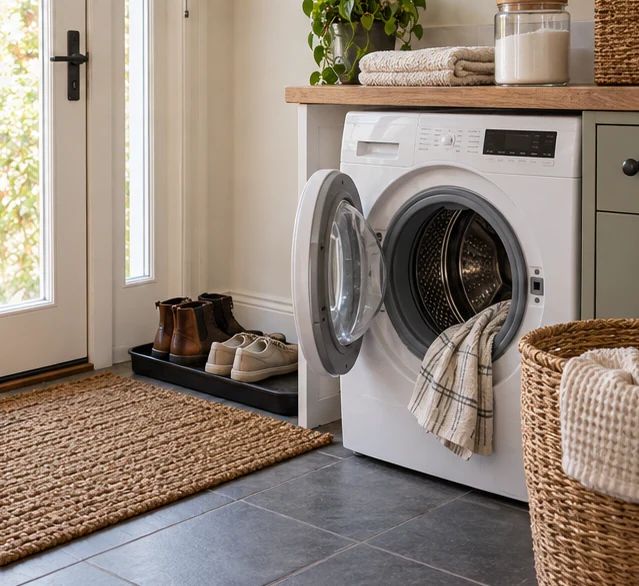
Clean entry mat and laundry basket beside an accessible washing machine.
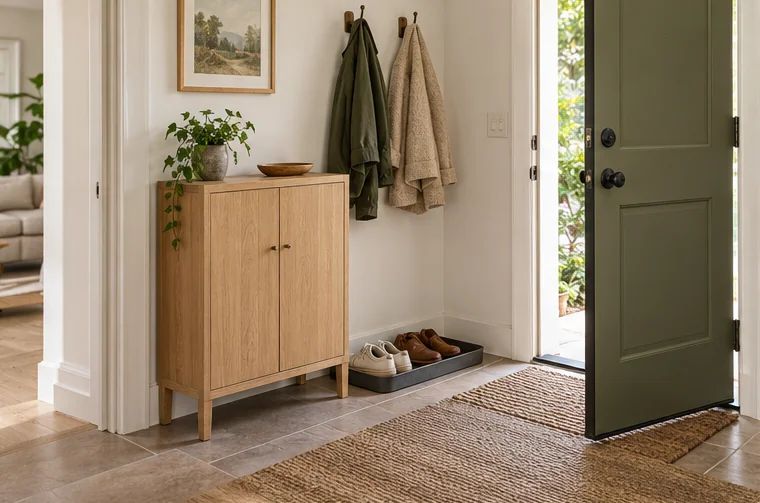
A final 15–25 minute session can cover the entry and accessible laundry surfaces. Clean the places that repeatedly bring dirt or moisture into the home: the mat, shoe tray, washer seal, and the shelf where detergent drips. Leave adequate drying time before closing damp items into cupboards.
Follow laundry-appliance maintenance instructions. Clear a dryer’s lint screen as directed, and arrange appropriate help for inaccessible vent maintenance rather than pulling machinery around alone. Keep exits clear while handling bags for donation or disposal. The Sunday reset routine can take over the small recurring jobs after this more detailed pass.
Save the checklist with the rooms you completed marked off. The next useful step is the unfinished priority, not starting the whole home again because every optional job was not done in one weekend.
Seven small space organization ideas built for everyday use, with practical storage choices, access rules and simple ways to prevent clutter returning.
May we use Google Analytics cookies to understand visits and which ideas readers find useful? It is optional. You can change your choice below at any time. Privacy details