7 Small Space Organization Ideas That Actually Work
Seven small space organization ideas built for everyday use, with practical storage choices, access rules and simple ways to prevent clutter returning.
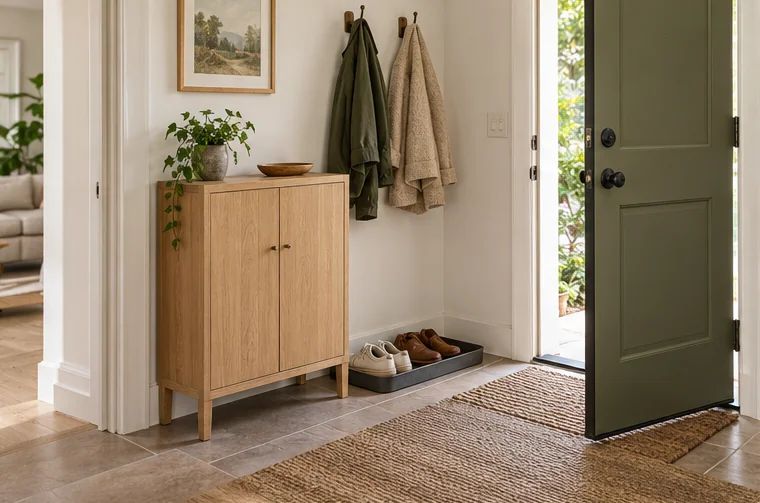
Small entryway with shallow cabinet, hooks and a shoe tray
Small space organization ideas work only if the room stays usable after the photograph. A box that fits beneath a bed is little help if lifting it requires moving the bedside table. A deep kitchen basket can hide supplies as efficiently as it stores them. The useful question is what happens when you need an item, and again when you put it away.
Start with one recurring annoyance: missing keys, a crowded worktop, clothes that never reach the wardrobe. These seven changes address the path from use to storage. Try the arrangement with containers you already own before spending money, and leave room for the ordinary mess of a household in motion.
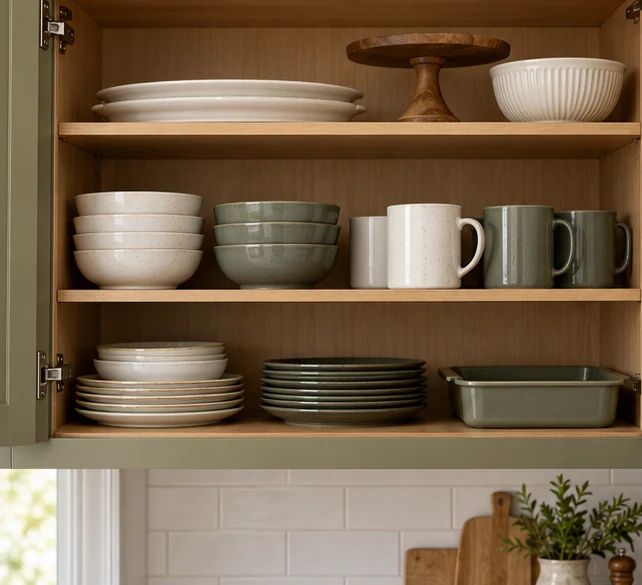
Everyday plates and mugs at reachable height with occasional serving pieces higher up.
Choose a small area and sort its contents by how often you actually use them. Daily items belong where you can see, grasp and return them comfortably. Weekly supplies can sit a little farther back; occasional items can take the less convenient spaces. In a kitchen, that might put everyday bowls beside the dishwasher, a weekly baking tin on a lower shelf and the holiday serving platter elsewhere.
Frequency is only one test. Keep heavy objects low enough to lift without reaching overhead, and keep hazardous items secured away from children. High shelves suit light, occasional belongings when they can be reached safely. Avoid placing a favorite mug above a stack of platters simply because the arrangement looks symmetrical.
Before moving anything permanently, mime the task. Open the cupboard while holding a bowl, or retrieve a coat with your work bag on your shoulder. A system that needs both hands, a cleared floor and several intermediate steps is unlikely to survive a busy morning.
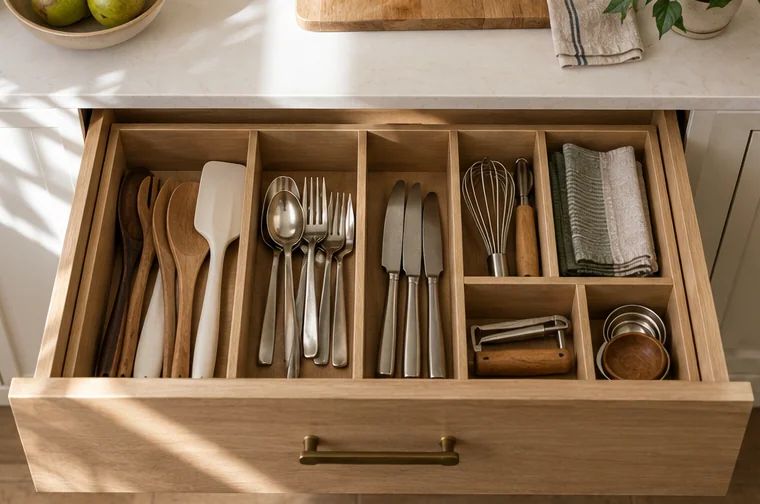
Kitchen utensils in a drawer with adjustable dividers
Separate storage by activity rather than insisting every similar object live together. A small repair kit can hold the sewing scissors, a few needles and the threads needed for ordinary mending. The main craft supplies can stay elsewhere. A writing tray might hold the current notebook, pen and reading glasses, while unused stationery lives in a drawer.
This works particularly well in rooms with more than one job. A dining table can return to eating space when the work materials have one portable home. Size the kit to the task rather than treating it as a second desk: a slim file, charging lead and pencil case may be enough.
Keep duplicate items only when they remove a real obstacle. Two frequently used charging cables may be sensible; six unidentified spares are a different problem. Review the kit after a week. Anything repeatedly fetched from elsewhere belongs closer, and anything never used can leave.
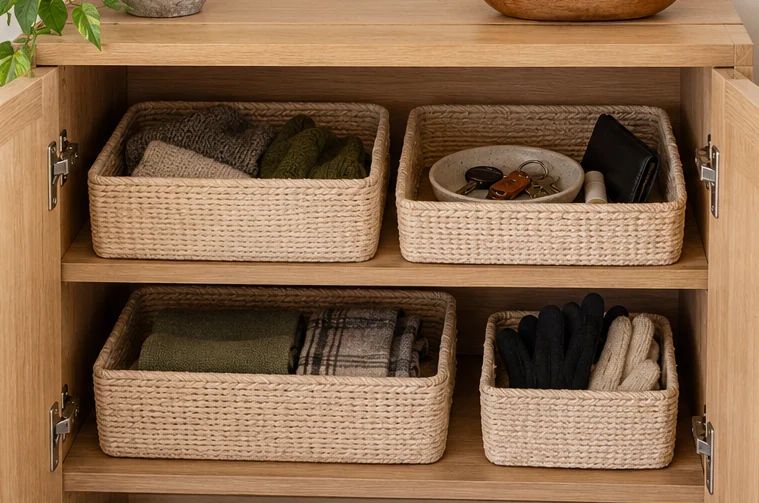
Everyday gloves and keys in plain baskets inside a shallow cabinet
Declutter the category first and measure the usable space second. Write down the shelf depth, width between hinges and height beneath the shelf above. Include room for fingers and handles. A container can fit inside a cabinet but still fail to pass through its door opening; a lidded box also needs clearance above it.
For daily belongings, an open bin or drawer divider often makes returning things easier. Use lids for dust protection or genuinely occasional supplies. Transparent boxes help with forgotten categories, while an opaque basket may suit visible shelves if a simple label identifies the contents.
Test a cardboard box before buying a matching set. Deep baskets can become a collection of buried layers, and round containers can leave unusable gaps on narrow shelves. Decanting food is optional; keep necessary preparation, ingredient and date information if you do it. The container should improve access, rather than create a new labeling and cleaning job.
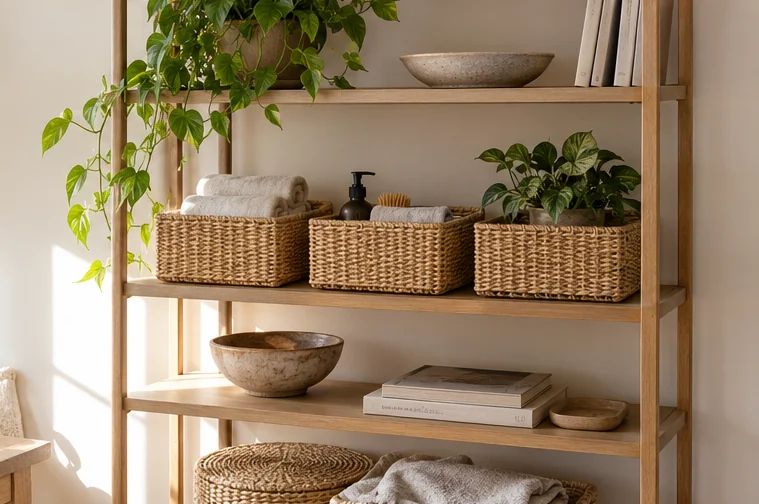
Accessible storage baskets on a slim household shelf
Look inside existing furniture before adding another freestanding unit. An adjustable shelf can remove a tall, unused gap above folded towels. A shelf riser may separate mugs from plates, provided the shelf and riser are rated for the load. A door rack can hold light supplies if it clears the frame, hinges and contents when the door closes.
Wall shelves need fixings suitable for the wall and the intended weight. Follow the product instructions and secure furniture against tip-over where required; the CPSC’s Anchor It guidance explains the risk. In a rental, discuss necessary fixing permission rather than assuming adhesive strips can carry a loaded shelf.
Keep the most useful height for things you need often. A tower of boxes above eye level may add capacity while hiding your inventory. Leave ventilation openings, electrical panels and essential access clear, and do not let a new rack narrow an already awkward route through the room.
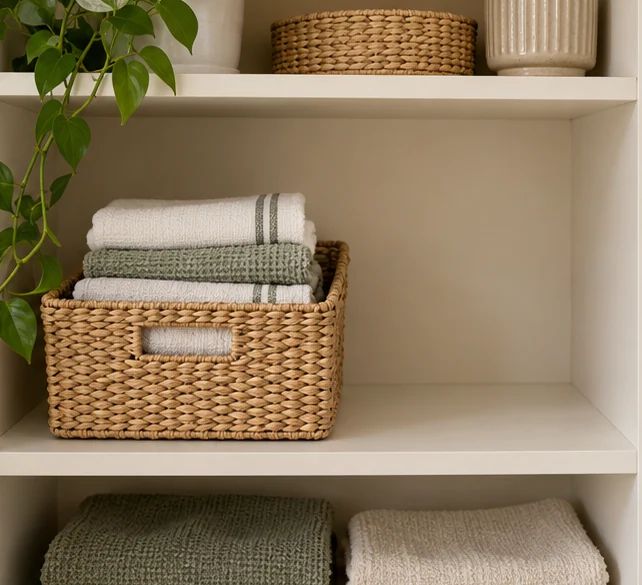
One small basket neatly filled with spare linens on a shelf with empty space around it.
Give a recurring category a home with a clear edge: one drawer for tea towels, one shelf for toiletries, one file for incoming paperwork. The boundary makes excess visible before it spreads. It also offers a concrete decision when something new arrives: use up, pass on or remove an older item before enlarging the storage.
The limit should suit the household. A family that washes towels weekly needs a different allowance from one with daily laundry access. Keep working spares, then stop storing quantities that make retrieval difficult. Buying a bulk pack is less useful when half of it blocks the vacuum cleaner.
Avoid turning this into a rigid one-in, one-out rule for necessities. Seasonal coats, accessibility equipment and changing family needs can require more room. When the category keeps overflowing, check whether its allocation is unrealistic or its contents are no longer useful before buying another box.
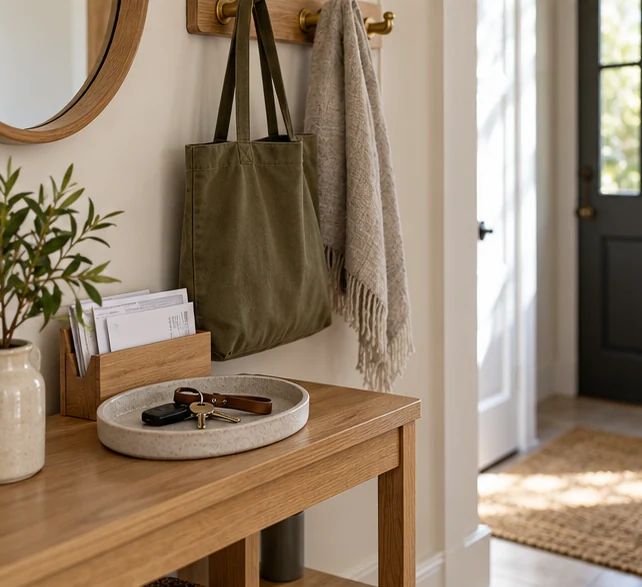
Shallow entry tray with keys and mail beside a cloth bag on a hook.
Observe the first surface you use after coming home. Place a shallow dish for keys there, with a nearby hook or shelf for the everyday bag. Keep it outside the door swing and walking route. In a very narrow entrance, a single wall hook and a small shelf may work better than a console that steals floor space.
Give paperwork a separate, slim holding space with a regular review time. Avoid an all-purpose basket that mixes bills, batteries, coins and gloves. The distinction matters: keys need a permanent home, while a form needs an action and an eventual destination.
If more than one person uses the zone, agree what belongs there and make the arrangement reachable for them. A child’s hook placed at adult height will not solve the coat pile. Test the landing zone during a normal week, then move it toward the behavior that actually occurs.
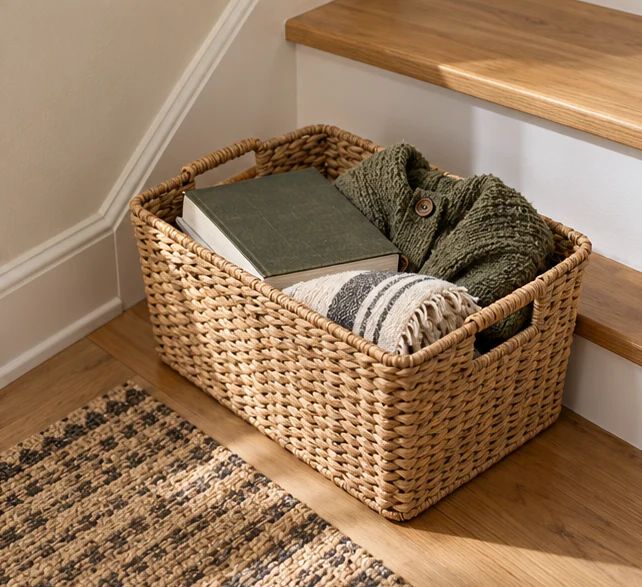
Portable return basket containing a book and folded cardigan at the base of stairs.
Choose a recurring moment to return stray belongings, empty the paperwork slot and move donations out of the house. Ten minutes after a weekly meal may be easier to remember than an elaborate schedule. Set a timer and stop when it ends. The task is to restore the system, not reorganize every cupboard. The short Sunday reset offers a practical place for this weekly return route.
Use one temporary carry basket if it helps move items between rooms, but empty it during the same session. A permanent overflow basket becomes another storage category with no boundary. A donation bag also needs a destination and a date; otherwise it occupies the floor for months.
When the same pile returns, change one part of the system. The scissors may belong nearer the parcel-opening spot; the laundry basket may need to sit where clothes are removed. Repeated clutter can be useful information about a storage arrangement that asks too much of the people using it.
Start with the place that causes the most repeated searching. A useful result is easier retrieval and easier returning, even if the containers do not match. Once that area works through an ordinary week, apply the same questions to the next one. For a crowded sleeping area, the small bedroom storage guide applies those access checks to bedsides, wardrobes and under-bed space.
Find useful storage under the bed, inside the wardrobe and beside the mattress, with seven ideas that protect access, keep items visible and reduce clutter.
Declutter seven useful categories before the New Year, with clear keep-or-pass-on decisions and responsible routes for clothes, electronics and medicines.
May we use Google Analytics cookies to understand visits and which ideas readers find useful? It is optional. You can change your choice below at any time. Privacy details