Find useful storage under the bed, inside the wardrobe and beside the mattress, with seven ideas that protect access, keep items visible and reduce clutter.
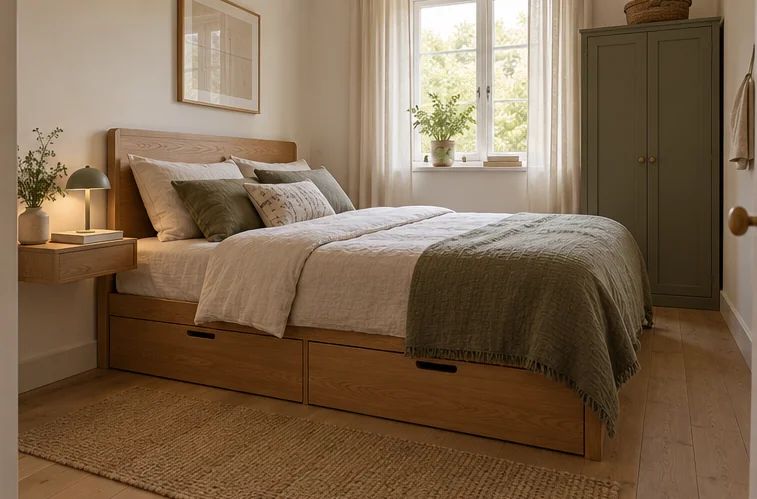
Small bedroom with under-bed drawers and a slim bedside ledge
Extra storage is useful only when you can put something away and retrieve it without rearranging the bedroom. The space under a bed may look generous until the drawer meets a wardrobe; a tall shelf adds capacity but puts everyday items beyond comfortable reach. Count access as part of the storage, rather than treating it as leftover floor area.
These small bedroom storage ideas work with ordinary furniture and possessions. They focus on the awkward categories that tend to migrate onto the bed or a chair: spare bedding, mixed clothes, books and the things used just before sleep. Start with one category that currently has no workable home.
Empty the proposed storage area before buying containers. Measure its narrowest point and the space needed to open or remove the contents. Note dampness, ventilation requirements, heaters and outlets. Photograph the contents of a cupboard as it is normally used; the goal is a system that works after a rushed morning, rather than only when everything has just been folded.
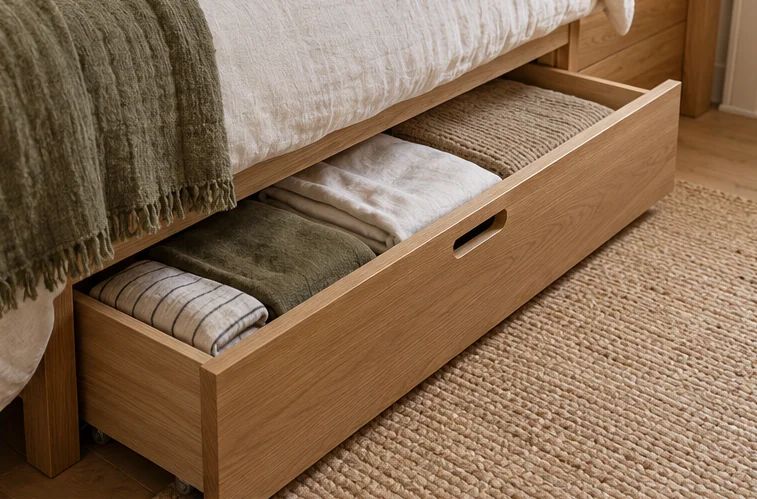
Measure the clearance beneath the frame at its lowest obstruction, including center supports. Then measure the floor space beside the bed. A box that fits underneath is not useful if you cannot pull it out far enough to open. Several smaller containers may be easier than one large drawer in a narrow room.
Store occasional, clean and dry items here: spare bedding, out-of-season clothing or a guest duvet if the space and container allow. Keep related items together and label the accessible end. Avoid turning the area into a deep mixed archive of possessions you rarely remember owning.
Follow the bed and mattress manufacturers' ventilation guidance. Do not pack storage tightly against components that need airflow, and address damp or condensation rather than sealing it inside a box. Choose containers appropriate to the conditions and check periodically. If retrieval is awkward, this space belongs to infrequent items; daily clothes need a more accessible home.
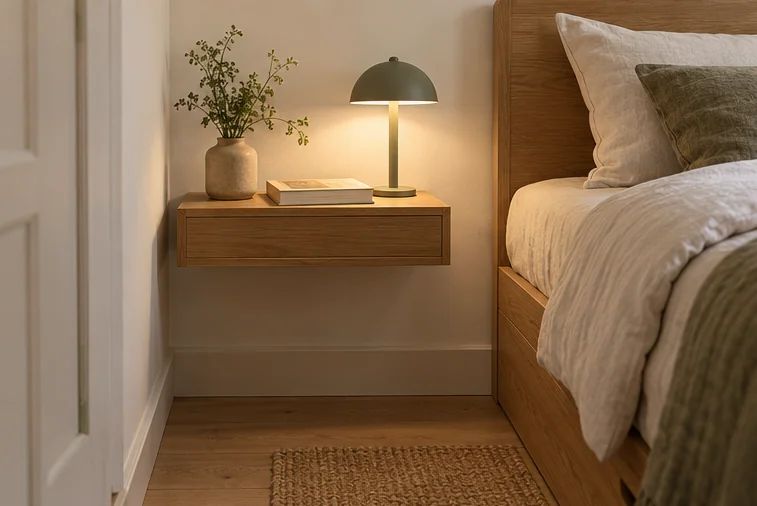
Slim floating bedside drawer with a small lamp beside the bed
List what you actually need beside the bed: a book, glasses, water, a charger and perhaps medication stored according to its instructions. Choose a table or small cabinet for that list. A compact drawer may conceal small objects more effectively than an open shelf, while a narrow ledge can work when only a few items are needed.
Check height from the mattress and the reach from your usual position. A beautiful low stool may leave a water glass awkward to reach, while an oversized cabinet can block access to the bed. Different solutions on each side are reasonable when space or needs differ.
A wall shelf needs suitable load-rated fixings, and a clip-on accessory needs a bed frame designed to accept it. Avoid hanging heavy storage from weak adhesive hooks. Keep charging cables clear of bedding and follow device instructions. The best bedside storage reduces reaching and clutter without creating a new obstacle at floor level. These proportions also support the uncluttered, comfortable rooms in our warm minimalist bedroom guide.
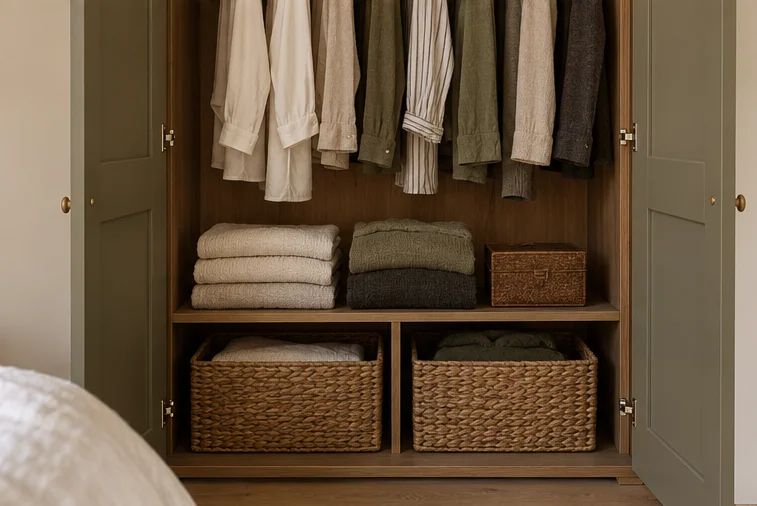
Modest wardrobe with hanging shirts, folded knits and baskets
Sort hanging clothes by the space they require, then look for unused height beneath short garments. A second rail or shelf can make sense where the wardrobe structure and fittings support it. Long coats and dresses still need a clear full-height section, so measure the actual clothes rather than dividing the wardrobe evenly.
Use shelves for categories that fold and remain stable. Add a divider only where stacks repeatedly collapse, and avoid high piles that must be lifted to reach the bottom. A small open bin may suit scarves, while shallow drawer compartments help keep socks visible. Buy the organizer after identifying the category and its volume.
Keep the most frequently used items in the easiest reach. Moving seldom-worn formalwear upward can release better space for everyday clothing. Do not overload rails or add unsupported hardware to a lightweight wardrobe. Repair sagging shelves or loose fittings before treating extra capacity as a solution.
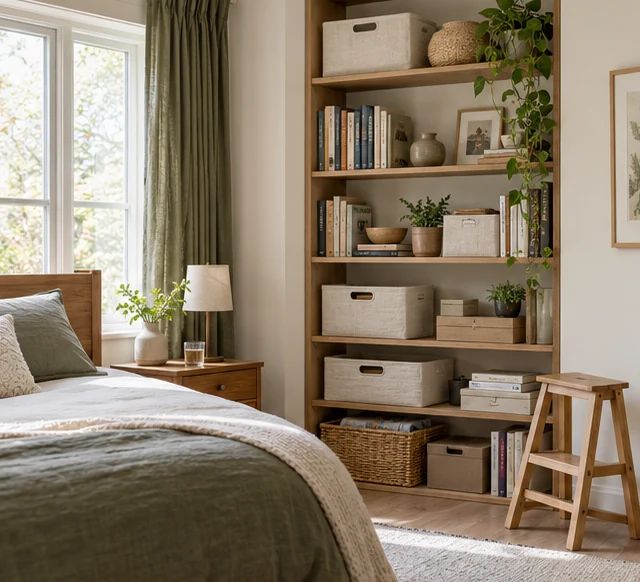
Tall bedroom shelves with light fabric baskets and sturdy step stool parked beside.
Wall height can provide useful storage, but it should not send everyday objects to a place you cannot reach. Put lighter, infrequently used items higher and daily items closer to hand. Measure shelf spacing to suit the contents so a small book collection does not occupy cupboard-sized gaps.
Use appropriate fixings for the wall, shelf and combined load. For freestanding storage, follow the manufacturer's anchoring instructions. The CPSC's Anchor It! campaign advises anchoring furniture with shelves, drawers or doors to prevent tip-over injuries; a tall unit's narrow footprint does not make it secure.
Avoid balancing on a chair or bed to reach the top. If a suitable step stool cannot be used safely and stored conveniently, lower the storage or choose another location. Keep heavy objects away from overhead positions above sleeping areas. In a rental, resolve the permission and installation method before choosing a unit that depends on anchoring.
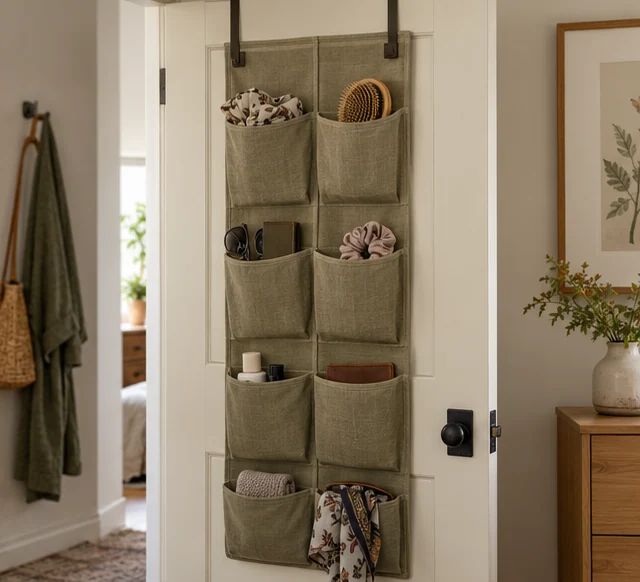
Lightweight fabric pocket organizer on the back of a bedroom door holding small accessories.
A door can hold a robe, a small bag or a limited set of accessories if the door, hooks and hinges suit the load. Start with something light. Over-door products need clearance at the top and enough space behind the door when it opens; a thick organizer may stop it closing or hit the wall.
Test the door's full movement with the items in place. Do not interfere with a closer, latch, ventilation provision or any required door function. Keep the handle usable and make sure nothing falls into the walking route. An organizer that scrapes paint or strains the door is not a free storage gain.
Use only a few clear categories. A row of bags containing miscellaneous objects quickly becomes difficult to search. If adhesive hooks are considered, follow their surface and load instructions and recognize the possibility of finish damage. A fixed wall hook installed appropriately may be a better answer where permission allows.
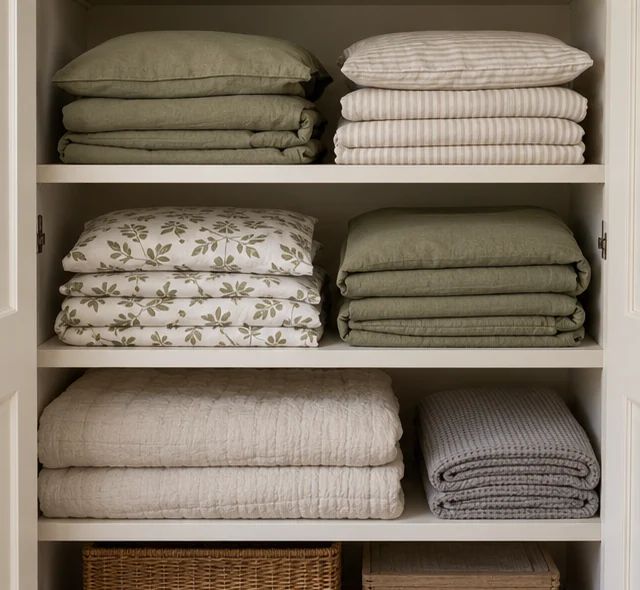
Complete folded cotton sheet sets with pillowcases grouped on a linen cupboard shelf.
Group bedding by the bed it fits, then keep each clean, dry set together. A pillowcase can hold the matching sheet and cover if they fit without being forced. Alternatively, use a labeled shelf section. The aim is to collect what you need in one trip, rather than impose a particular folding style.
Keep the set currently in use, a practical washing rotation and any guest or seasonal bedding you genuinely need. The right quantity depends on drying time, household needs and available space. Buying extra sets to make a cupboard look full only makes storage harder.
Give bulky bedding a location suited to its material and care instructions. Compression may be inappropriate for some items, and it is not a substitute for drying everything thoroughly. Keep different sizes identifiable so you do not unfold several bundles searching for the right one. A simple written label usually contributes more than another decorative basket.
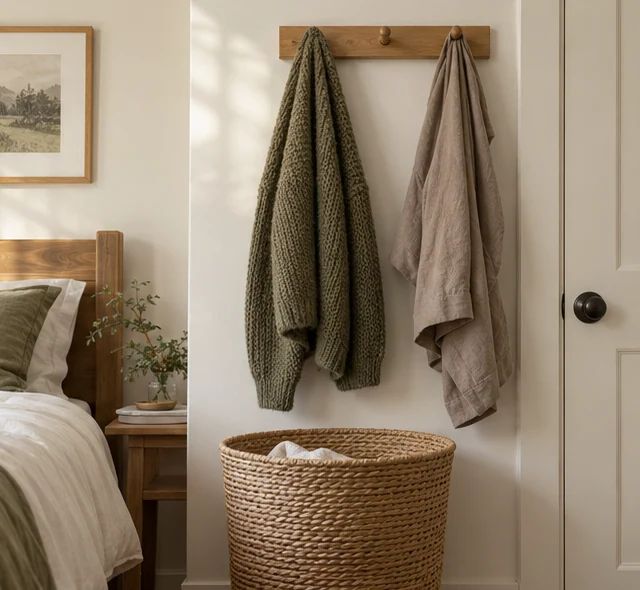
Simple wall hooks holding worn-once cardigan and trousers above a ventilated basket.
Clothes that are not ready for the wash but not ready to fold back into the wardrobe need a deliberate temporary home. Choose a few hooks, a short rail or an open shelf that lets suitable garments air. Keep it separate from clean folded clothing and decide which items are appropriate to wear again.
Set the capacity by the space you can maintain. A short rail encourages a small rotation; an upholstered chair can accept an unlimited pile until it becomes unusable. Put the laundry basket nearby enough that clothes needing washing do not join the same group by default.
Review the landing place when you put laundry away. Return items that are ready for storage and wash what needs it. If the hooks are permanently full, the system needs a shorter cycle or fewer circulating garments, rather than a second set of hooks. This one category often releases a chair, clears the bed and makes the rest of the room easier to keep usable. If the same categories overflow into other rooms, try these maintainable small-space organization systems.
Solve the storage category with the most daily friction first. Make sure its container opens, its shelf is reachable and its contents are clear. When that system survives ordinary use, apply the same access test to the next area instead of filling every available gap.
Build a warm minimalist bedroom with comfortable cotton or linen bedding, wood, layered lamps and storage that fits, while keeping the room easy to use.
Seven small space organization ideas built for everyday use, with practical storage choices, access rules and simple ways to prevent clutter returning.
Declutter seven useful categories before the New Year, with clear keep-or-pass-on decisions and responsible routes for clothes, electronics and medicines.
May we use Google Analytics cookies to understand visits and which ideas readers find useful? It is optional. You can change your choice below at any time. Privacy details