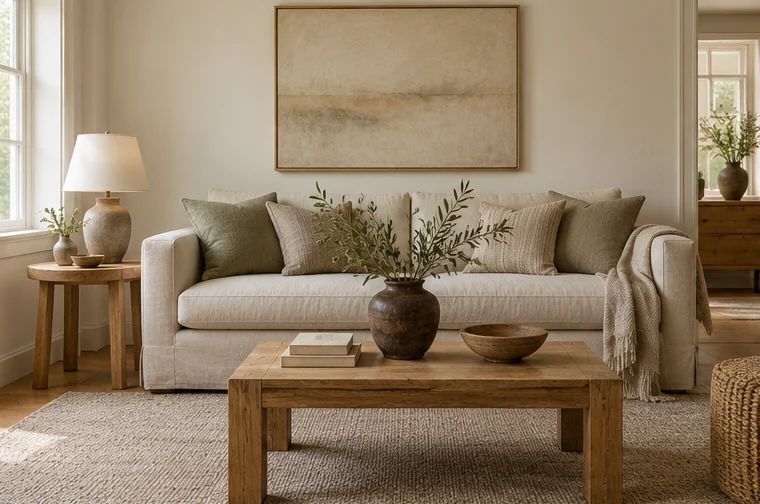
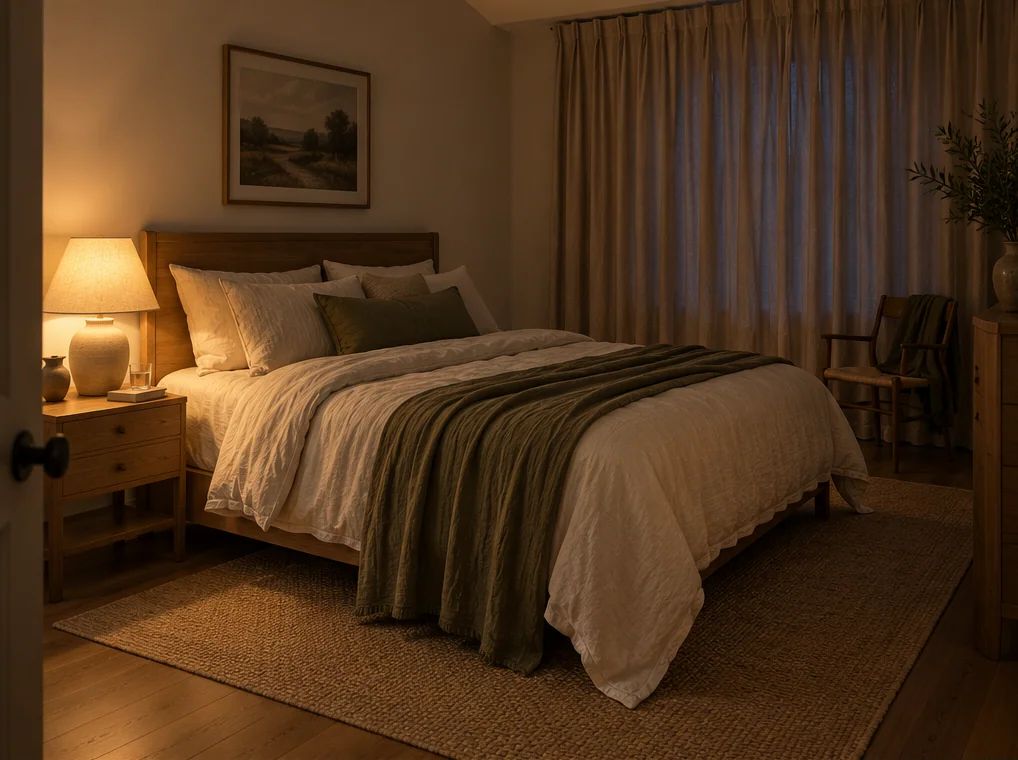
Build a warm minimalist bedroom with comfortable cotton or linen bedding, wood, layered lamps and storage that fits, while keeping the room easy to use.
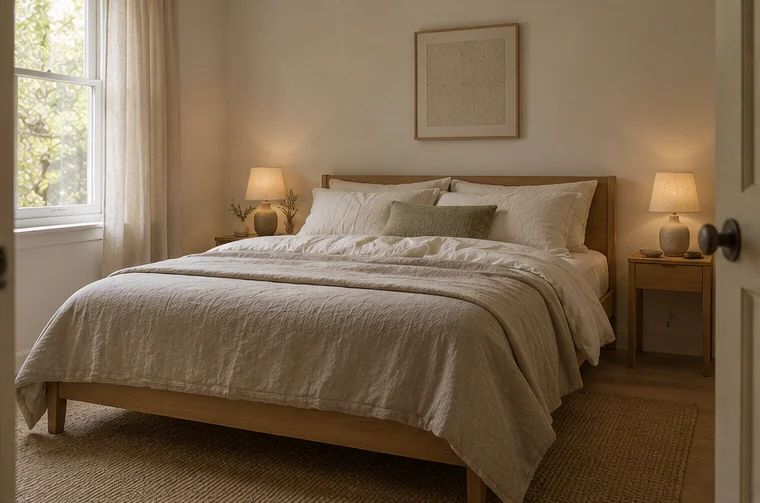
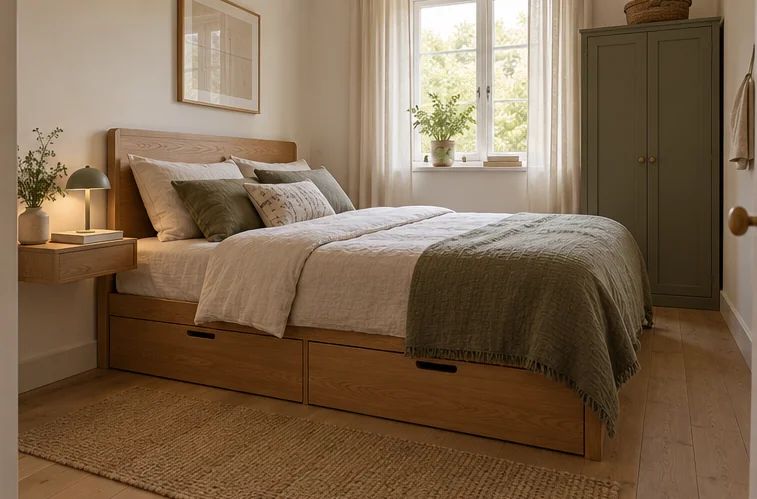
Small warm minimalist bedroom with oak bed and oatmeal bedding
A warm minimalist bedroom needs enough comfort to be useful at the end of a long day. Begin with the bed, light and storage that support sleep and dressing, then use texture and a small palette to make those essentials feel settled.
These warm minimalist bedroom ideas focus on those needs first. You can keep an existing bed and mismatched bedside furniture; the important work is deciding what stays visible, how the lighting works and where a little texture will be felt.
Look at the bedroom with the bed made and its usual daily objects in place. Note the awkward route, the glare, the unfinished pile and the textile you dislike touching. Pick the most persistent problem before choosing a palette. Measurements should include opening wardrobe doors and drawers, getting into bed and using any under-bed storage.
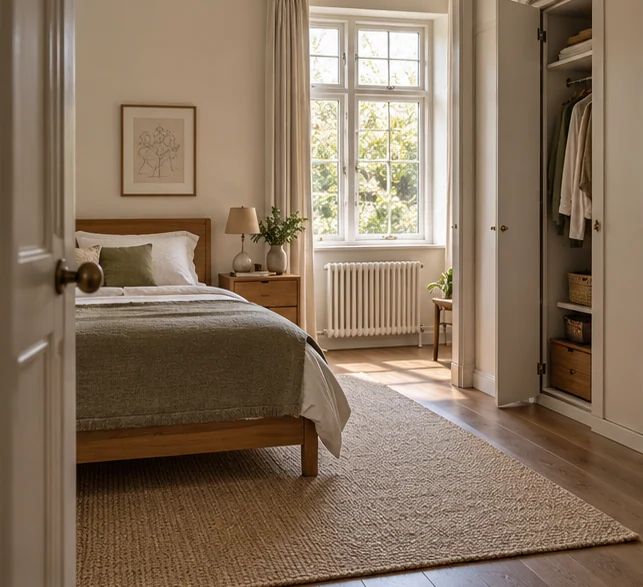
Low-profile bed frame with clear bedside passage and wardrobe door open.
Compare the frame's full dimensions, not just its mattress size. A broad padded headboard or projecting footboard can take up useful space in a small bedroom. A simpler frame may give the same sleeping area while leaving more room to pass, although replacing a sound bed is unnecessary if the current arrangement works.
Position the bed so its users can enter and leave comfortably and reach the storage they need. Symmetry is a visual preference, not a rule that justifies trapping a wardrobe door. In a very narrow room, different bedside solutions on each side may be more useful than two identical tables.
Check the floor around the bed at night with the usual lights on. Avoid a bench that becomes a shin-level obstacle or a rug edge that catches the foot. If you are considering a storage bed, test the operating space and lifting mechanism rather than assuming hidden capacity automatically makes it the best option.
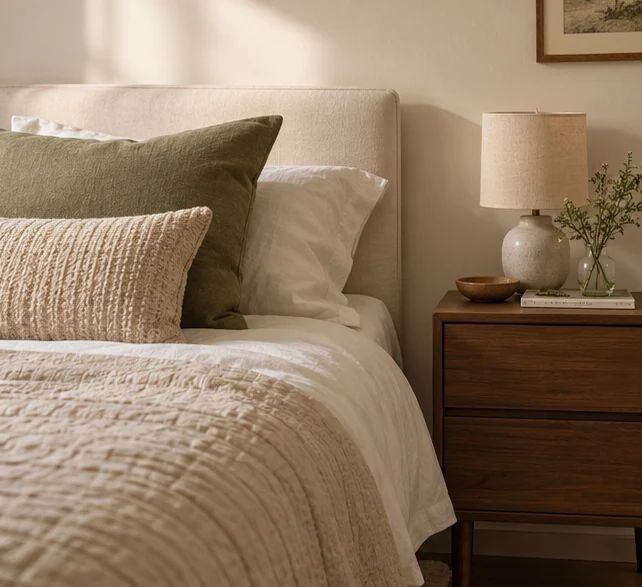
Ivory wall, oatmeal quilt and walnut bedside cabinet showing three warm tones.
Choose a pale background, a middle tone and a deeper accent. For example, a warm white wall, oatmeal bedding and a walnut bedside table give the eye a gentle range without filling the room with colors. The middle tone prevents the bed from disappearing into the walls; the darker element gives the arrangement definition.
Compare samples against the floor and existing furniture. Benjamin Moore's neutral guidance emphasizes undertones and testing in different light. A creamy white may clash with a pink-beige carpet, while a gray quilt can look blue beside yellow-toned wood. Let the actual room decide which variation works.
If painting is impractical, introduce the relationship through a coverlet and pillowcases first. Keep a few differences in depth rather than trying to match every beige precisely. Broadly related tones look more natural together, and replacements will be easier to find when a textile eventually wears out. If the existing neutrals seem to clash, compare them using this guide to undertones and tonal contrast.
Cotton sheets, linen coverlet and wool cushion on a bed
Start with the sheet and duvet cover that touch your skin. Cotton and linen both offer useful options, but the weave, finish, weight and your own temperature preferences matter. Cotton percale often feels crisper, while linen has a more visibly relaxed surface. Feel a sample where possible and check care instructions instead of assuming a higher thread count guarantees comfort.
Use only the layers your climate and room require. A coverlet folded across the foot can add color and texture, but it should have somewhere to go if you do not sleep beneath it. One small decorative cushion is optional; a pile that moves to the floor nightly adds work without improving rest.
Choose bed linen you can launder and dry conveniently. In a small home, bulky decorative layers compete for drying and cupboard space. A simple, well-kept set in a color you enjoy will contribute more than several fragile pieces reserved for a photograph.
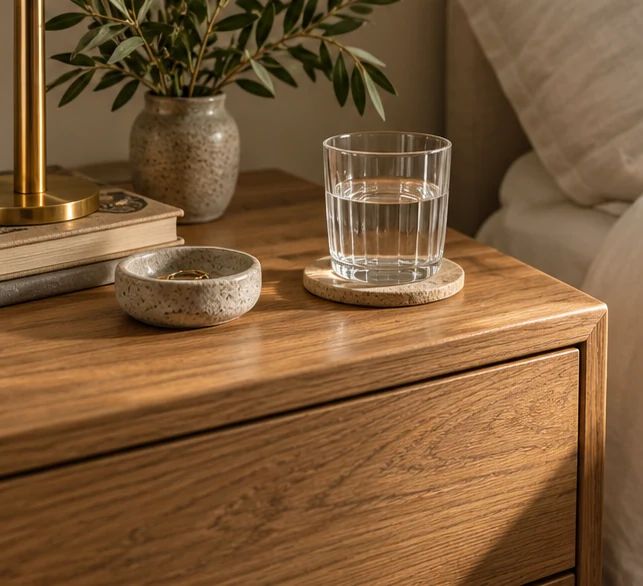
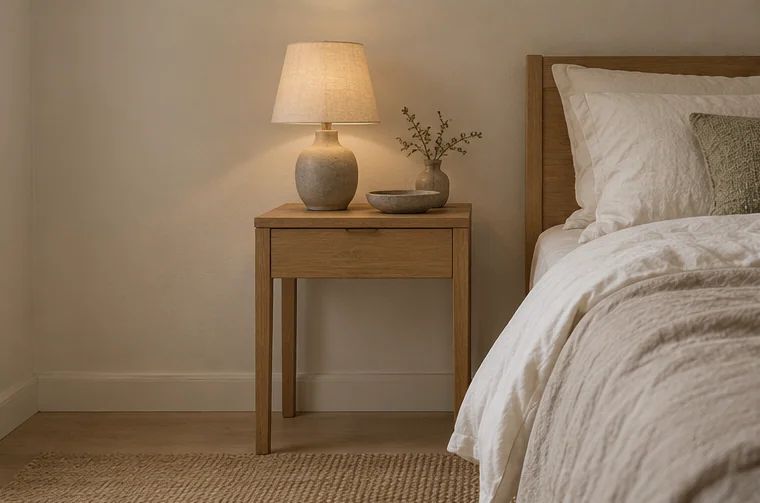
Close view of wood grain on oak bedside cabinet with water glass on a coaster.
Wood gives a restrained palette visible grain and a natural range of light and dark. Let one substantial piece establish the tone: a headboard, bedside cabinet or existing dresser. Then repeat a related warmth in a small frame or tray if the room needs a connection. You do not need to replace every wood item to match.
Compare samples beside the floor. Honey-colored furniture can look much stronger against pale gray flooring than against warm boards; a deep brown piece can provide useful contrast in a pale room. Use the actual finishes as the reference, rather than relying on broad labels such as oak or walnut, which encompass many colors.
Keep care and function in mind. A bedside surface needs to tolerate the water glass and cleaning method you use, perhaps with an appropriate coaster. Avoid overly rough reclaimed surfaces where bedding or clothing catches. Warm minimalism works through pleasant everyday contact as well as the appearance of natural materials.
Decide what the light needs to do before selecting its shape. A reader needs a controlled beam on the page; someone who mainly wants a gentle light for getting into bed may prefer a shaded lamp. Two people sharing a room can use different fittings if their needs differ.
Try the lamp while lying and sitting in bed. Check whether the bulb is exposed from either position and whether the switch is reachable without stretching. A wall-mounted or clamped lamp can release tabletop space, but it must be installed on a suitable support with its cord kept away from snagging points. Never assume decorative adhesive is sufficient for a light fitting.
Choose a warm light appearance that works with your palette and enough brightness for the task. A dimmer helps only when the bulb and fixture are compatible. Keep broader room lighting for dressing and cleaning, so the bedside lamp is not expected to illuminate the entire bedroom.
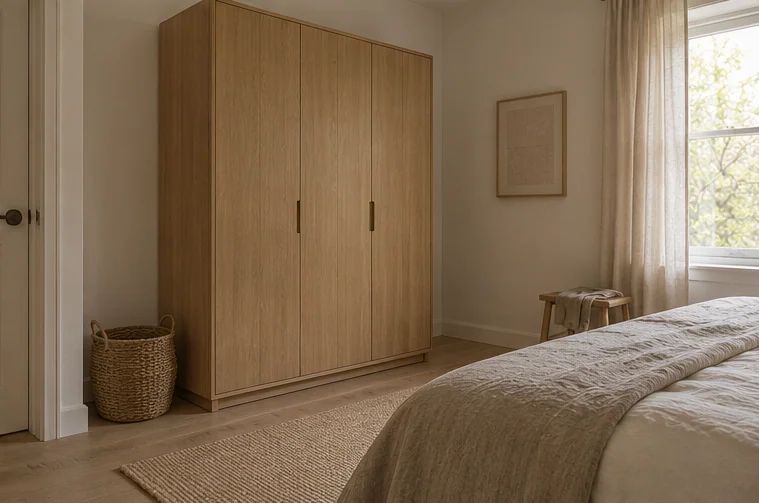
Light oak wardrobe and taupe bedding in a compact bedroom
Visible storage works best for a small number of objects whose outlines you enjoy. Mixed toiletries, spare cables and everyday clothing are often calmer behind a door or inside a drawer. The useful distinction is between what you want to see and what you need to retrieve, rather than between attractive and unattractive possessions.
Start with the surface closest to the bed. Give the charging cable a fixed path, place small necessities in a shallow compartment and move occasional items elsewhere. Measure drawer interiors before buying organizers. Dividers that fit the contents and leave room for fingers are more useful than a perfectly filled grid.
Do not buy another cabinet simply to hide a pile. First remove things that belong in other rooms and review what is genuinely being used. Any new storage should fit both the footprint and its opening space. Secure furniture as required by its instructions, using suitable anchoring rather than relying on its apparent weight. For the areas inside and beneath the furniture, our small-bedroom storage ideas focus on opening space and easy retrieval.
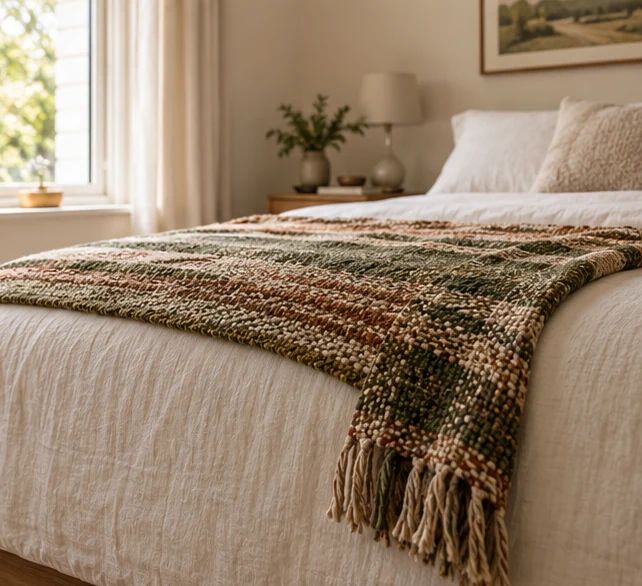
Handwoven patterned throw across a plain duvet with open space around it.
A quiet bedroom can still reveal who lives there. Choose one textile or personal object with enough presence to be noticed: a handwoven throw, a small artwork beside the bed, a family photograph in a plain frame or a ceramic bowl for jewelry. Its role is to provide a clear point of interest, not complete a prescribed shopping list.
Place it where it contributes to use. A woven blanket belongs within reach, a jewelry dish on a stable surface and art where it is visible from the doorway or bed. Avoid heavy or insecurely mounted objects above a pillow. If the room already has a richly patterned rug, that may be all the detail it needs.
Leave some uninterrupted space around the chosen element. The contrast between a plain duvet and a textured throw makes the texture easier to see. When every surface has another small feature, the room loses the restful visual rhythm you were trying to establish.
Finish the bedroom by using it for a week. Notice where the throw lands, which drawer stays open and whether the lamp reaches the page. Adjust those details before adding anything else. A restrained room earns its simplicity when everyday life fits comfortably inside it.
Find useful storage under the bed, inside the wardrobe and beside the mattress, with seven ideas that protect access, keep items visible and reduce clutter.
Try seven warm neutral decor ideas using texture, lighting, wood and a restrained palette. Work with the furniture, finishes and daylight your home already has.
Build an evening routine for better rest with five gentle habits around preparation, quieter activities and bedroom comfort, adapted to your actual schedule.
May we use Google Analytics cookies to understand visits and which ideas readers find useful? It is optional. You can change your choice below at any time. Privacy details