Build an evening routine for better rest with five gentle habits around preparation, quieter activities and bedroom comfort, adapted to your actual schedule.
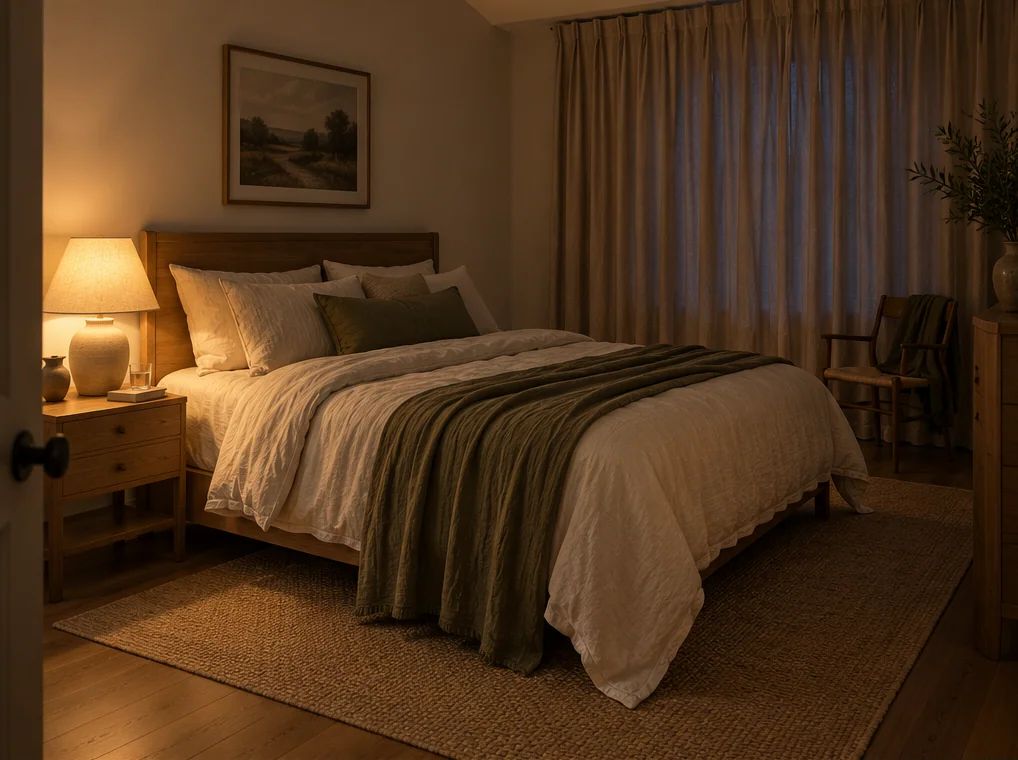
Cotton-covered bed and dim shaded bedside light in a quiet bedroom
An evening routine for better rest can begin with one gentle change. Choose a practical habit that reduces a recurring difficulty, then let it fit around work, care and the time you actually have before bed.
These five habits combine practical preparation with established sleep guidance from the NHS and the US National Heart, Lung, and Blood Institute. They may support sleep, but they cannot guarantee it. Choose a change that fits your schedule, especially if you work shifts, share a room or care for someone overnight.
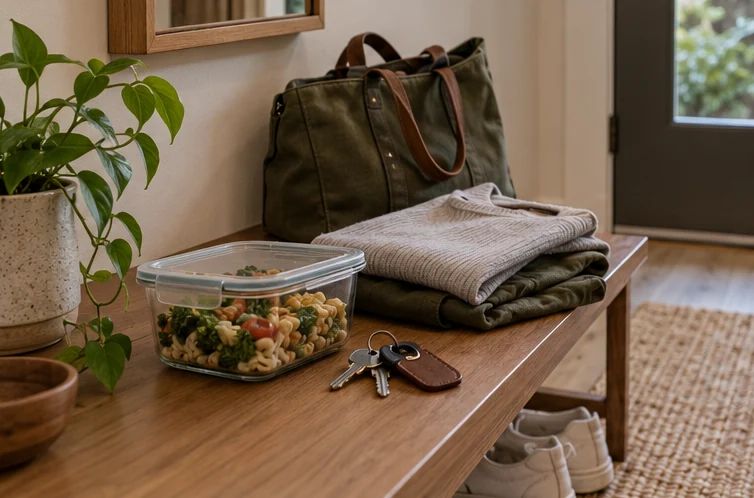
Prepared lunch container, keys and tomorrow's clothes near the entry before evening.
Choose an earlier evening moment to check the next day’s first commitment and put necessary items together. Find the document, pack the bag or write a reminder for the refrigerated lunch. Keep the session brief and give it an end point. Otherwise a useful check can quietly turn into an hour of administration.
If unfinished thoughts keep returning, write a short list with a plausible next step beside each actionable item. For example, replace sort out the leak with call the landlord after breakfast. Put the list somewhere you will actually review it. You do not have to solve everything tonight for the reminder to be useful.
Leave complicated planning outside the bedroom where you can. In a studio, close the notebook, put work materials in a tray and move them off the sleeping surface. A consistent sequence can fit a changing clock time: finish essential preparation, put it away, then begin the quieter part of the evening. The Sunday reset routine can take care of the larger weekly decisions.
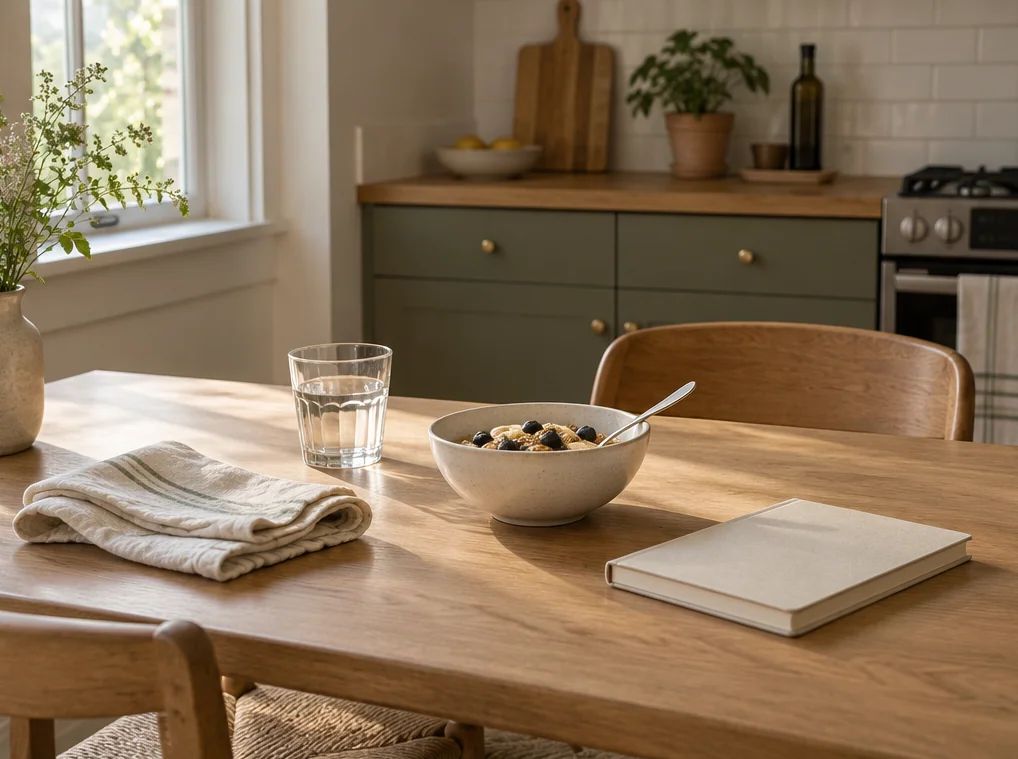
Cup of herbal infusion and plain glass of water on a kitchen counter at dusk.
Look at the drinks and snacks you actually have in the later part of the day. Coffee is an obvious source of caffeine, but tea, some fizzy drinks, energy drinks and chocolate can contribute too. NHLBI notes that caffeine’s effects can last up to eight hours. There is no single cutoff that suits every person and schedule.
If you suspect a connection, try moving your last caffeinated drink earlier and observe your sleep for several days. Keep the alternative ordinary: water, a caffeine-free drink you enjoy, or decaffeinated coffee if that suits you. Check labels rather than assuming a herbal or specialty drink is appropriate for everyone, particularly if you take medicines.
Alcohol is not a reliable sleep aid. NHS and NIH guidance advise against drinking it near bedtime because it can disturb sleep. Avoid turning an evening drink into a required ritual for falling asleep. If alcohol or caffeine use is difficult to change, seek appropriate professional advice rather than adding more rules to your evening.
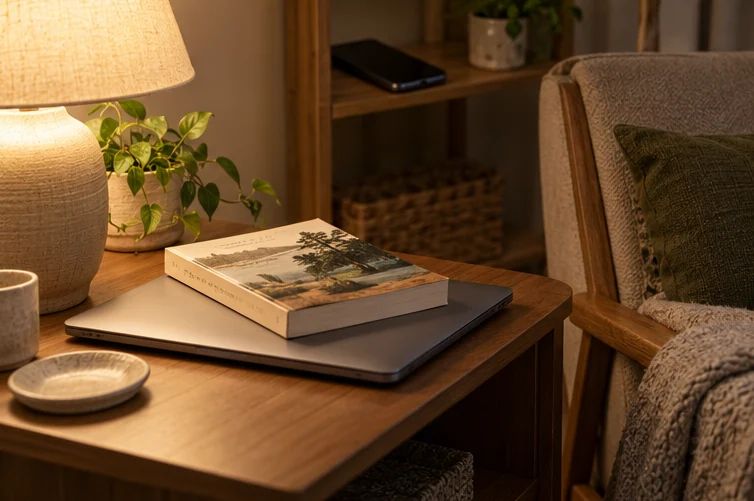
Closed laptop and paperback beside a shaded reading lamp with phone away on shelf.
Pick one activity that is easy to pause: a familiar book, gentle music, a simple craft or a quiet conversation. Start with a short interval rather than trying to perform an entire hour of relaxation. Place what you need beside a comfortable seat, so settling down does not require another search through drawers.
NHLBI recommends quiet time and avoiding bright artificial light before bed. Use a lamp that gives enough light for the activity without flooding the whole room. If screens are necessary, reduce unnecessary brightness and choose a clear stopping point. Messages, work and an endless sequence of new videos can keep the evening active even with a screen filter.
Keep the routine flexible enough to travel or survive interruptions. You might read a few pages at home and listen to a short audio piece elsewhere. Do not measure how relaxed you feel minute by minute. Choose something agreeable, end it when you become sleepy and allow a less peaceful evening to remain an ordinary variation.
Shaded bedside lamp, closed book and glass of water beside cotton bedding
Check the room from the position where you sleep. Notice light around the curtains, a bright device display, a recurring noise or bedding that feels too warm. Address one problem at a time. NHLBI recommends a quiet, cool and dark sleeping space; a universally correct thermostat setting is less useful than a comfortable arrangement for the people in the room.
Try changes using what you have: move an unnecessary glowing device, close curtains fully or use a lighter bedding layer. Keep routes to the door and bathroom safe. A dim night light may be appropriate if you need it. Earplugs or an eye mask are optional and should suit your hearing, safety and comfort needs.
If the room also serves as an office, gather work materials out of your immediate view. Keep the bedside surface limited to useful items so you can reach a lamp or glasses easily. Our warm minimalist bedroom ideas offer practical ways to simplify the space without making it bare or buying an entirely new set of bedding.
Calm bedroom at dusk with cotton bedding, low bedside light and analog clock.
Choose a realistic waking time and allow enough time for sleep, adjusting around work and care responsibilities. NHS guidance supports a fairly regular sleep routine. An elaborate evening ritual is less helpful if it routinely pushes bedtime later than intended, so include washing, changing and other necessities before you become very tired.
Begin the wind-down before you want to sleep, then move to bed when sleepy rather than treating an exact minute as a performance target. If you are lying awake and becoming frustrated, NHS advice suggests getting up and doing something relaxing, then returning when sleepier. Keep the activity quiet and the lighting modest.
If difficulties persist, affect your daytime functioning or come with symptoms such as breathing problems during sleep, seek healthcare advice. Sleep habits are one part of the picture; they are not a complete treatment for every sleep disorder. Shift workers and people with complex health needs may benefit from tailored guidance instead of a standard bedtime schedule.
Begin with the change closest to the difficulty you notice: earlier planning for unfinished tasks, a review of late caffeine, or a quieter sleeping space. Keep the routine short enough to use on a normal evening, and judge it over time rather than by one night.
Build a warm minimalist bedroom with comfortable cotton or linen bedding, wood, layered lamps and storage that fits, while keeping the room easy to use.
Try five morning routine ideas for a calmer day, from a simpler first task to practical preparation. Choose one habit that fits your time and responsibilities.
May we use Google Analytics cookies to understand visits and which ideas readers find useful? It is optional. You can change your choice below at any time. Privacy details