Try five morning routine ideas for a calmer day, from a simpler first task to practical preparation. Choose one habit that fits your time and responsibilities.
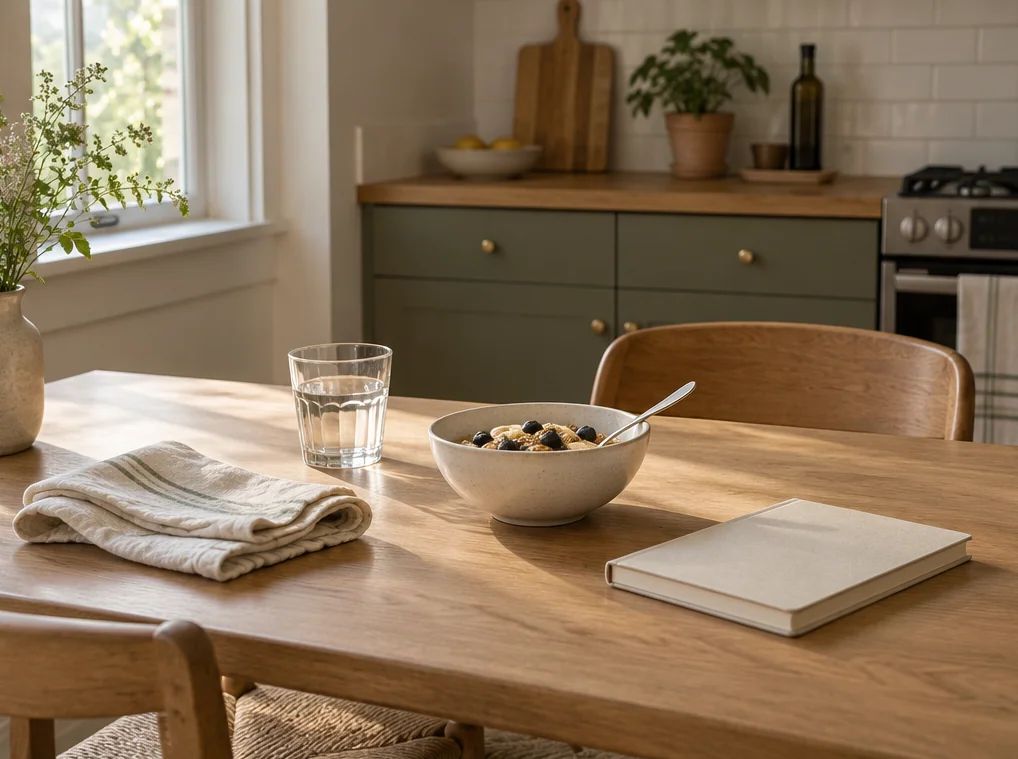
Glass of water, breakfast bowl and closed notebook on a morning kitchen table
Morning routine ideas are easier to use when they solve one recurring difficulty. These five simple habits offer a calmer start without assuming you have a free hour, an early waking time or the same schedule every day.
These five habits can sit inside things you already do. Choose one to try for several days, then decide whether another would help. Keep the smallest workable version on busy mornings. If a routine requires sacrificing needed sleep, revise the routine.
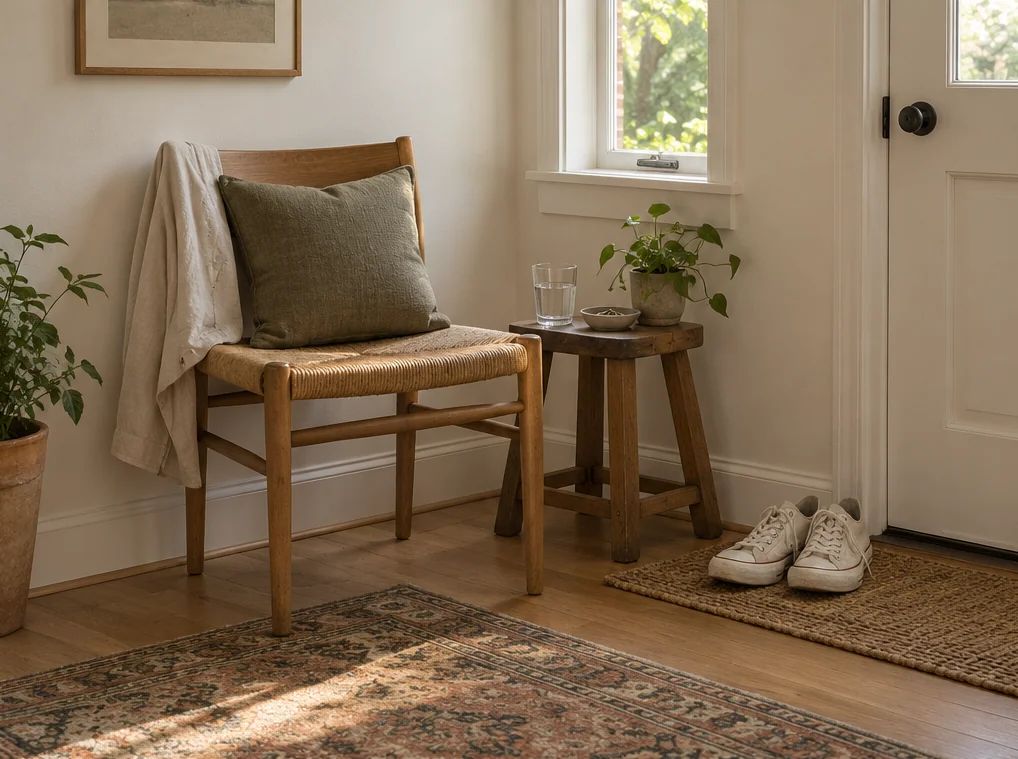
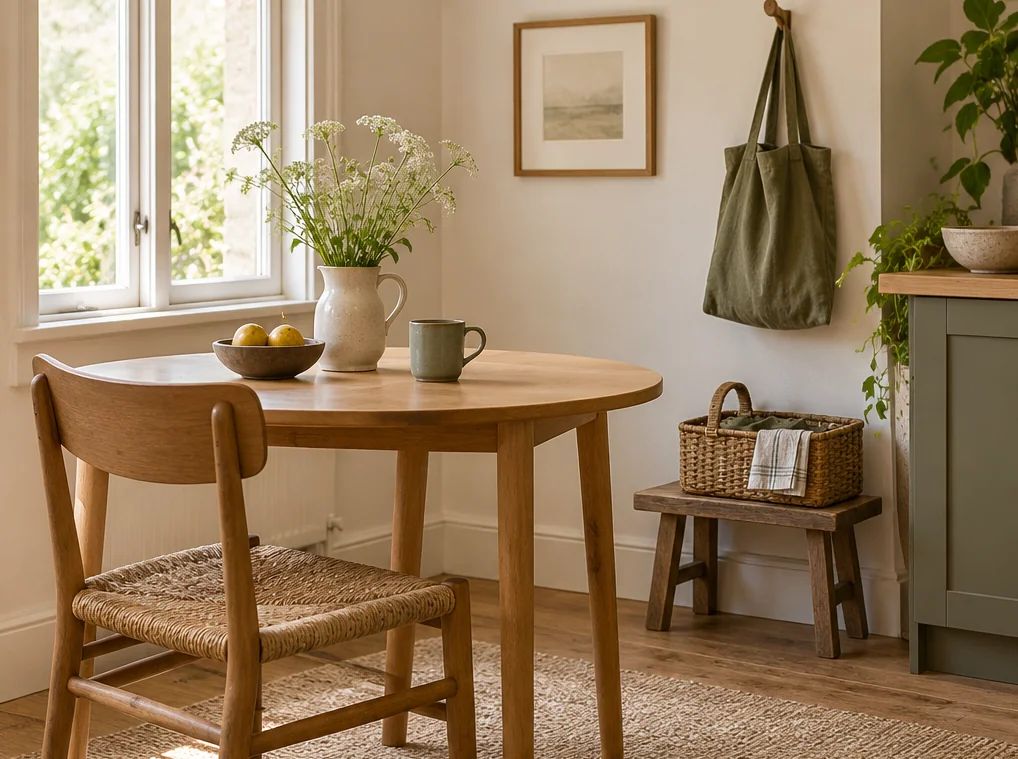
Small chair and glass of water beside a bright morning window
Open the curtains or blinds when you get up, where privacy and circumstances allow. If you have an outdoor journey or a safe place to step out, give yourself a moment to notice the conditions before rushing into the next task. Daylight is one of the everyday sleep-habit recommendations in NHS guidance, but you do not need a complicated light-exposure protocol.
In a dark winter morning, turn on the light you need to move around safely and get ready. Do not wait for a picturesque patch of sunshine or use a dim room as a test of discipline. If you sleep during the day because of shift work, adapt light and darkness around your sleep schedule instead of copying a conventional morning routine.
Attach this habit to an existing action, such as walking into the kitchen. Put the curtain cord or lamp switch within comfortable reach. The useful change is noticing that the waking part of the day has started, while keeping the practical needs of the household in view.
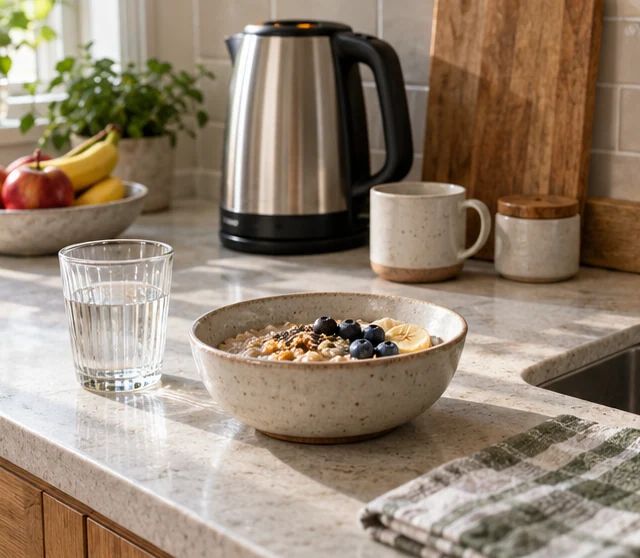
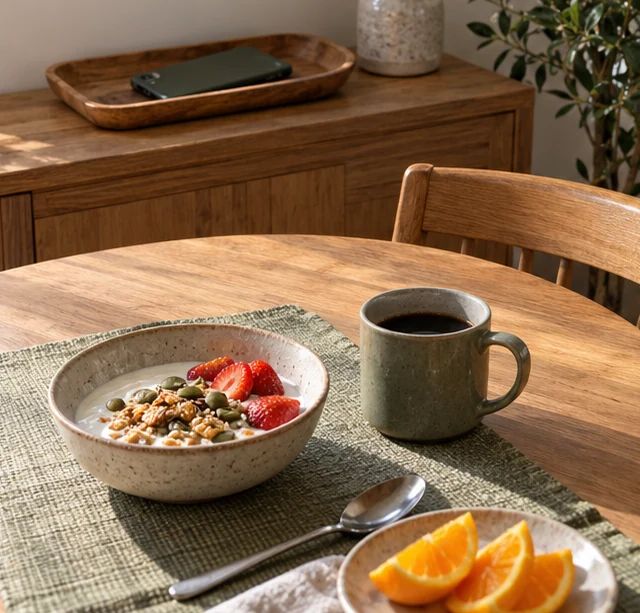
Simple breakfast bowl and glass of water set ready in a modest morning kitchen.
Identify the small omission that regularly sends you back upstairs or out of the door in a hurry. It might be finding your glasses, filling a water bottle, eating something that suits you or taking prescribed medicine at its usual instructed time. Put that essential near the beginning of your existing sequence.
Choose a practical setup the night before. Set the clean cup beside the kettle, keep the breakfast ingredients together or return glasses to one safe place. Follow normal food-storage and medicine-storage instructions rather than leaving everything on display. This is about making the right item easy to find.
Do not add every desirable habit at once. If breakfast tends to become an elaborate decision, use a familiar option on workdays. If the problem is a missing bag, solve its storage rather than adding ten minutes to the alarm. The most useful morning improvement often happens in the layout of the evening before.
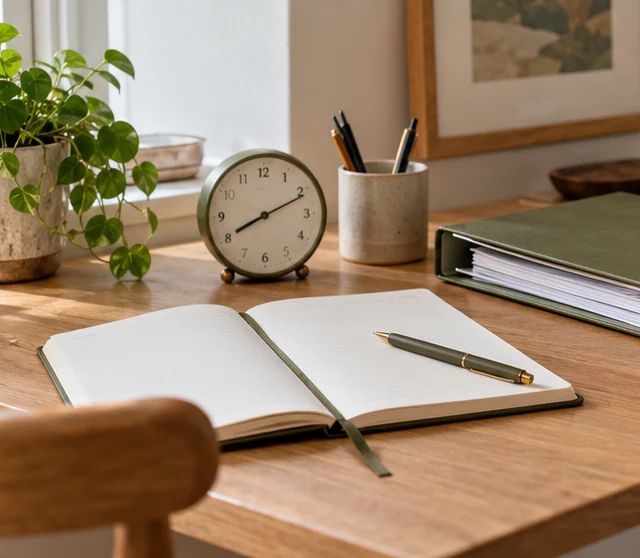
Open blank planner, analog clock and one work folder on a bright desk.
Look at the actual commitments for the day before opening a long to-do list. Check times, locations, necessary materials and travel. Then choose one meaningful starting task for the next flexible period. Write an action you can recognize, such as email the repair request or draft the first paragraph, rather than catch up on everything.
Separate fixed responsibilities from optional ambitions. A medical appointment, school collection and an urgent deadline may already fill the day. A sensible priority might be preparing for one of them, with no additional improvement project. Leave some room for delays when the schedule depends on other people.
If a page of planning expands into avoidance, stop after a few lines. The NHS recommends making helpful routines accessible and workable for the individual; it does not require a beautifully organized notebook. A short note on a phone is enough. For a broader look ahead, move the planning to a brief weekly reset instead of repeating it every morning.
Phone face down on a shelf while breakfast waits at a table nearby.
Choose when to check messages based on your responsibilities. If you need work updates, travel changes or contact from someone you care for, check those channels deliberately. Where possible, leave unrelated feeds until after you have completed the first essential action. The distinction is between information you need now and information that can wait.
Make the boundary concrete. Charge the phone away from the breakfast plate, put a timer on a short check or open the relevant message thread directly. Keep emergency and accessibility functions available. A blanket phone ban may be impractical; a useful limit accounts for how you actually use the device.
Observe the result for a few mornings. If the boundary creates more checking or anxiety about missed information, adjust it. You might need one short message check before breakfast and another at a predictable time. Treat the arrangement as a practical experiment, without claims that avoiding a screen will guarantee concentration or a better mood.
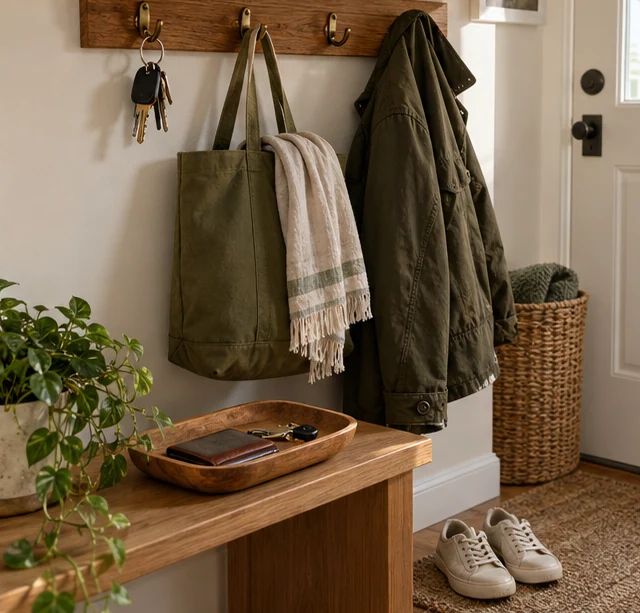
Keys, reusable bag and coat together in a small entry departure station.
Choose a few essentials that match the day: keys, phone, necessary medication, wallet or travel pass, and any specific paperwork. Check them at the same point, perhaps before putting on your coat. Keep the list short enough to remember and store the items where the check naturally occurs.
For a family, give each person an age-appropriate part of the sequence. One child can put a water bottle in a bag while another checks a book folder. Where support is needed, a simple picture or written checklist can be more useful than repeated instructions across several rooms. Leave enough time for the actual people involved.
If you work at home, use a start-of-work check instead: water nearby, required file open, first task visible. End the household preparation at a clear point so it does not spread into the working morning. If things regularly go missing, revisit the storage system around the doorway or desk; a repeated search usually deserves a practical change.
Try one habit that removes a real source of friction, then watch what happens on an ordinary day. Keep it if it helps, simplify it if it becomes a chore and allow rushed mornings to use a smaller version. A routine should remain useful when life is busy.
Build an evening routine for better rest with five gentle habits around preparation, quieter activities and bedroom comfort, adapted to your actual schedule.
Use seven simple living tips to reduce everyday friction, make more deliberate choices and shape manageable habits around the life and responsibilities you have.
May we use Google Analytics cookies to understand visits and which ideas readers find useful? It is optional. You can change your choice below at any time. Privacy details