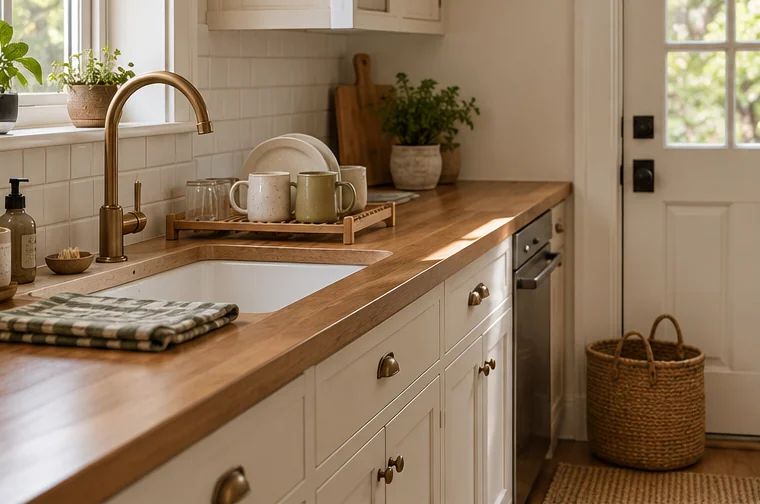
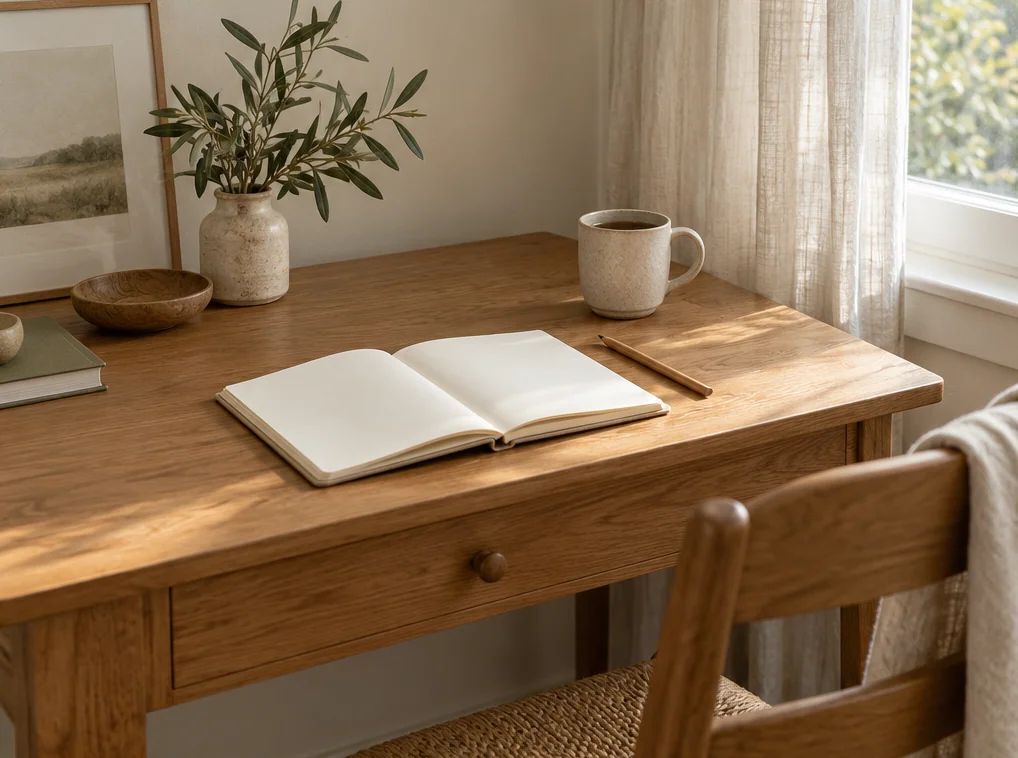
Use seven simple living tips to reduce everyday friction, make more deliberate choices and shape manageable habits around the life and responsibilities you have.
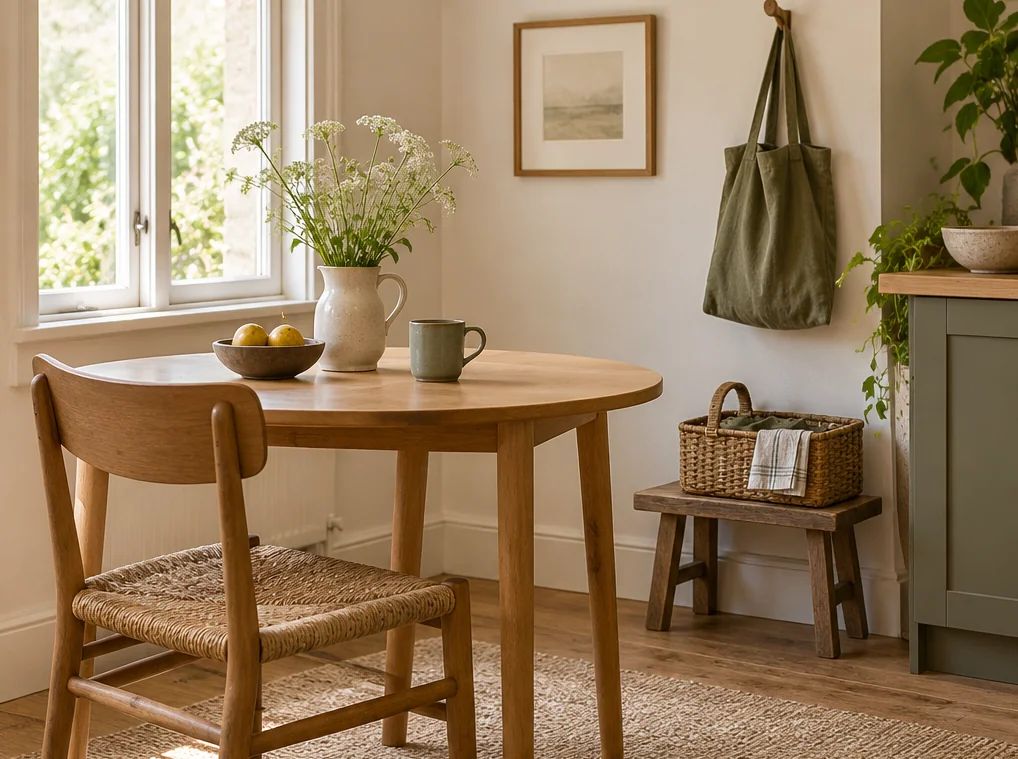
Woven basket and reusable shopping bag beside a small oak table
Simple living tips become useful when they reduce a specific demand on your time, money or attention. You do not need an empty house or an entirely new way of living; begin with one ordinary habit that makes the week easier to manage.
The habits below start with the commitments and belongings you already have. They leave room for a full household, an irregular job and interests that do not fit into a neutral storage basket. Choose one recurring source of friction, make a modest change and see whether life becomes easier to manage. An intentional choice can be to keep something, ask for help or spend money on a genuine need.
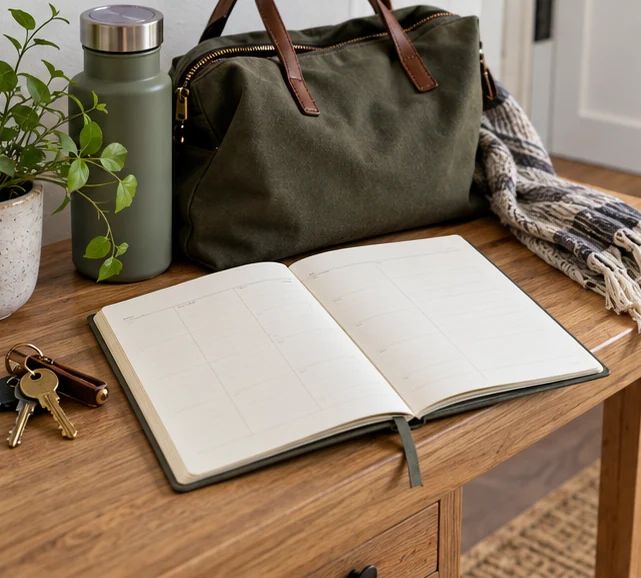
Open blank weekly planner beside packed work bag and household keys.
Before accepting something optional, look beyond the time of the event itself. Include preparation, travel, cost and the time needed afterward. A one-hour appointment across town might occupy most of an afternoon. Put those surrounding parts on the calendar before deciding whether the invitation fits.
Use a simple response when you need time: let me check and get back to you tomorrow. Then follow through. This creates room for an actual decision without requiring a dramatic explanation of your priorities.
Keep flexibility for things that matter to you, including spontaneous company. The aim is a calendar that reflects your circumstances. If most commitments are fixed, look for one adjustable task rather than treating a crowded week as a personal failure.
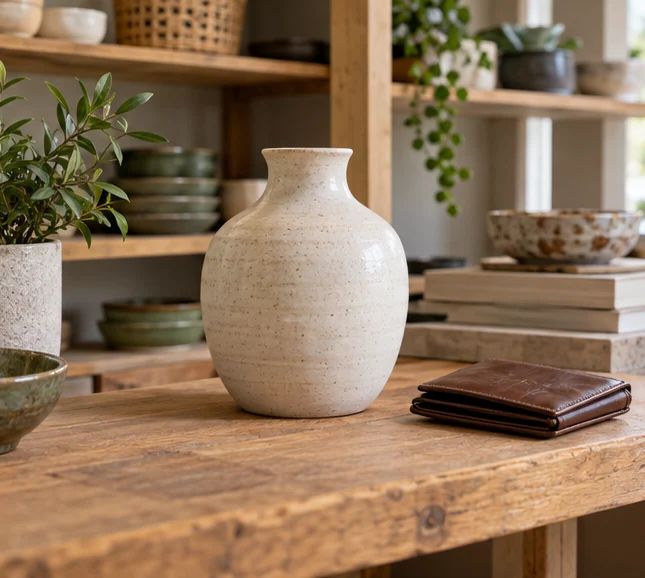
Potential purchase represented by a plain ceramic vase left on a shop-like wooden display with a closed wallet nearby.
Write down the item, the problem it would solve and where it would live. Revisit the note after an interval that suits the purchase. A small decorative object might wait a few days; a major item needs more thought. Essentials and urgent replacements do not need an arbitrary delay.
Before buying an organizer, check whether reducing the category or moving its existing storage would solve the problem. Before buying a kitchen appliance, consider its setup, cleanup and storage as well as the task it performs.
The waiting list is a decision aid, not a ban. If the need remains, choose with clearer requirements. If the desire disappears, remove the note without replacing it with another search. No numerical saving or universal waiting period is necessary for the habit to be useful.
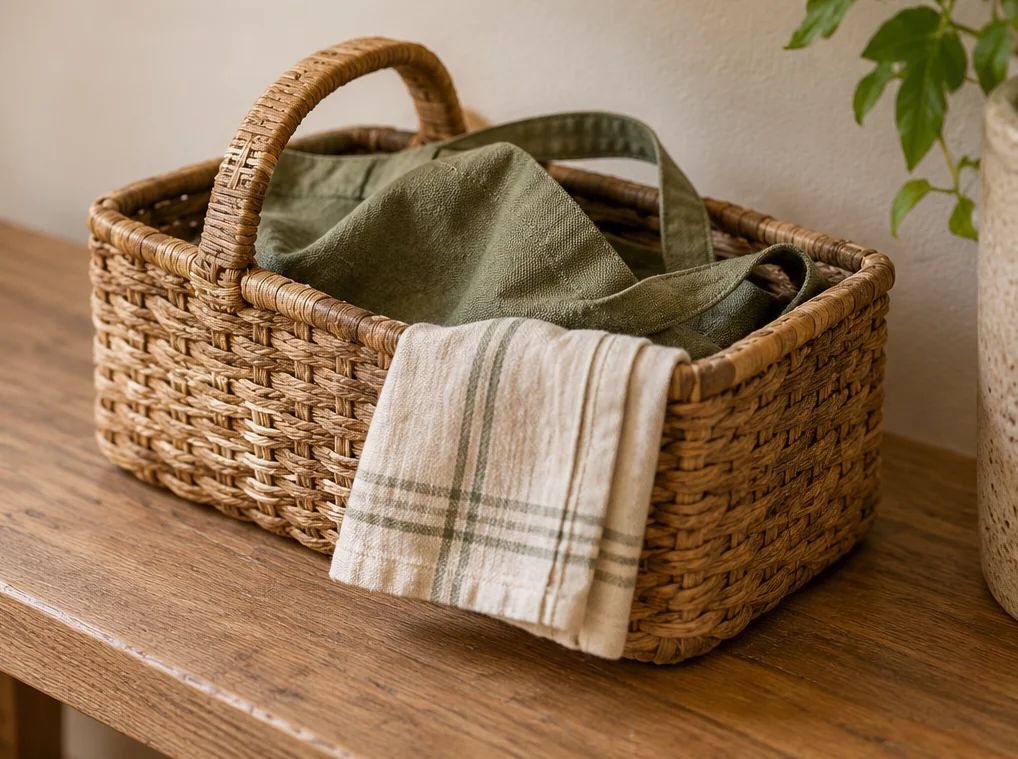
Cloth shopping bag and cotton napkin in a small basket
Choose a handful of things whose condition affects ordinary life: shoes, a frequently used bag, a kettle or a door that sticks. Put the next useful action on a realistic list. Clean according to the care instructions, arrange a suitable repair or find the missing part.
EPA’s waste guidance puts reducing, reusing and repairing ahead of discarding and replacing where practical. Start with safe, manageable maintenance. Electrical repairs and unfamiliar mechanical work may need a qualified person; keeping something in use does not mean improvising beyond your ability.
Limit the repair queue so it does not become another storage problem. If a repair is unsuitable, unavailable or more costly than a sensible replacement, decide its next destination. A clear decision is more useful than keeping an unusable object indefinitely because it might one day be fixed.
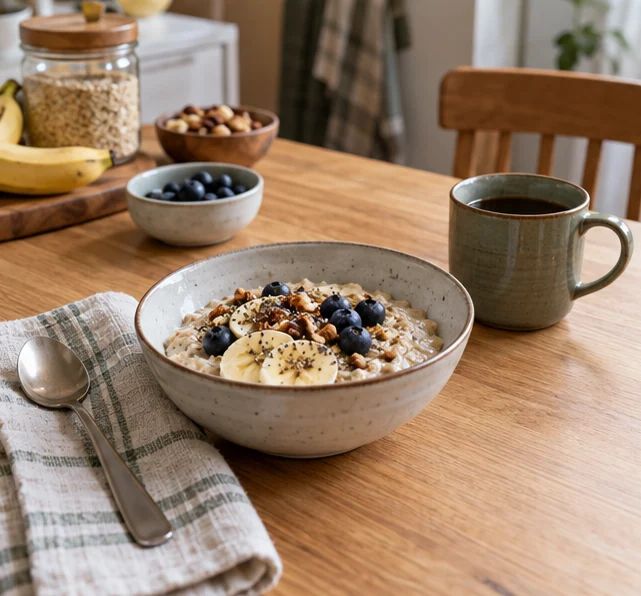
Repeated simple breakfast setting with oats, fruit and the same everyday cup.
Choose familiar defaults for situations that repeatedly drain time. Keep two easy weeknight meals, a usual place for important papers and an uncomplicated workday outfit combination. Repetition can save you from rebuilding small decisions when you are tired.
Use defaults where they help, while keeping choice where you enjoy it. Someone who likes cooking may want variety at dinner and a repeat breakfast; someone else may prefer the reverse. The useful question is which decision you are glad to stop remaking.
Write down the fallback rather than expecting to remember it under pressure. A small list inside a cupboard can hold meals you can make from ordinary staples. The weekly reset is a useful time to check whether the necessary ingredients and clean clothes are actually available.
One chair facing a window with a paperback and no electronic devices.
Choose a brief, ordinary moment to give one activity your attention: drinking tea, walking to the shop, reading a few pages or talking with someone at home. Put aside unrelated input where practical. This can be a few minutes; it does not require a silent house.
Give the moment a natural boundary. Read until the next heading, finish the drink or walk one section of a familiar route. A defined interval is often easier to fit around responsibilities than an open-ended intention to be more present.
Notice what makes the activity agreeable or difficult, without demanding a particular feeling. If the phone is needed for accessibility or care, keep it available. The choice is about what is useful in that moment, rather than proving you can avoid all technology.
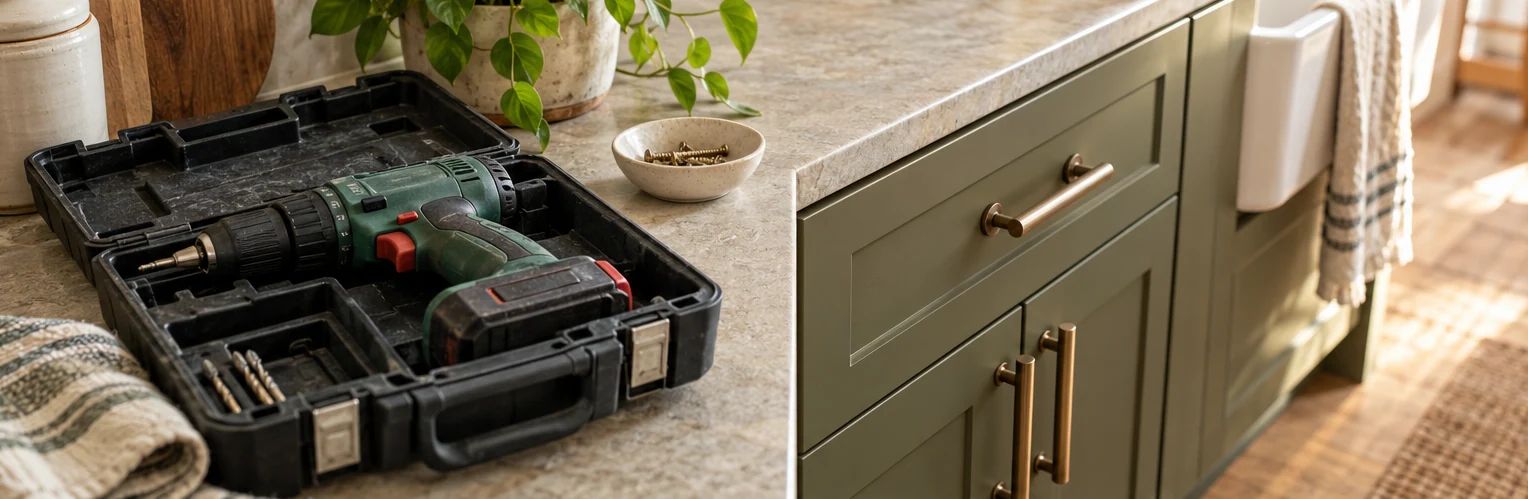
Borrowed household drill in a plain tool case beside a repaired loose cabinet handle.
For occasional equipment, check the library, a community tool scheme or a willing friend before buying. Borrowing can suit a once-a-year hosting item or a tool needed for one repair. Confirm the item is appropriate, safe and available for the period you need it.
Agree on return arrangements, care and replacement responsibility. Bring it back clean and complete. Sharing should not depend on someone else repeatedly managing your belongings or chasing you for theirs.
Buying is still sensible for something essential, frequently used or difficult to borrow reliably. Include transport, accessibility and timing in the decision. EPA lists borrowing and sharing as ways to reduce waste; whether the arrangement simplifies your particular life depends on the practical details.
One small household shelf reviewed with three useful objects retained and open space around them.
At the end of a week or month, ask what was repeatedly awkward and what worked without much effort. Choose one example of each. A bag by the door may have helped; an elaborate meal planner may have gone unused. Keep the evidence close to ordinary events.
Make one adjustment rather than announcing a complete reset. Move the laundry basket, shorten the shopping list or remove a recurring commitment that no longer fits. If no change is needed, the review can end there.
A journal can hold this reflection without becoming another reporting task. Try one of the prompts for intentional living when the answer is unclear. Return later to see what changed, and allow the system to evolve with the season and the people using it.
Choose the habit with the clearest practical benefit this week. The aim is a little more room for what you value, measured in easier decisions and usable time rather than fewer possessions or a more impressive routine.
Seven small space organization ideas built for everyday use, with practical storage choices, access rules and simple ways to prevent clutter returning.
Use seven journal prompts for self-reflection to connect everyday choices with your values. Explore attention, boundaries and enough without adding another quota.
May we use Google Analytics cookies to understand visits and which ideas readers find useful? It is optional. You can change your choice below at any time. Privacy details