7 Journal Prompts for Self-Reflection and Intentional Living
Use seven journal prompts for self-reflection to connect everyday choices with your values. Explore attention, boundaries and enough without adding another quota.
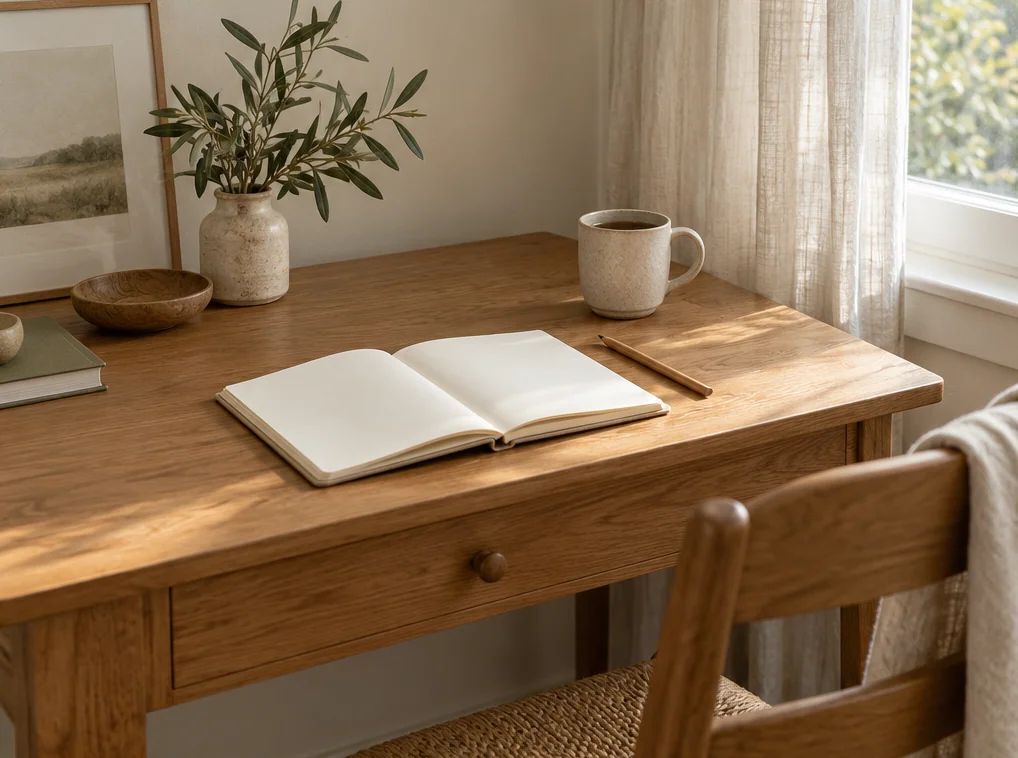
Open blank journal, pencil and ceramic mug on a small wooden desk
Journal prompts for self-reflection become more useful when they refer to something you can remember: a conversation, a purchase or the way Tuesday evening disappeared. These seven questions connect those ordinary moments to intentional living, rather than asking you to describe an ideal life in the abstract.
Use these seven prompts to examine one ordinary week. Choose a single question, write for a few minutes and stop when you have said something specific. You can use a notebook, a voice note or a private document. These are original reflection exercises, not diagnostic questions, and no answer needs to become a goal.
The NHS distinction between values and goals is helpful here: values describe an ongoing way of living, while a goal is a particular thing you can complete. The prompts move between the two so that a stated value has somewhere to show up in daily life.
Blank cream journal, pencil and smooth stone on an oak desk
Choose a scene from the last few days rather than an impressive milestone. You may have listened closely to a friend, repaired something or eaten lunch without rushing. Describe where you were, what you were doing and what was absent from the moment.
Look for its practical conditions. Perhaps the phone was in another room, the task had a clear finish or someone else was handling a responsibility. Identify one condition you might repeat. If no moment comes to mind, write about where your attention was needed most and what kept interrupting it. That is useful information too.
Walking shoes and a picnic cloth by a door representing time given to an important relationship.
Name one value in plain language: generosity, curiosity, fairness, dependability or something else that means something to you. Find a specific action from the week that expressed it. Calling a relative, making room for another person’s opinion or taking care of a borrowed item can all be evidence.
Then consider where expressing that value was difficult. Stay with circumstances rather than judging your character. You may have lacked time, money, information or support. Finish by describing a small expression of the value that fits your present capacity. A value can remain important even when the current version of it is modest.
Open blank calendar and a single invitation envelope beside a closed work bag.
Think of an optional commitment that occupies your time or attention. Write down why you originally accepted it and whether those reasons still apply. Separate genuine responsibility from habit, fear of disappointing someone or an expectation that was never discussed.
You do not need to cancel it immediately. Explore a smaller role, a different frequency or a clear end date. Include who would be affected and what a considerate conversation would involve. If the commitment remains worthwhile, explain why you choose it now. Renewing an intentional yes can be as useful as finding a no.
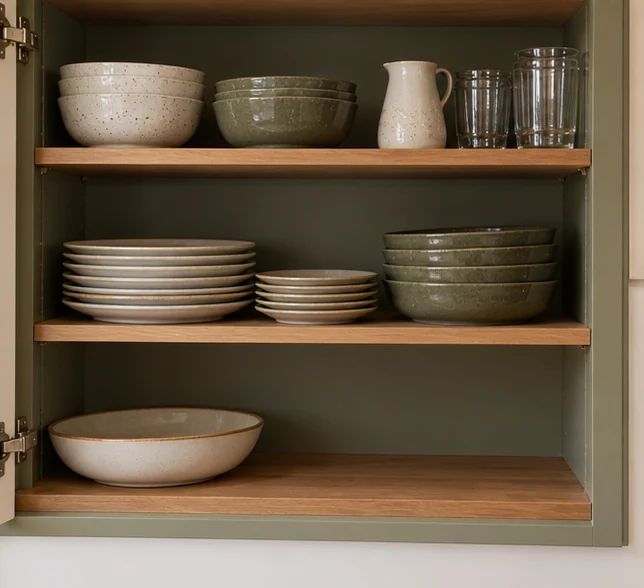
Small cupboard holding just enough everyday plates with empty shelf space remaining.
Choose a bounded area: hosting, clothing, exercise equipment, online reading or a household project. Describe a useful stopping point. For hosting, enough might mean seats, food that suits the guests and a clean bathroom, without repainting the dining room first.
Notice where the imagined standard came from. Is it your own preference, a practical requirement or something repeatedly seen in other people’s lives? Keep the elements that serve you and question the rest. Write a sentence you could use while making the next decision: for this month, this is sufficient because. The reason matters more than a minimal-looking result.
Modest work table beside a child's small bag showing real limits on time and space.
Describe a recurring frustration as factually as you can. Include work hours, travel, health, caring responsibilities, budget or limited space where relevant. Avoid starting with lazy, disorganized or bad at. Write what actually happens, such as arriving home after the shops have closed.
Ask which part is changeable and which part needs accommodation. A different shopping day may help; another demand on an already full evening may not. Name any support that would make a difference, even if it is not currently available. This entry does not need a neat solution. Recognizing the real constraint can keep the next decision realistic.
Two comfortable chairs facing each other across a small table without screens.
Choose one relationship rather than writing about being a better person in general. Recall a recent interaction and describe the moment you felt connected, distracted, helpful or unsure. Consider what the other person actually asked for, alongside what you assumed they needed.
Write about a manageable way to be present: remembering an important date, making time to listen or being clear about when you are unavailable. Include your own boundaries. Dependable company does not require constant access. If a conversation is needed, note the first sentence rather than scripting the other person’s response or deciding their feelings for them.
One seedling being planted into a small pot on an apartment window ledge.
Return to one earlier entry and identify something you can test. State the action, the situation and a review point: put the library book beside the chair and read after lunch for a week, for example. Choose an experiment small enough to fit an unremarkable day.
Decide what would count as useful evidence. You might notice whether you reached for the book, whether the timing was awkward or whether another activity suited you better. Leave room to stop or change the experiment. Your journal is a place to learn what fits, rather than a collection of promises to hold against yourself.
After writing, underline one sentence that feels accurate. It may describe something to protect rather than something to improve. If an action would help, choose one; if you need practical starting points, the simple living habits connect reflection with everyday decisions. To try one change at the start of your day, the calmer morning habits offer a few modest experiments.
Use seven simple living tips to reduce everyday friction, make more deliberate choices and shape manageable habits around the life and responsibilities you have.
Seven January journal prompts for a thoughtful fresh start, helping you carry forward what works, recognize your capacity and choose a small next step.
Explore seven gratitude journal prompts for everyday life, with specific observations, practical examples and room for mixed feelings on difficult days.
May we use Google Analytics cookies to understand visits and which ideas readers find useful? It is optional. You can change your choice below at any time. Privacy details