Explore seven gratitude journal prompts for everyday life, with specific observations, practical examples and room for mixed feelings on difficult days.
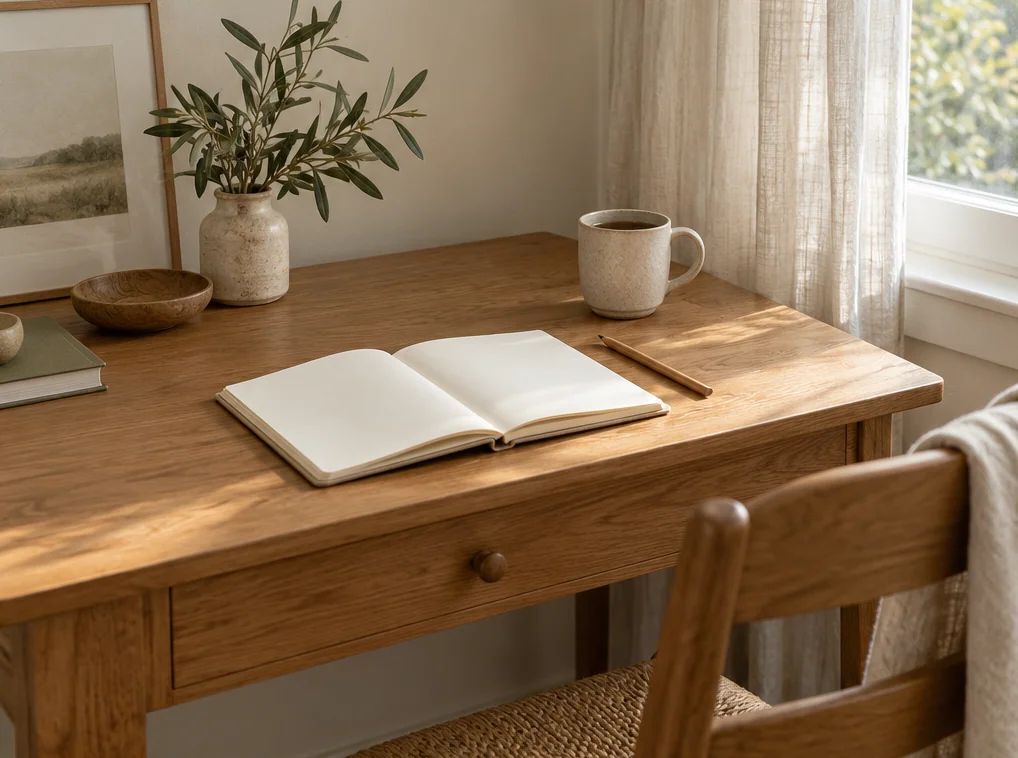
Blank notebook and tea cup on a small kitchen table in afternoon light
Gratitude journal prompts work best when they help you notice something particular in everyday life. A list of family, home and health may be sincere, but repeating the same broad words can leave the actual day unrecorded.
Choose one of these seven prompts and describe a scene, a detail or a practical difference. There is no requirement to find a lesson in something painful or to feel cheerful afterward. Appreciation and disappointment can sit on the same page.
Greater Good in Action, based at UC Berkeley, recommends specificity and depth in gratitude writing. These original prompts use that approach without prescribing a daily quota. Write when the exercise feels useful, and leave it alone when another kind of reflection would fit better.
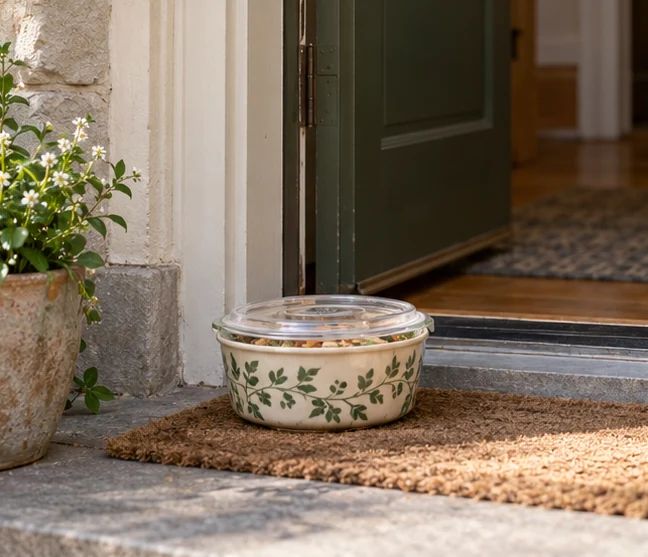
Covered bowl of home-cooked food left beside a neighbor's doorway.
Think of an interaction that might disappear from memory: someone leaving you a seat, explaining something patiently or checking the details of a shared plan. Describe the action and the moment around it. Keep the focus on what the person actually did rather than a general statement that they are wonderful.
Write how the moment might have gone without that help. You do not need to exaggerate the difference; avoiding a few minutes of confusion can be enough. If you want to thank the person, keep it specific and proportionate. The journal entry itself does not create a duty to contact them.
Plain mug, blank journal and linen napkin in afternoon light
Choose something you already own: a sound umbrella, a sharp kitchen knife, a comfortable pair of shoes or a lamp beside a chair. Describe its use in a real scene. What did it make possible or more comfortable? Notice function as well as appearance.
Consider the care, labor or decisions behind the object without turning the entry into a product review. It may remind you to mend, clean or keep using something familiar. Appreciation does not require defending every purchase you have made. An imperfect object can still have served you well in one part of the day.
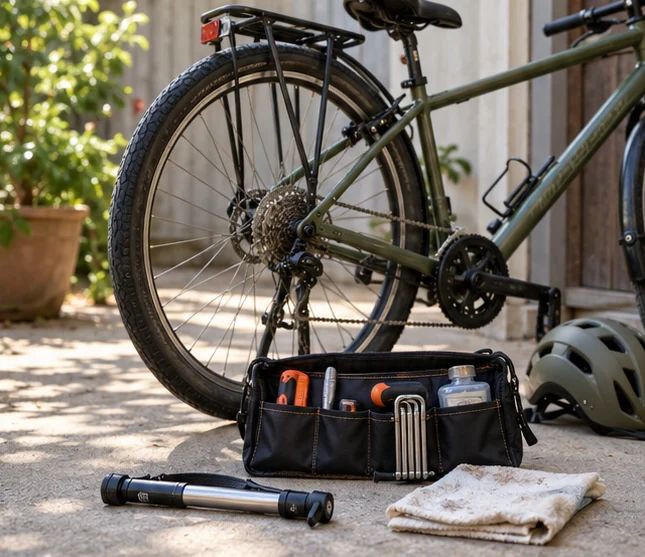
Hands-free still life of a bicycle with repair tools packed away after learning a repair.
Choose a small skill you used recently: navigating a route, making a reliable meal, asking a clear question or handling an unfamiliar form. Recall an earlier stage when it felt more difficult. Record the specific action that is easier now, without comparing your progress with someone else’s.
Name the people, tools or repeated attempts that contributed. You can appreciate your own work and the support behind it at the same time. If the skill still feels uncertain, describe the part you have learned rather than claiming mastery. This is a record of something present in your life, not a requirement to keep improving it.
Welcoming public library interior with bookshelves and reading chairs, no visible signs.
Think about a library, a bus route, a maintained path, a public bench or a community space. Describe the particular use you made of it. The useful detail might be a dry place to wait or a quiet table available without buying anything.
Consider the people whose work keeps the place usable. Appreciation can include recognizing limitations: the route may be infrequent or the building hard to access. Write what helped and what would make it work better. Gratitude does not require treating an imperfect service as beyond criticism or overlooking who is excluded from it.
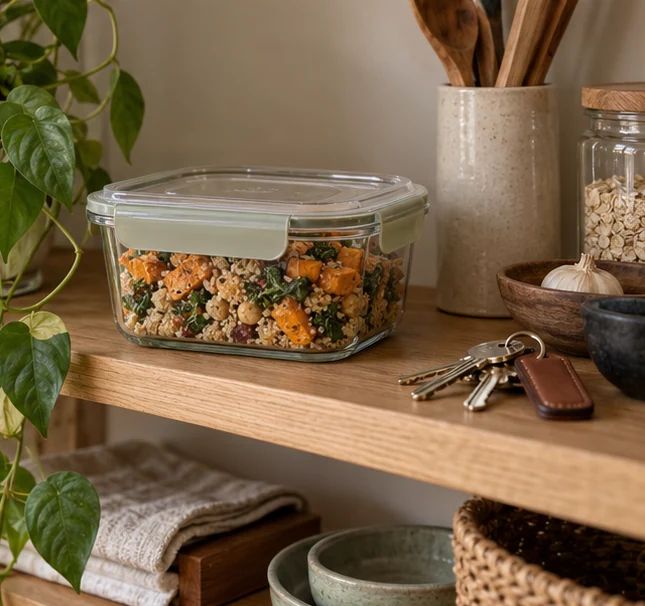
Lunch container and keys prepared the previous evening on a kitchen shelf.
Look for a modest preparation: food frozen last week, a bill dealt with, a spare key returned or a conversation you finally arranged. Describe the moment when that earlier effort became useful. This gives routine maintenance a place in the record.
Be fair about the circumstances that made the preparation possible. You may have had help, time or resources that are not available every week. Appreciate the benefit without turning it into a rule you must always meet. If nothing comes to mind, choose someone else’s earlier work that supported you today, or leave this prompt for another occasion.
Unexpected winter sunshine across an ordinary breakfast table with fruit.
Choose a small, concrete surprise: a queue that moved quickly, a conversation that felt easy or an ingredient that made a familiar meal more interesting. Write the expectation first, then the event. The difference may be slight; you do not need a dramatic reversal.
Describe one sensory or practical detail so the memory remains distinct. Avoid rewriting a genuinely difficult experience into a success story just to fill the page. If the day held no pleasant surprise, it is fine to say so. Another prompt may offer a more honest entry, or the notebook can simply close.
A warm meal beside a rain-speckled window, with walking boots by the doorway.
Choose one part of a mixed day that you would like to remember: a warm lunch during a frustrating shift, a kind message after disappointing news or a few quiet minutes in a busy home. State both parts plainly. The appreciation does not cancel the difficulty.
Write why the moment mattered in that context. It may have offered practical help, familiarity or a brief change of attention. You do not need to explain why the hard thing happened or be grateful for it. End with the detail you want to keep, allowing the rest of the day to remain complicated.
A useful gratitude entry preserves something you might otherwise forget. Keep it precise, allow it to be small and skip any prompt that asks more of you than it offers. For a different kind of page, the intentional living prompts make room for choices, limits and unresolved questions. If writing fits best at the end of the day, pair one question with a stopping cue from the gentle evening habits.
Use seven journal prompts for self-reflection to connect everyday choices with your values. Explore attention, boundaries and enough without adding another quota.
Use seven fall journal prompts to reflect on attention, commitments and the pace of autumn. Choose one original question and write about a specific everyday moment.