Chair by a winter window with a wool blanket, mug and open notebook
Useful winter self-care ideas fit the day you have, including the one with an early commute, a tight budget or very little energy. Comfort might mean a warm lunch prepared before you are hungry, a reliable lamp beside the chair, or a short conversation with someone you miss.
Choose from these seven ideas rather than turning them into a daily checklist. Some suit a quiet afternoon; others take a few minutes between necessary tasks. They are ordinary ways to make the colder months more agreeable. They do not need a new set of products or an elaborate seasonal routine.
Winter coat, gloves and sturdy shoes ready beside a doorway opening toward a daylight walk.
Look for a realistic daylight window in your existing day: walking part of an errand, eating lunch outdoors when conditions allow, or stepping outside before an afternoon shift. Have the coat and suitable shoes ready so the decision is easier when the time comes. If leaving home is difficult, choose a comfortable place by a window for a change of scene.
NHS winter wellbeing advice includes seeking daylight and keeping a flexible daily rhythm. You do not need to turn the outing into a distance goal. Notice a tree, the state of the sky or a familiar street in different light. In poor weather, prioritize safe footing and your circumstances over maintaining a streak.
Bowl of hearty winter soup and bread beside one shallow extra-portion container.
Choose a meal you like eating and can prepare with the equipment you have. Soup, porridge, baked potatoes or a simple rice dish can be reassuringly familiar without requiring a weekend of cooking. Make one extra portion if that is manageable, and put bread or another useful accompaniment on the shopping list.
If you cook ahead, package and refrigerate food promptly in shallow containers, following reliable local food-safety guidance. Date it and plan when to eat it; the freezer is useful for portions intended for later. The five cozy soup recipes offer different textures and ingredients, so choose the one that suits your cupboard rather than making all five.
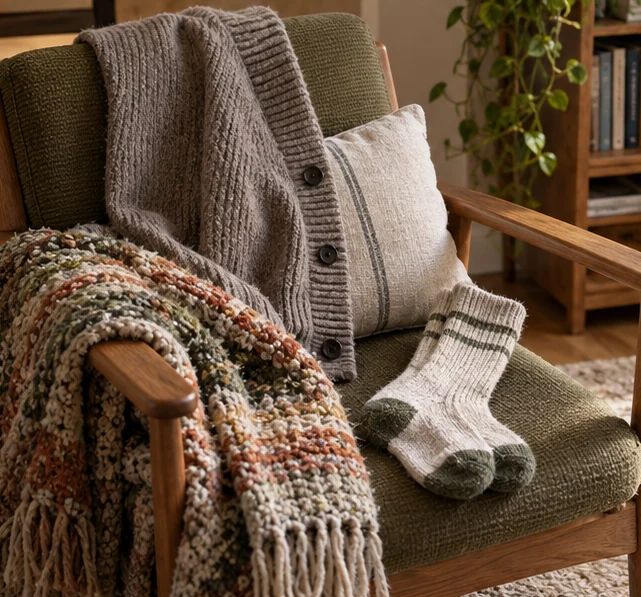
Comfortable cardigan and dry wool socks on a chair with a familiar throw within reach.
Keep a comfortable layer, dry socks and a familiar throw where you will actually use them. Wash or mend the things you already own before shopping for replacements. A cardigan that is easy to reach can be more useful than a carefully styled basket of blankets across the room.
Treat comfort as personal. Some people prefer a light cotton layer; others want a heavier knit. Check care labels and leave any powered heating product to its manufacturer’s instructions. You can make a chair more pleasant with a cushion that supports your own seated position, without adding objects that make the room difficult to clean or move through.
Ceramic mug, folded blanket and closed book on a small wooden table
Set aside a small, plausible interval: the fifteen minutes after lunch, an early evening break or part of a day off. Choose what rest means in that moment. It may be sitting quietly, listening to an album, reading a familiar chapter or looking out of the window. It does not have to produce a completed book or a better version of yourself.
Make the time easier to protect by being specific about when it ends and what comes next. A timer can help if you are watching the clock. If lying down during the day interferes with nighttime sleep, choose seated leisure instead. When evenings are unsettled, the gentle habits for better rest offer practical starting points.
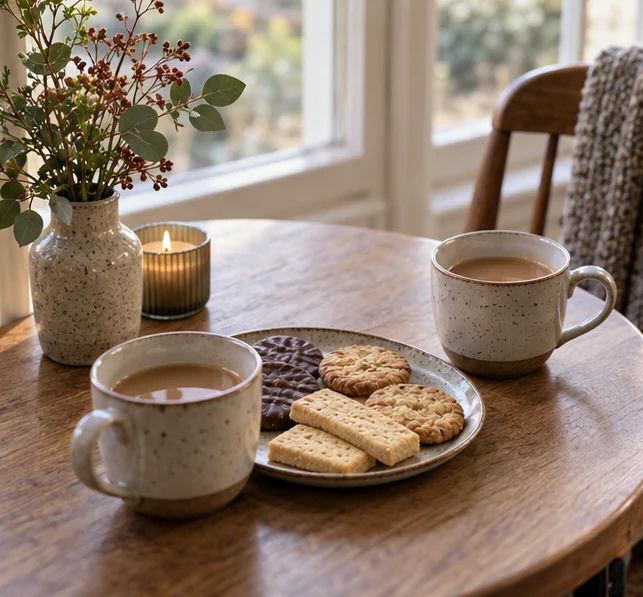
Two cups of tea and a modest plate of biscuits across a small table for company.
Choose one person and suggest a specific, modest way to connect: a short call after dinner, a shared lunch, or a walk on a route both of you can manage. If hosting, tea and something already in the cupboard can be enough. Avoid turning companionship into a meal-planning or house-cleaning assignment.
Offer room for the other person’s circumstances, and leave space in yours as well. A voice note can bridge a busy week without needing immediate replies. If your usual network is far away, look for an accessible library event or an existing local group that interests you. You can attend once without committing to a full calendar of activities.
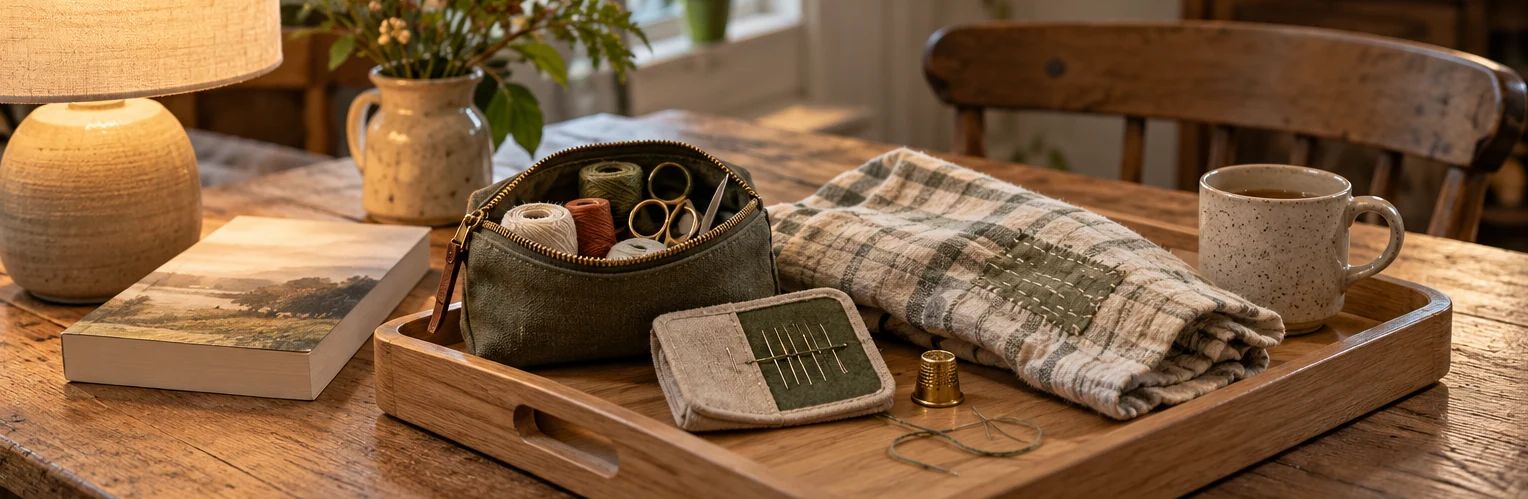
Small mending pouch, folded fabric and needle case on a portable hobby tray.
Put a low-setup activity where you can begin it comfortably: a paperback beside the lamp, a sketchbook with one pencil, or a small mending project in a pouch. Choose the version that fits your attention today. Sorting a few photographs or knitting a short section still counts as time spent with something enjoyable.
Keep the materials contained so the activity can coexist with everyday life in a small home. A tray that lifts off the dining table is easier to manage than supplies spread across its whole surface. Avoid buying for an imagined winter hobby before trying it. Borrowing a book or using spare materials is a useful first experiment.
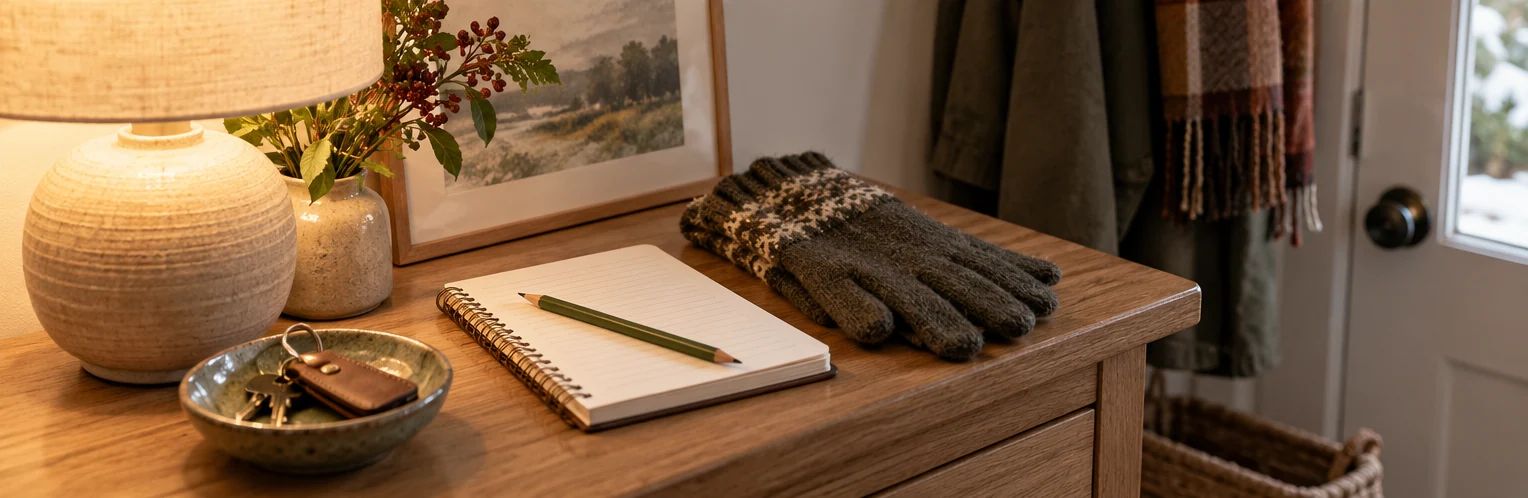
Small daily reflection notebook beside gloves and a lamp ready for the following day.
At a natural stopping point, write a few concrete observations. Which meal was easy? When did the room feel pleasant? What made leaving home harder than it needed to be? Include an ordinary disappointment if it matters. The purpose is to notice your preferences, not to produce a positive account of every day.
Choose one small adjustment for tomorrow only if a useful one emerges: put gloves by the door, move a lamp or ask someone about lunch. If you prefer a guided page, try a prompt from the everyday gratitude journal. Let the record stay brief enough that you can close the notebook and return to the evening.
Keep the ideas that suit your circumstances and leave the others. If low mood or sleep problems persist or affect everyday functioning, seek advice from a qualified healthcare professional; a more elaborate comfort routine is not the answer to every winter difficulty.
Make winter evenings more comfortable with seven practical decor ideas, from layered lamps and washable throws to curtains, rugs, and restrained greenery.
Build an evening routine for better rest with five gentle habits around preparation, quieter activities and bedroom comfort, adapted to your actual schedule.
Cook five easy cozy soup recipes: lentil-tomato, chicken-rice, potato-leek, white bean-kale and carrot-ginger, with quantities, substitutions and storage.
May we use Google Analytics cookies to understand visits and which ideas readers find useful? It is optional. You can change your choice below at any time. Privacy details