Make winter evenings more comfortable with seven practical decor ideas, from layered lamps and washable throws to curtains, rugs, and restrained greenery.
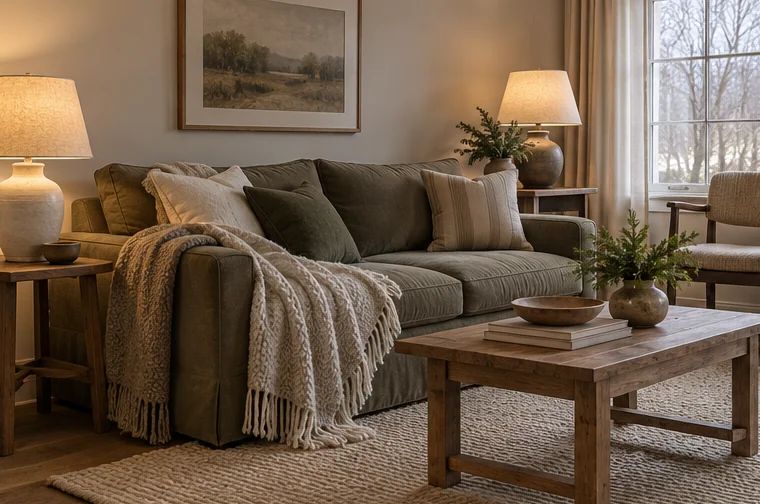
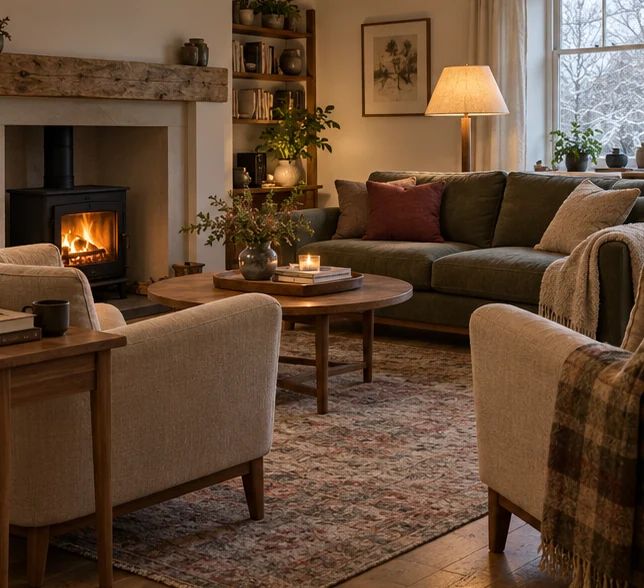
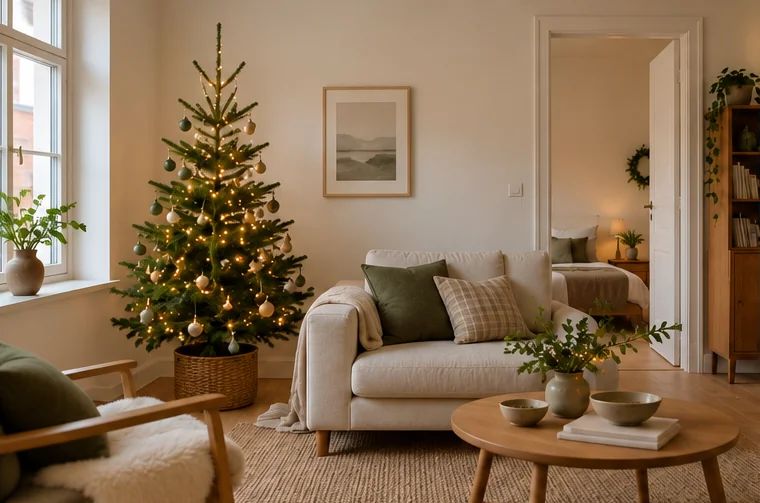
Winter sitting room with wool layers, olive cushion and shaded lamps
A room can be warm on the thermostat and still feel unwelcoming at four in the afternoon. A bare window turns dark, one ceiling light leaves hard shadows, and a decorative blanket sits too far from the chair where someone actually reads. The most useful cozy winter decor ideas address those ordinary frictions before introducing anything seasonal.
Start with the place where you spend the longest winter evenings; a comfortable small living room layout is a useful foundation. Sit there after sunset and notice the light, the floor under your feet, the reach to a drink, and the view toward the window. These seven changes build comfort around that experience. They suit January and February as well as December, with very little that needs its own storage box.
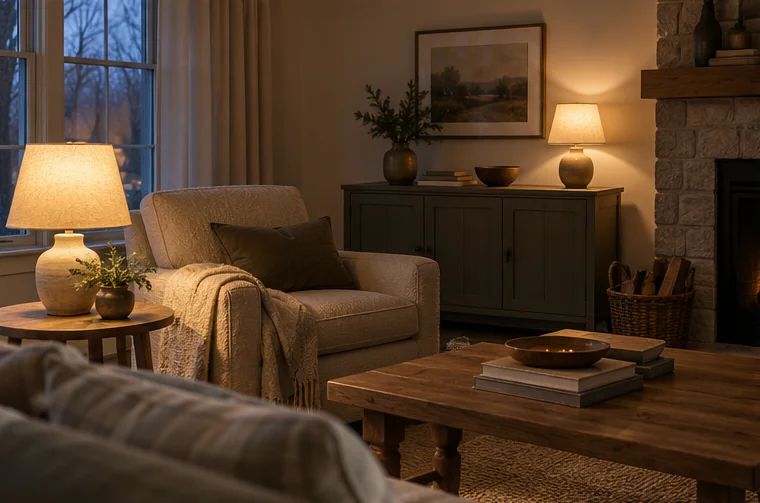
Place a reading lamp beside the seat you use most, then add a smaller shaded light across the room. Separating the sources gives the eye several comfortable points to settle on; it also avoids lighting the entire room at the intensity needed for a single task. A lamp beside a book needs a more directed beam than a lamp intended to soften a bare corner. Keep both purposes in mind before buying another shade.
Warm-white bulbs around 2700K are a useful starting point for a relaxed evening appearance, though brightness and shade material matter just as much. Read by the actual lamp before deciding it is sufficient. A dark linen shade may look attractive and deliver too little useful light. Use compatible dimmable bulbs only with suitable fixtures and controls, respect fixture wattage ratings, and route cords around furniture edges without crossing the walking path. A nearby switch is more useful than an elaborate lighting arrangement nobody turns on.
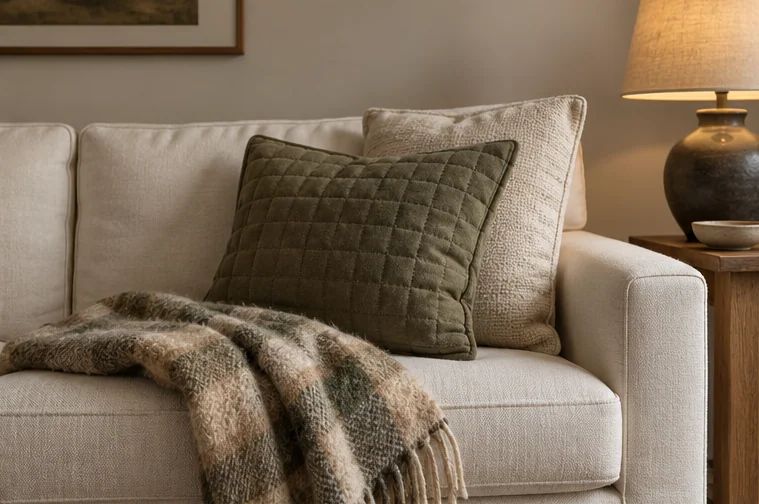
Wool throw and quilted cotton cushion on a cream sofa
Choose the throw for the person and the washing routine first. A tightly woven wool blend can feel substantial, while brushed cotton is often easier for frequent laundering; check the individual care label rather than relying on the fiber name. Very open chunky knits catch on rings, pet claws, and chair hardware. A long fringe may spend more time tangled than neatly arranged.
Fold a usable blanket over the arm nearest the usual sitting position, with enough of its weight supported that it stays put. If the sofa is shared, a second blanket can live in an open basket beside it, provided the basket does not narrow the route through the room. Two everyday cushions and one throw often serve a compact sofa better than six decorative pillows. Repeat a color already present in the rug or artwork so the added layer feels connected. Keep the rest of the seat available for sitting; softness loses its purpose when everything must be removed first.
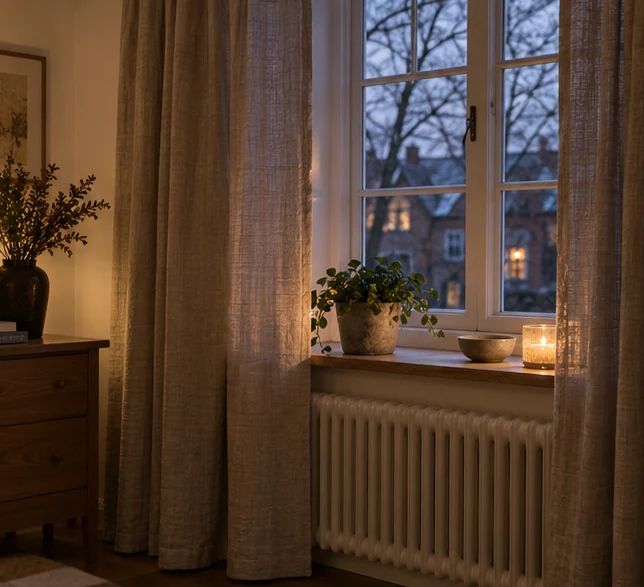
Winter curtains drawn at dusk above a clear window sill with radiator unobstructed.
Treat winter curtains as something you operate, not a permanent backdrop. On a sunny winter day, open coverings where the sunlight is helpful; close them as evening arrives. The Department of Energy includes this simple change in its home energy checklist. Actual performance depends on the window, covering, fit, and conditions, so a decorative panel should not be treated as a repair for persistent drafts or damp.
For a fuller appearance, check that existing panels can cover the glass without stretching flat. A lined fabric in oatmeal or mushroom gives more visual substance than a thin, bright-white sheer. Before replacing panels, inspect the track and consider whether a compatible lining is possible. Keep fabric clear of heaters according to their instructions, avoid covering vents, and check behind closed curtains for condensation. In a rental, report defective seals or persistent moisture. A darker textile can change the room’s atmosphere; solving a building problem requires a different response.
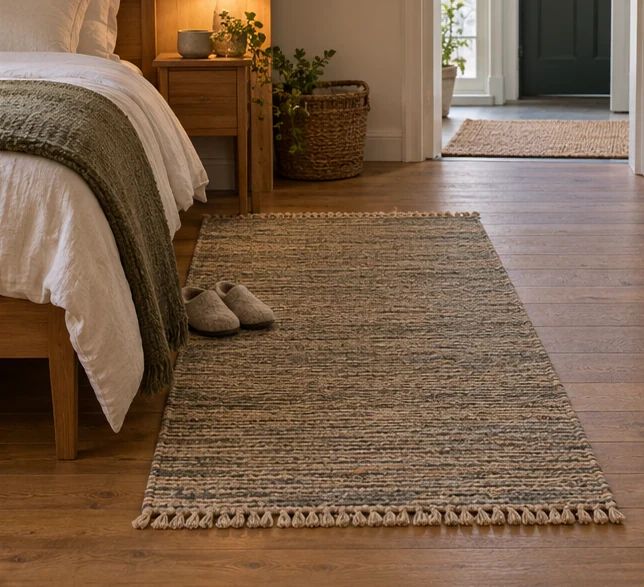
Flat woven wool rug beside a bed and washable mat at entry with edges lying flat.
Identify the places bare feet first meet the floor: beside the bed, in front of a favorite chair, or where you stand to make coffee. A textile at one of those points can be more useful than a large new rug chosen only for the center of a photograph. In the bedroom, a flat, washable runner may be easier to maintain than a deep pile that catches the door.
Measure the floor with doors open and furniture in use. Pair the rug with an underlay approved for the floor finish, then check that its corners lie flat and edges do not curl. Avoid stacking several small rugs along a narrow route. In a living room, moving an existing rug so the main seating pieces relate to it may improve the whole arrangement without another purchase. Texture is the seasonal contribution here: a woven surface or soft, low pile can feel winter-appropriate without snowflakes, slogans, or a separate seasonal color scheme.
Two armchairs closer to a compact sofa with a clear walking route around seating.
Winter often shifts attention from a bright window toward conversation, a book, or a shared film. Try angling a chair toward the sofa and moving its side table within easy reach. If furniture has drifted against every wall, a modest adjustment can make the center feel more settled. Use removable floor markers to record the old arrangement so the experiment stays easy to reverse.
Test the layout by carrying a laundry basket through the room, opening cabinets, and pulling out the seating. A closer conversation group is useful only if everyday movement remains comfortable for the people who live there. Keep furniture out of heater clearances, preserve routes to exits, and avoid turning a radiator into a display shelf. If there is no space to move the sofa, repositioning a lamp and side table may provide the same practical benefit. The aim is to support the way the room is used in winter, not to squeeze an extra armchair into it.
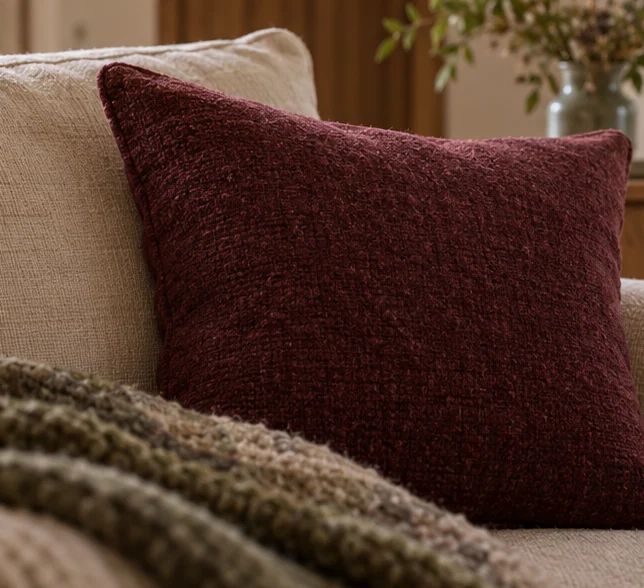
Close-up of deep burgundy wool cushion against plain oatmeal upholstery.
Choose a winter accent by looking at the undertones already in the room. Tobacco, olive, burgundy, and deep blue can all work; the right choice depends on the sofa, wood, and daylight. A cool-gray room may respond better to muted plum than bright orange. Hold a fabric sample beside the largest existing textile in daylight and under the evening lamps before committing.
Introduce the shade in one generous piece, such as a cushion cover or the folded end of a quilt, then echo it once on a nearby shelf. The repeated note makes the choice look deliberate without spreading a new color across every surface. Mix smooth and nubby finishes so a tonal scheme still has definition. Avoid buying a collection of tiny accessories merely because they match: they add dusting and storage without giving much visual weight. A richly colored textile can remain useful all year, which is a better purchase test than whether it looks seasonal in a shop.
Single evergreen branch in a ceramic vase on an oak sideboard
Use a single vase of identified greenery, a bowl of clean pinecones, or a bare branch with a shape that suits the room. One modest arrangement on a console makes a clearer statement than trailing foliage over every doorway. Obtain material legally, inspect it for insects, and choose plants with the household’s pets and children in mind. Unknown berries and cuttings do not belong within reach.
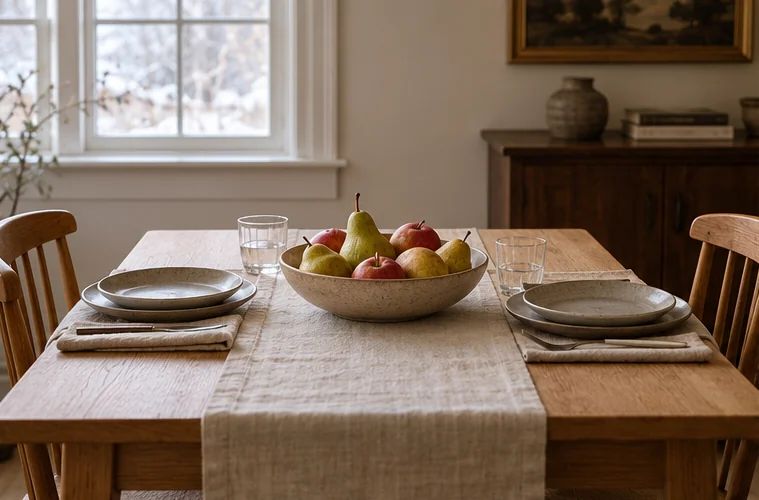
Protect wood from water with a sound vessel and a suitable tray, and remove material when it sheds or deteriorates. Dry branches and greenery should stay well away from heat and flames; flameless candles make positioning easier. Leave the rest of the surface useful for keys or a lamp. If seasonal foliage becomes another chore, use an unfilled ceramic jug and the grain of a wooden bowl instead. Winter character can come from the forms and textures already present rather than an ever-changing arrangement that requires replacing every week. For a meal, extend the same restraint to a practical winter table setting.
Begin with the uncomfortable seat, dark corner, or bare landing point you noticed first. Correcting that one detail gives winter decorating a useful direction, and it makes the next purchase, if any, much easier to judge.
Try seven warm neutral decor ideas using texture, lighting, wood and a restrained palette. Work with the furniture, finishes and daylight your home already has.