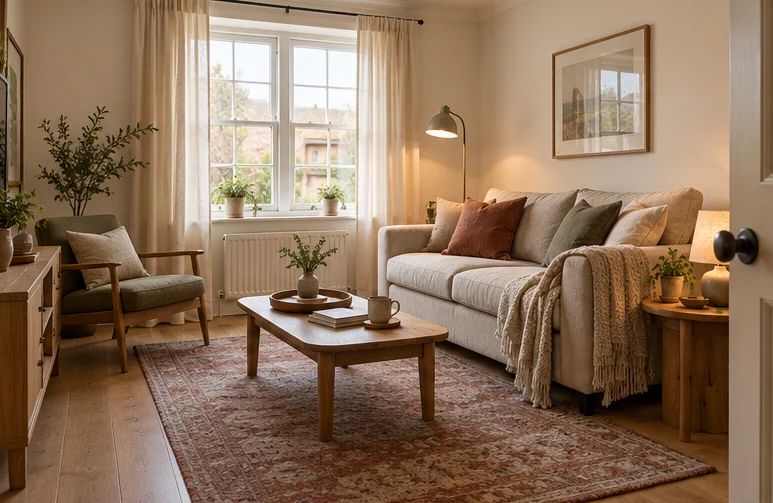
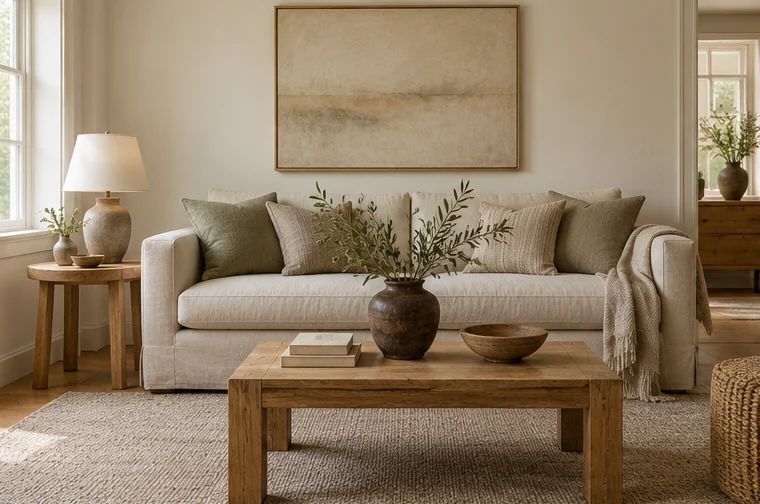
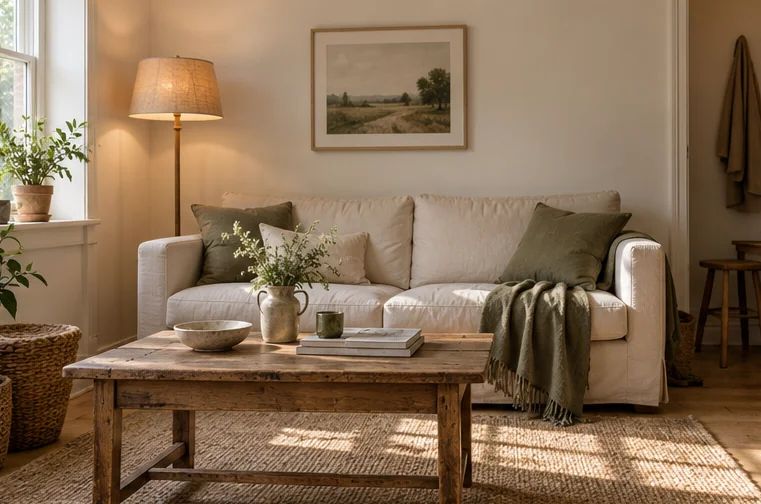
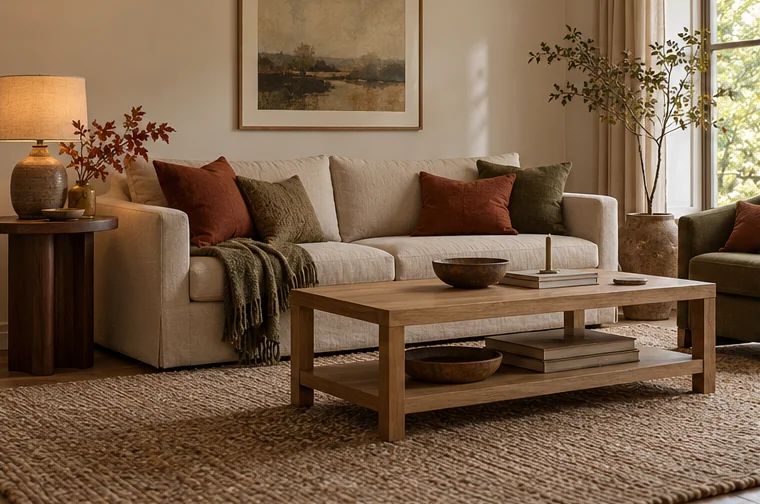
Compact living room with linen sofa, oak table and rust rug
A small living room often feels uncomfortable for a surprisingly practical reason: the comfortable seat is difficult to reach, the lamp shines into your eyes, or the coffee table occupies the only clear route. More cushions will not solve those problems. Start by making the room easier to use, then give the surfaces, light and colors a little more depth.
These cozy small living room ideas suit an ordinary apartment lounge that may also hold a dining table, drying rack or work bag. They do not require a matching furniture set. Most work best when you change one relationship between things you already own.
Before moving furniture, sketch the room with its doors, windows, radiators and outlets. Mark the routes you actually use, including the trip to the balcony and the space needed to open a storage drawer. Measure your sofa, including its arms, and photograph the room from the doorway. The photograph is useful for spotting competing focal points; the measurements stop an appealing purchase becoming a permanent obstacle.
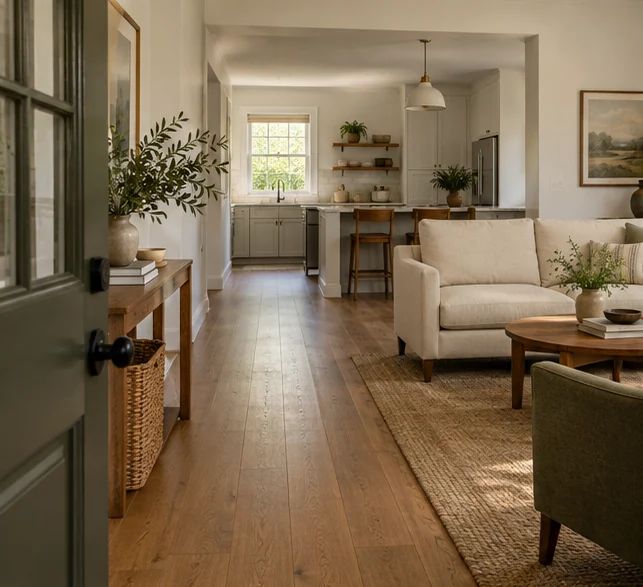
Clear walkway from a living-room entrance past compact seating to an open kitchen.
Choose the easiest route between the entrance and the room's next destination, then arrange seating beside it. In a narrow lounge, a sofa on one long wall and a shallow media unit opposite often leave a clearer passage than two bulky seats facing each other. A little empty floor can make the whole arrangement feel more settled.
Use masking tape to mark proposed furniture edges, then walk through carrying a laundry basket. Try the route with someone sitting down and with the door fully open. This is a useful household test, rather than an accessibility measurement; anyone who uses a mobility aid will need a layout fitted to their own turning and transfer space.
Avoid a diagonal chair simply because it fills a corner in a photograph. Its projecting back can consume the space a person needs to pass. If the arrangement works only when every movable piece is pushed precisely into place, simplify it.
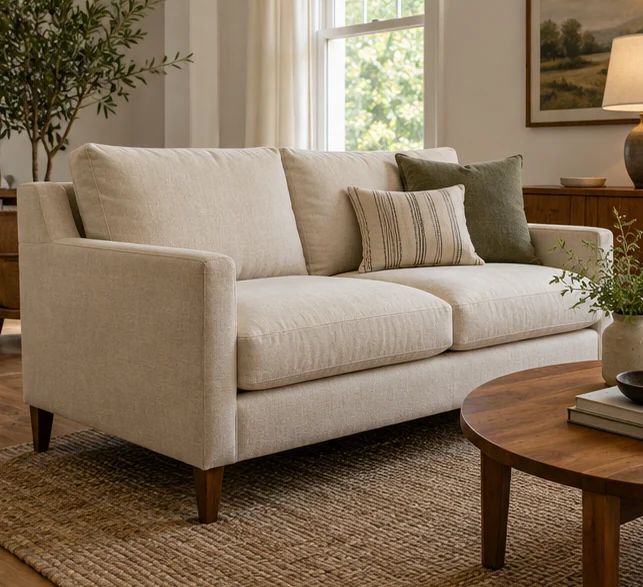
Slim-arm two-seat sofa with two generous cushions in a modest apartment.
A sofa described as apartment-sized can still waste room through wide arms or a deep back. Compare the overall width with the actual sitting area. Slimmer arms can preserve a useful seat without increasing the footprint, while an upright model may suit a conversation room better than an extra-deep lounging design.
Measure the whole furniture envelope, including a reclining footrest or pull-out bed when open. In a tiny room, a straight sofa and one light occasional chair may be easier to arrange than a sectional. A sectional can work well against two walls, but its chaise should not sit across the main route.
If your current sofa is comfortable and sound, keep it. A plain washable throw over a worn seat, repaired cushions or new covers may make more sense than replacement. Exposed legs create a lighter visual outline, but they are a style choice; the best sofa remains the one people can comfortably sit in.
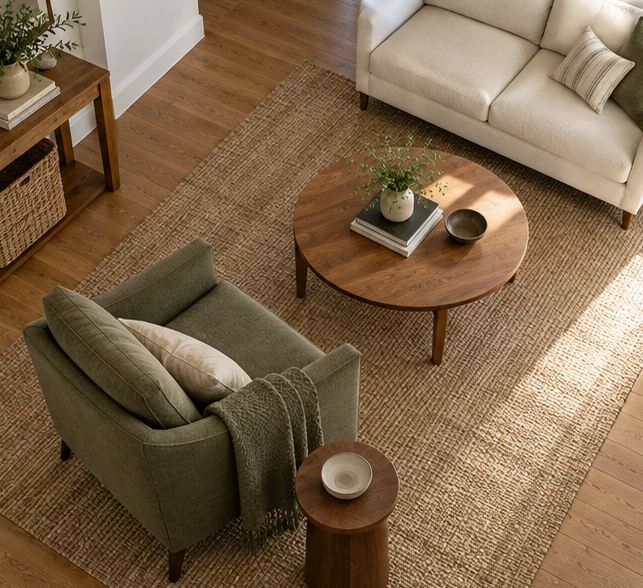
Living-room rug underneath the front legs of both sofa and armchair.
A rug should relate to the seats, rather than float as a small rectangle beneath the coffee table. Where the layout allows, let the sofa's front legs and the principal chair's front legs share the rug. IKEA's rug guidance likewise treats the sofa's width and furniture placement as useful starting points, rather than choosing solely by the room's floor area.
Tape the proposed rug outline before ordering. Check that doors clear the pile and that an exposed edge will not cross an awkward doorway. Standard dimensions are a purchasing convenience, not a reason to buy a rug that disrupts the room. A flatweave or low-pile finish is often easier beneath moving chairs.
For warmth without a strong pattern, try oatmeal with flecks of brown, a muted terracotta ground or a small woven stripe. Choose care instructions you can live with. A suitable nonslip underlay and flat edges matter more to everyday comfort than an additional decorative layer.
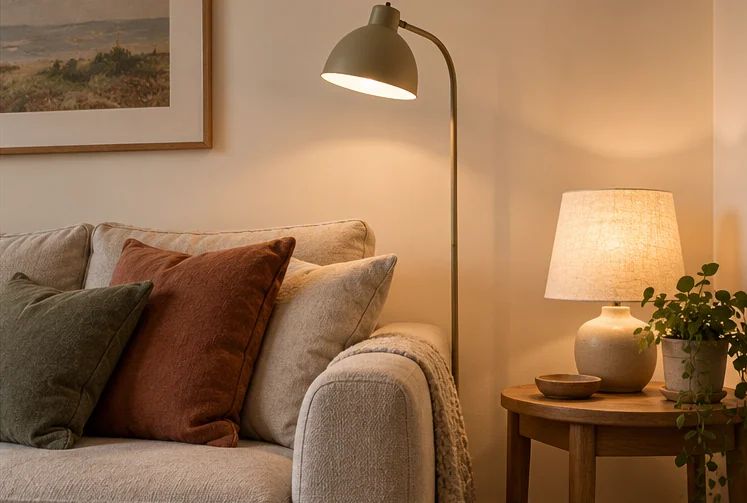
Reading lamp and shaded table lamp beside an oatmeal sofa
One ceiling fitting can illuminate the floor while leaving the seating area harsh. Keep it for general tasks, then add a shaded table lamp near the sofa and a directional reading light beside the chair. The three levels give you choices: cleaning, conversation and reading do not need the same light.
As an editorial starting point, warm white bulbs around 2700–3000 K often suit evening living rooms. Color temperature describes the appearance of the light; it does not tell you how bright a bulb is or how faithfully it renders colors. The Department of Energy explains these as separate qualities, so compare lumens and color information as well.
Sit in the usual seat before settling a lamp's position. You should see the pool of light, rather than stare into an exposed bulb. Keep cords out of the walking route, check the fixture's rating and use compatible dimmable bulbs where relevant. Buy one bulb first if you are unsure about the effect.
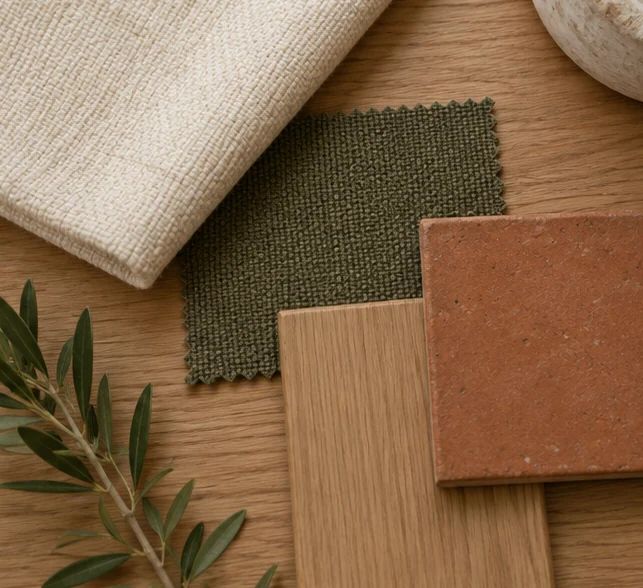
Cream upholstery, terracotta tile and olive textile samples beside an oak floor.
The floor, sofa and largest cabinet already occupy much of the room's color. Use those as the starting palette. A gray sofa beside honey-colored flooring may need a mushroom throw and a small rust cushion, rather than an unrelated collection of cream accessories. Repeating an existing brown or warm gray helps the furniture feel connected.
Put sample fabrics next to each other in daylight and under the lamps you use at night. An ivory that looks gentle in a shop can look yellow beside a blue-white wall; a pale taupe can appear pink against green upholstery. You are choosing a relationship, not finding a universally correct neutral.
Keep the broad areas fairly quiet and place a deeper tone where you want the eye to pause: an olive cushion, dark wood frame or tobacco-colored seat. There is no need to repaint every wall. A small, repeated accent often gives an existing room a clearer direction. For a more detailed comparison of the colors already in the room, use our warm neutral palette guide.
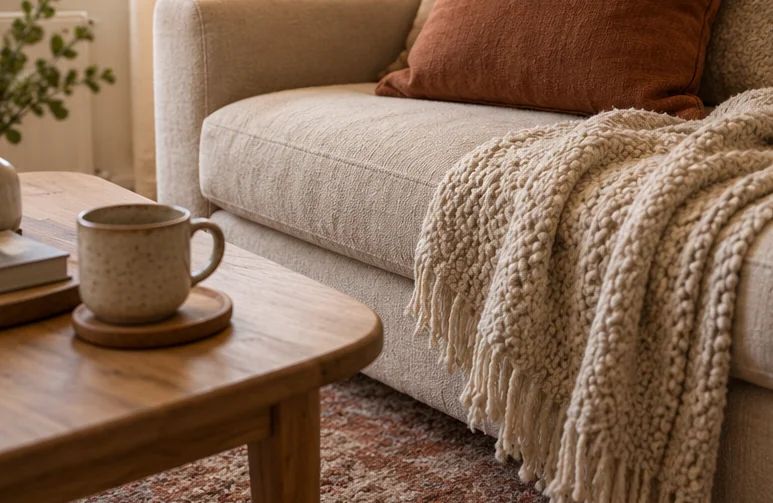
Wool throw and rust linen cushion on an oatmeal sofa
Texture is most useful where it improves an actual experience: a soft throw within reach, a cushion that supports your back, or a curtain that softens glare. Start with those places. A slubby cotton cover, woven wool throw and smooth wood side table create different surfaces without requiring several competing patterns.
Limit cushions to the number that can remain on the sofa while people sit comfortably. If guests must move half the arrangement to the floor, the display is borrowing space from the room. Keep a single folded throw on an arm or in a nearby basket that does not occupy the walkway.
Choose washable covers when pets, children or frequent meals make that practical. Inspect loose loops if claws or jewelry may catch them. A heavy knit is not automatically the warmest-looking choice; on a compact sofa, a lighter woven blanket can drape more naturally and leave the furniture's outline visible.
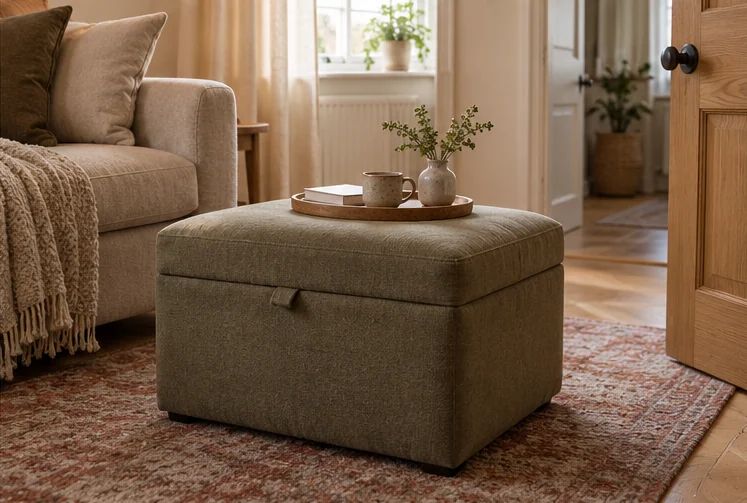
Olive storage ottoman and tray beside a compact sofa
Choose a second function that matches your household. A lidded ottoman can hold a throw and provide an occasional footrest; nesting tables can move beside different seats; a shelf under a coffee table can hold the few things used every evening. Storage is helpful only if it remains easy to open.
Check the table from a seated position. Can you put down a mug without leaning awkwardly, and can someone pass while it is there? A cardboard box of roughly the proposed dimensions makes a useful trial. Round corners can ease movement, but the tabletop still needs a stable base and a surface suited to your use.
Avoid buying a large storage trunk solely for its capacity. A hinged lid that cannot open beneath the sofa arm or a tray that must be completely cleared will discourage use. Store genuinely recurring items here and find a permanent home elsewhere for paperwork and spare cables. If you are deciding where a limited budget will make the biggest difference, the prioritization steps in our small-apartment decorating guide can help.
Begin with the route through the room and one evening lighting improvement. Live with those changes before buying a rug or another seat. A small living room feels warmer when its soft materials and useful objects support the way you already spend time there.
Try seven warm neutral decor ideas using texture, lighting, wood and a restrained palette. Work with the furniture, finishes and daylight your home already has.
Try seven small apartment decorating ideas on a budget, from improving the layout and buying secondhand carefully to choosing useful lighting and washable textiles.
Style a fall living room with seven specific ideas for sofa colors, cushions, throws, rugs, seating, lamps, and one seasonal display that leaves room to live.