Style a fall living room with seven specific ideas for sofa colors, cushions, throws, rugs, seating, lamps, and one seasonal display that leaves room to live.
Fall living room with rust cushions, olive wool and walnut table
A living room does not need orange on every surface to feel ready for autumn. The change can happen where you sit, where the light falls, and how the sofa relates to the rug. The most useful fall living room decor ideas work with the furniture’s existing colors and the room’s actual footprint.
Begin from your usual seat and the view from the doorway. Those two positions reveal which textiles carry the room, where a lamp is missing, and whether a seasonal display would be noticed. This guide concentrates on arranging the living room itself; the budget fall decorating guide covers house-wide reuse, secondhand shopping, and deciding what deserves any seasonal spending.
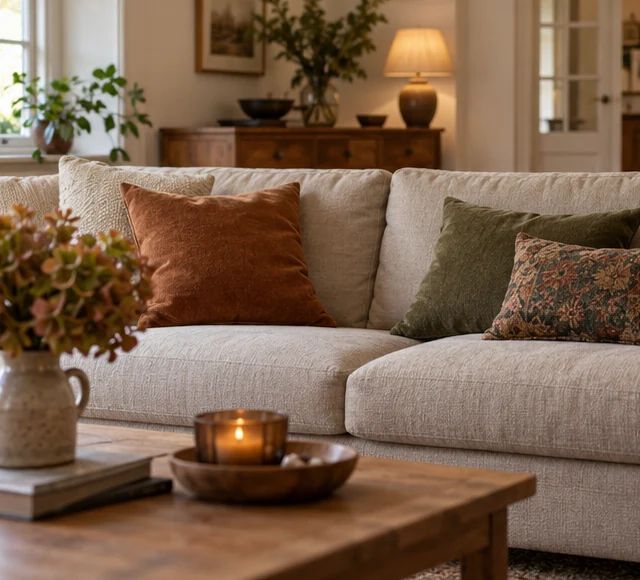
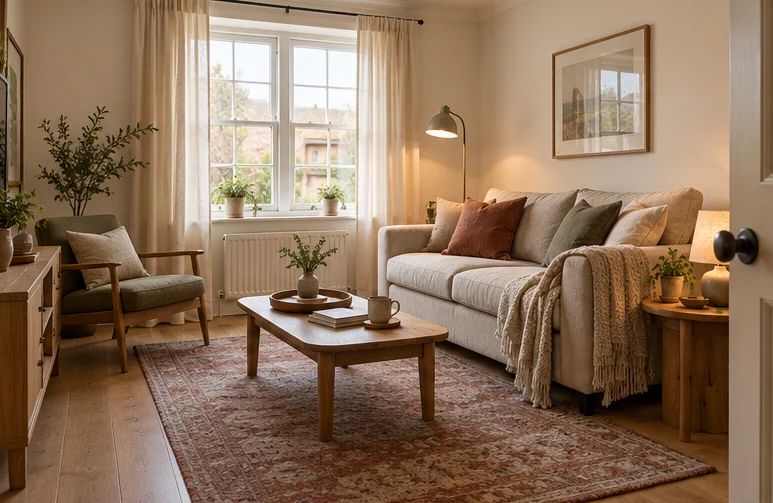
Existing oatmeal sofa with rust and olive cushions balanced against warm wood floor.
Treat the sofa as the largest color decision, even if it is described as neutral. Beige may lean yellow, taupe may read pink, and gray can have blue or green undertones. Hold possible accent fabrics directly against the upholstery in daylight, then check them under the lamps used at night. A shade that looks rich in a shop may become muddy beside the actual sofa.
For warm beige upholstery, try muted olive with tobacco or rust. With a cool-gray sofa, plum, deep blue, or a restrained ochre may connect more comfortably than bright pumpkin orange. These are combinations to test, not compulsory schemes. Choose one dominant accent and a quieter supporting shade, then keep the background pieces fairly steady. Warm neutral decorating principles are helpful if the room feels cold despite using cream and brown. Autumn color should strengthen the existing composition rather than require repainting to make a new cushion work.
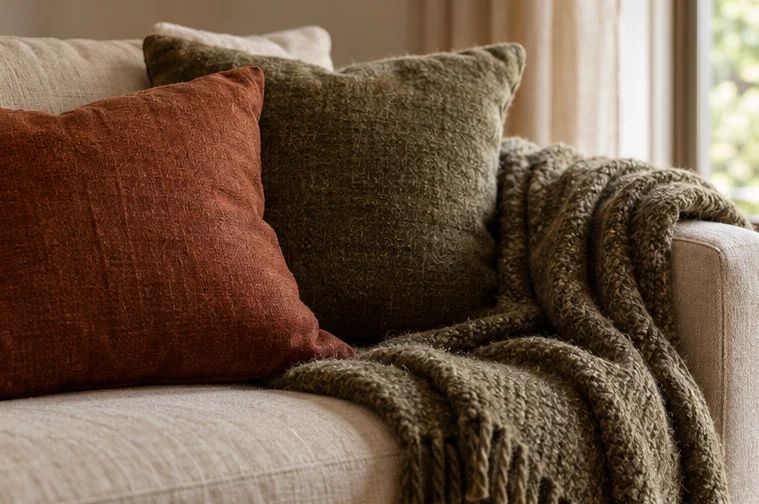
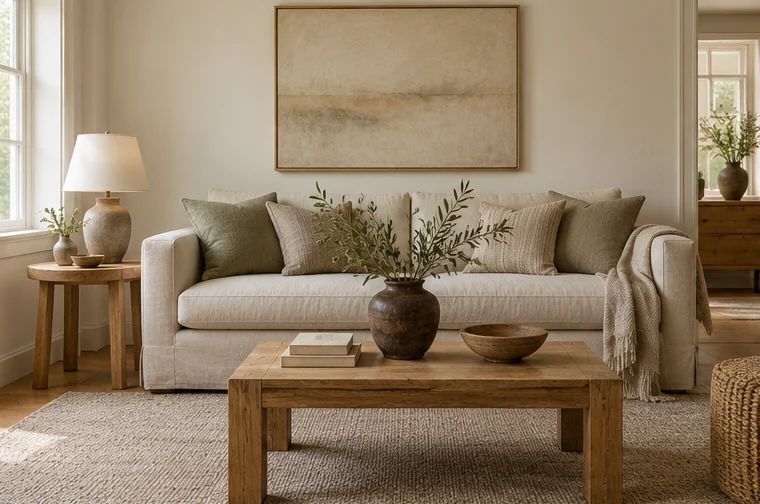
Rust linen cushions and olive wool throw on an oatmeal sofa
On a compact sofa, begin with the number of cushions people actually use. Two supportive cushions and one smaller lumbar may be enough; if the occupants immediately put them on the floor, reduce the arrangement. Measure the inserts before buying covers and check whether the fastening makes them straightforward to remove for cleaning.
Use one quiet solid, one texture, and, if wanted, one pattern whose colors connect the two. A broad check beside a fine weave has clearer contrast than three small busy prints of similar scale. Place the stronger pattern near a plain section of the sofa so it has room to be seen. Avoid symmetrical towers that cover every inch of the backrest. Texture matters at arm’s length: a stiff decorative cover may photograph well and feel unpleasant against a cheek. Check softness, care requirements, and snagging risk with pets before making it part of the daily sitting arrangement.
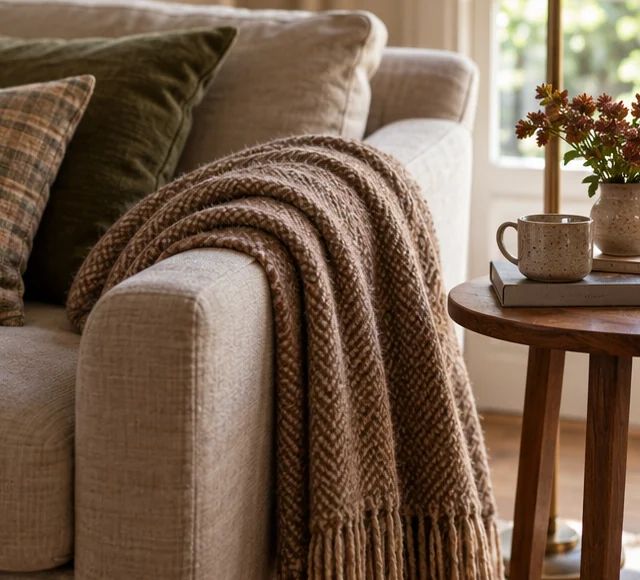
Wool throw draped within easy reach over sofa arm beside a reading spot.
Choose a blanket large enough to use comfortably, then let its placement follow the seat. Fold it over the sofa arm next to the person who gets cold, or lay it across the back of a chair if that is where reading happens. A carefully cascading blanket across the only free seat looks attractive until somebody wants to sit down.
Use the throw to vary texture rather than introduce a fourth accent color. A brown brushed weave can sit beside olive cushions; an oatmeal blanket can soften a more patterned sofa. Read care labels and choose a fabric that suits real laundering needs. Open chunky knits may catch on claws or jewelry, while a dense weave can be easier for everyday use. Store an extra blanket in a reachable basket only if it fits without narrowing the route around the coffee table. The extra layer should make the room more comfortable, with no evening ritual of dismantling a display first.
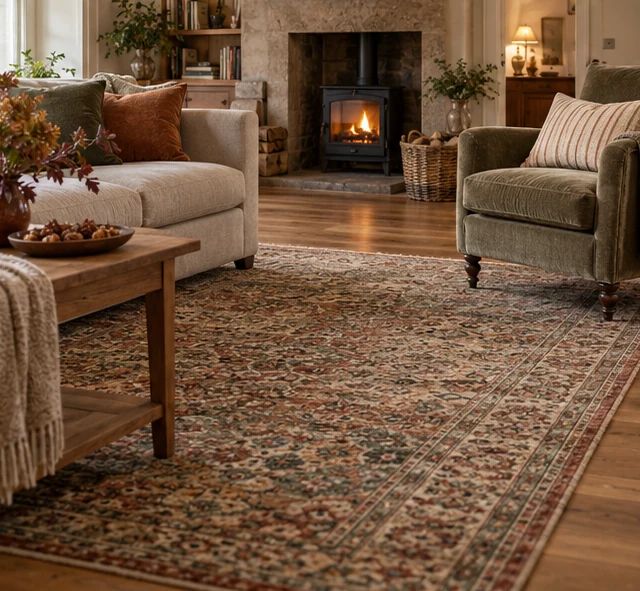
Existing patterned rug moved beneath front legs of sofa and adjacent chair.
Look at how the seating relates to the existing rug. If it floats entirely in front of the sofa, the room can feel like separate objects around a small textile island. Where dimensions allow, moving it beneath the front legs of the main seating can connect the group more clearly. Test with the actual furniture rather than choosing a standard rug size from a photograph.
Check door swings, edges, and the route to the next room. Use a suitable underlay that is compatible with the floor finish and keep corners flat. Avoid adding a small loose faux-fur layer in a busy passage just for seasonal softness. If replacement is already needed, choose the pile and maintenance requirements before the autumn color; a patterned low pile can disguise ordinary use without being difficult to vacuum. For a narrow plan, the small living room layout guide can help you judge the rug as part of the seating arrangement rather than a separate decorative purchase.
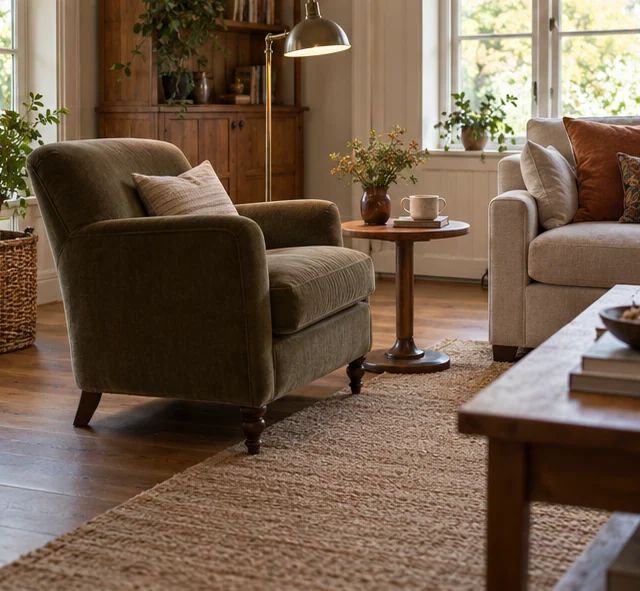
Small armchair turned toward sofa with reachable stable side table and clear route.
Angle one armchair slightly toward the sofa instead of lining every seat against a wall. Then put a stable small table within comfortable reach so the chair can hold a reader or guest for more than a few minutes. If there is no room for another table, try exchanging a bulky existing one for a narrower piece elsewhere in the home.
Test the adjustment by walking through the room with a bag and by opening nearby storage. Keep access comfortable for the household and maintain all required exits and heater clearances. A closer conversation group should not force someone to turn sideways beside a hot radiator. Where the sofa cannot move, changing the chair’s angle or moving a lamp may be sufficient. Do not add a new armchair solely to make the arrangement look fuller. The useful autumn shift is toward a room people can share during longer evenings, with clear surfaces and comfortable routes still intact.
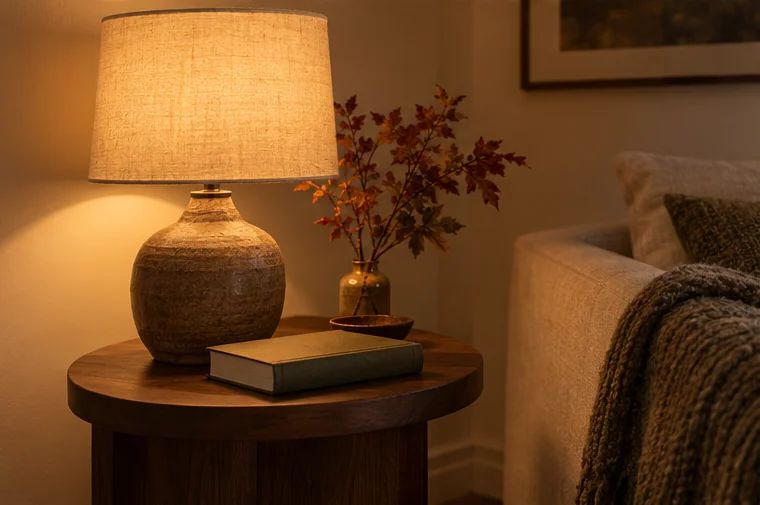
Shaded reading lamp and walnut side table on an autumn evening
One overhead light often leaves the far side of a small living room in shadow. Try a shaded table lamp near the sofa and a reading light at the chair, positioning them so they support different activities. A bulb around 2700K is a reasonable warm-white starting point, but choose sufficient light output for reading rather than judging by color temperature alone.
Switch the lamps on before it becomes fully dark and check glare from the seated position. If the bulb is visible below the shade, adjust the fixture or choose an appropriate shade rather than simply reducing brightness until nobody can read. Use compatible bulbs and dimmers, follow fixture ratings, and route cords around furniture without hiding them under rugs. The room should also remain easy to navigate when a single lamp is on. Treat decorative candles as optional accents; practical autumn lighting comes from fixtures that are stable, reachable, and suitable for their tasks.
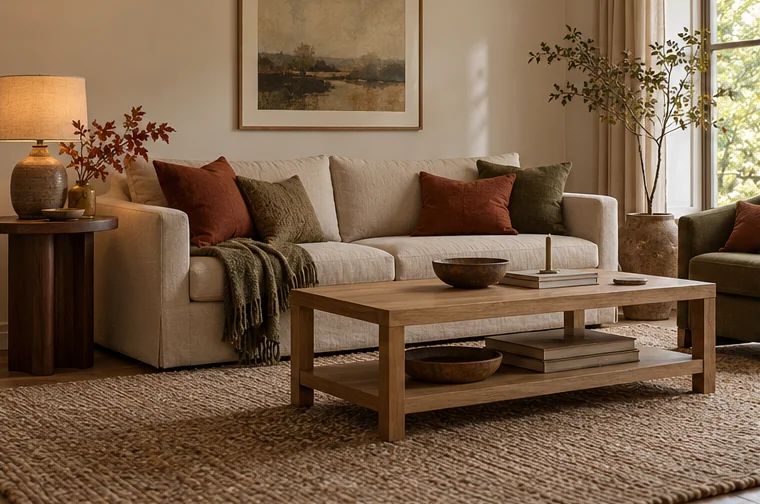
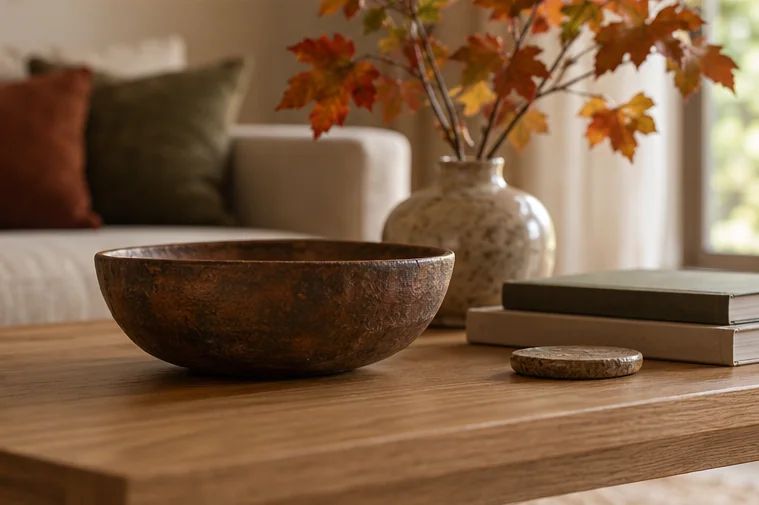
Brown pottery bowl on a clear oak coffee table in fall
Choose the coffee table, a console, or a shelf as the room’s seasonal focus. A low bowl beside a vase of a few identified branches can be enough. If the coffee table is small, put the branches on the console and retain space for drinks and a book. Viewed from the doorway, one clear arrangement usually reads more strongly than several miniature pumpkin groups scattered across the room.
Use stable vessels, protect wood from moisture, and inspect natural materials for deterioration. Keep dry stems away from flames and heaters, and check plant suitability around pets and children. Avoid a tall coffee-table arrangement that blocks the view between seats or toward the television. Let the remaining shelves retain ordinary books, photographs, and useful objects. The display should join the room’s life instead of replacing it. When you can wipe the table or set down a tray without moving half the arrangement, the scale is probably close to right for everyday use.
Change the sofa textiles or the lamp positions first, then live with the result for a few evenings. The rest of the room may need only one small seasonal display once its seating and light feel settled.
Try seven warm neutral decor ideas using texture, lighting, wood and a restrained palette. Work with the furniture, finishes and daylight your home already has.
May we use Google Analytics cookies to understand visits and which ideas readers find useful? It is optional. You can change your choice below at any time. Privacy details