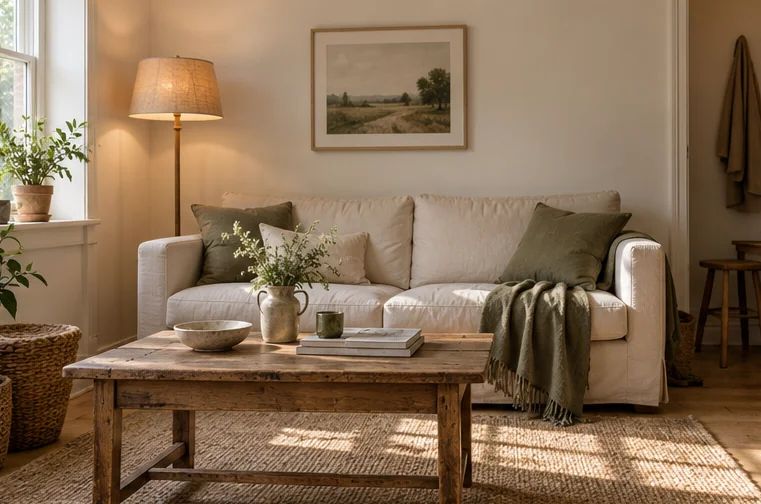
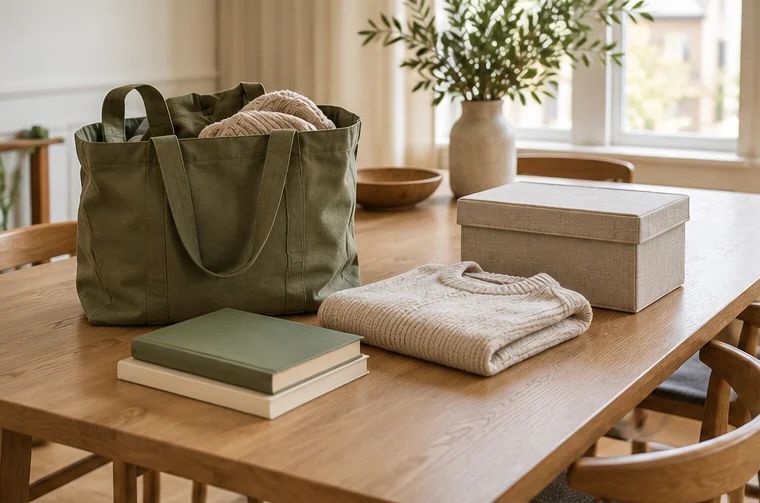
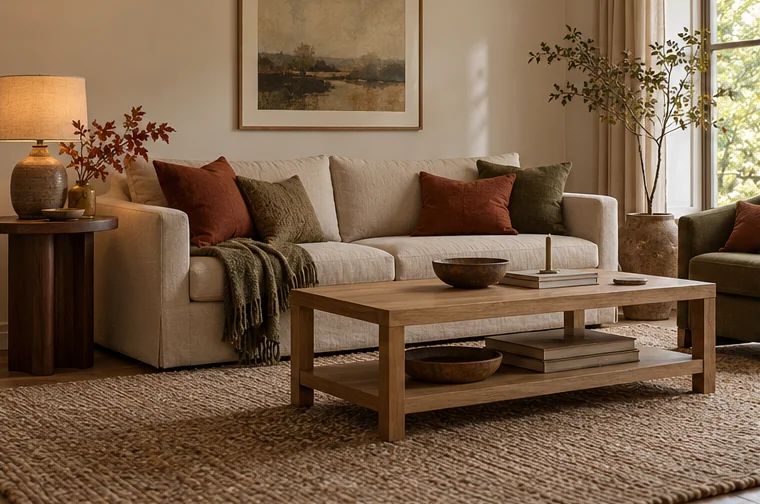
Budget autumn dining corner with linen and a bowl of apples
The cost of autumn decorating usually grows through small decisions: a new wreath, a few miniature pumpkins, a seasonal mug, then another storage tub. Fall decorating ideas on a budget need a firmer starting point. Decide where a change will be noticed, use a few materials repeatedly, and let ordinary household objects do some of the work.
This guide covers affordable seasonal choices across the home, from an entry table to a dining spot. For sofa arrangements, rug placement, and the details of a single room, use the fall living room guide alongside it. Here, the focus is spending less without making every surface carry an autumn theme.
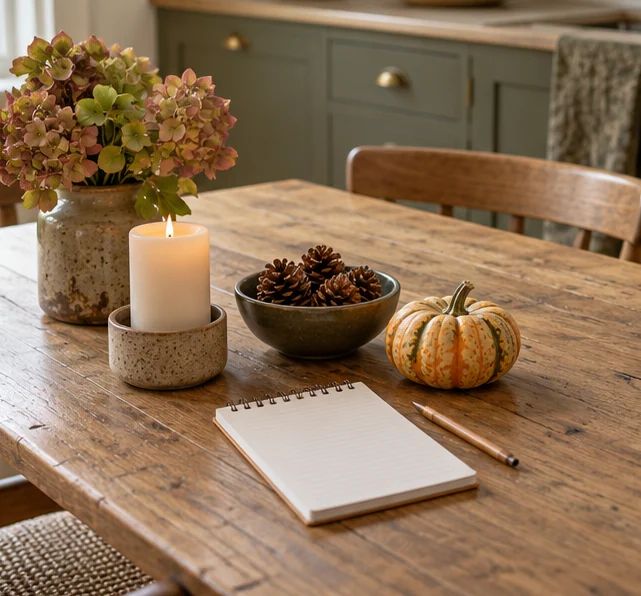
Three modest fall decorating objects on a table beside a small blank budgeting notepad.
Pick three places you encounter every day: perhaps the entry shelf, the kitchen table, and the foot of the bed. Photograph them before shopping. List what could improve each place, separating useful changes from ornaments. A washable cover for a cushion you already own may serve longer than several small decorations that have no role after November.
Set a total you can comfortably spend, including delivery, hanging materials, and any storage needed afterward. Then assign the largest share to the change you will feel or use most. A possible order is one textile, one natural accent, and no purchase for the third location. This is a planning method, not a claim about a universally affordable amount. If the basket total grows, remove the least useful item before adding more locations. Shopping with photographs and dimensions also stops an inexpensive bargain becoming an awkward object that does not actually fit anywhere in the home.
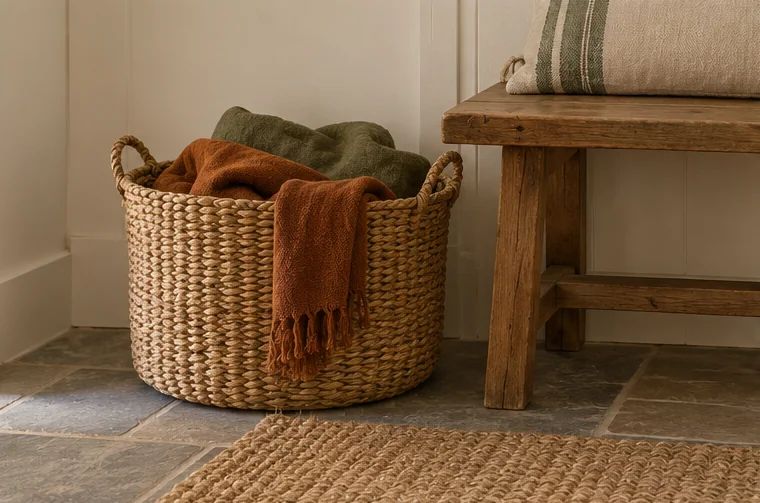
Rust and olive cotton textiles stored in an everyday basket
Pull together objects in brown, olive, muted gold, russet, and cream from around the house. Books, tea towels, a wooden board, and a plain ceramic jug can suggest autumn without carrying a leaf motif. Place them together temporarily, then choose two colors that already relate to the room. Return the rest to their usual places rather than spreading the whole collection everywhere.
Use a larger existing item to carry the color: a folded scarf on a bedside chair can contribute more than six tiny ornaments, provided it remains easy to retrieve and is kept away from heat. Group objects by material as well as shade. A wood bowl and a woven cloth look coherent even when the browns differ. Avoid turning every brown item into decor; the arrangement still needs a clear purpose and space around it. The goal is to see familiar belongings differently, not to empty cupboards into a seasonal still life.
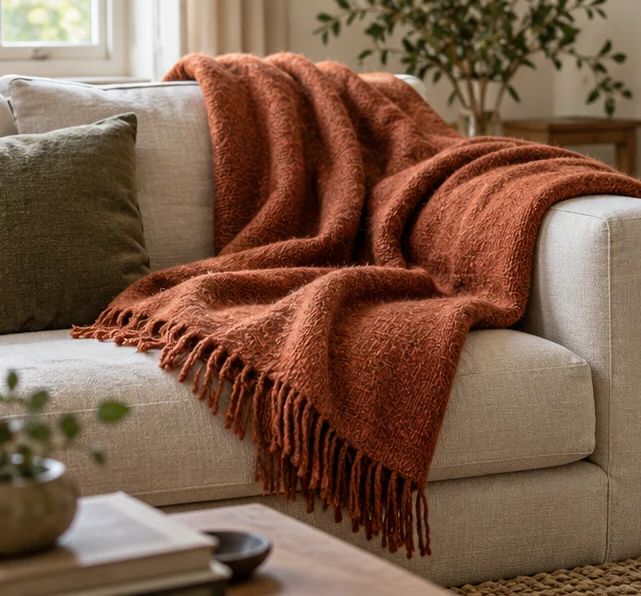
Single rust-colored wool blanket on an existing neutral sofa.
If the room needs softness, spend on a textile you would use without an autumn label. A plain rust cushion cover, an olive cotton throw, or a checked tablecloth can work from September into winter. Measure the insert or table first, then check the care instructions. A low purchase price becomes less attractive if the piece needs specialist cleaning the household will not arrange.
Look for the practical detail that matters most in its intended position. A sofa cover needs a reliable fastening; a tablecloth needs enough overhang to look deliberate without catching on knees; a bedroom blanket should be large enough to use. Compare fabric condition and construction when buying secondhand, inspect seams and odors, and launder appropriately before use. Avoid buying an extra cushion insert just to fit a bargain cover unless that cost was part of the plan. Seasonal reuse saves space as well as money, especially when the same textile also suits January.
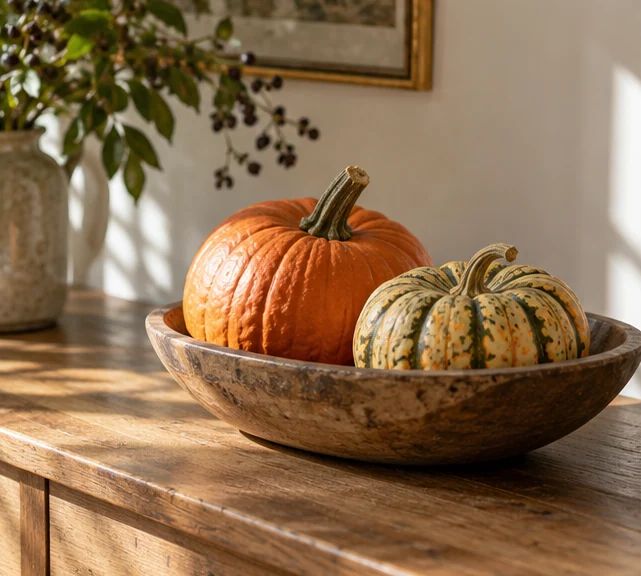
Two small uncarved pumpkins in a shallow bowl with plenty of clear table space.
One sound pumpkin in an interesting shape can provide the entire seasonal accent for an entry or sideboard. Choose fruit without soft spots or significant damage, and support it on a washable tray or plate so moisture does not mark the furniture. Whole pumpkins generally keep their appearance longer than carved ones, although conditions and the particular fruit determine how long.
Use two or three only if the surface can spare the space. Different sizes give a group definition without adding foliage, signs, and ribbons. Inspect the undersides regularly and remove any that soften or mold. Keep the display out of strong heat, and do not use a carved decorative pumpkin as food after it has sat around. Before disposing of an unpainted pumpkin, check local compost collection rules. Remove non-compostable embellishments and never dump it in a park or woodland. A low-cost natural display still needs an end-of-season plan rather than becoming waste left beside the bin.
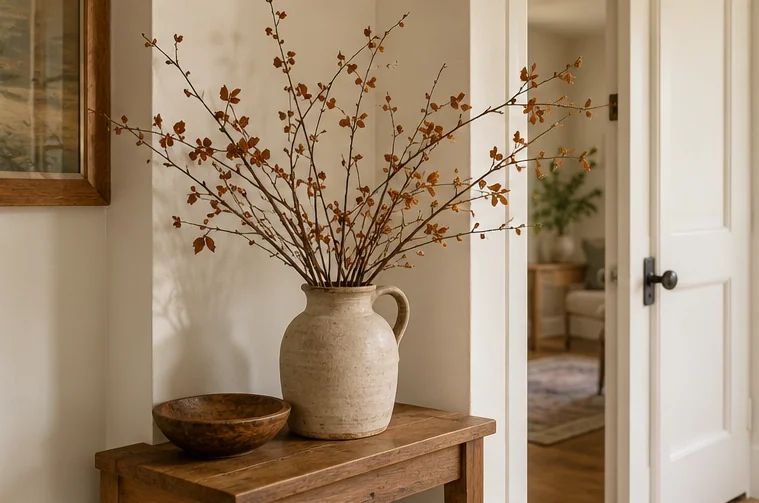
Autumn branches in an existing ceramic jug on a hall table
An autumn arrangement can be mostly empty space. Choose a few identified branches from a permitted source and place them in a stable vessel already in the cupboard. Their line should suit the position: a sideways branch may look effective on a wide console but intrude into a narrow passage. Trim the overall shape before adding anything else.
Check for pests and loose material outdoors, and avoid unknown berries, thorny stems within reach, or plants unsuitable around pets. Use a container that will not tip when someone brushes past. If stems are dry, keep them far from candles and heaters; a battery light offers fewer positioning constraints. Do not add heavy stones to a fragile vase without considering whether the base can tolerate them. If no suitable branches are available, a bowl of in-season apples works just as well. Natural decorating should not require a drive to a specialty shop or collecting from protected public spaces.
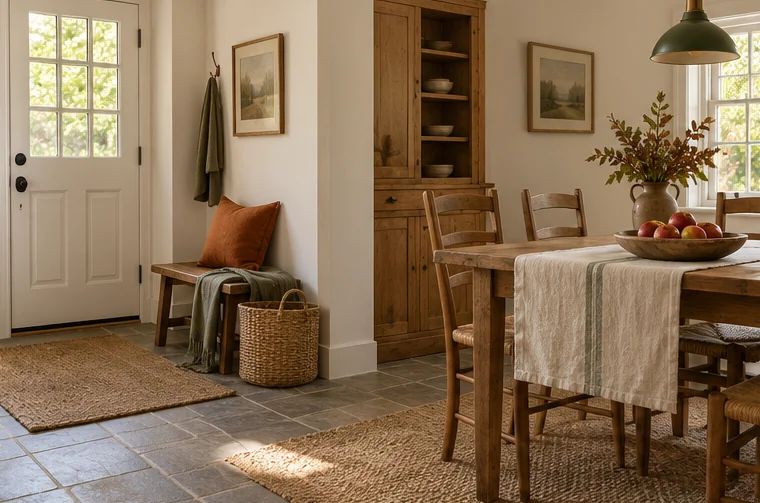
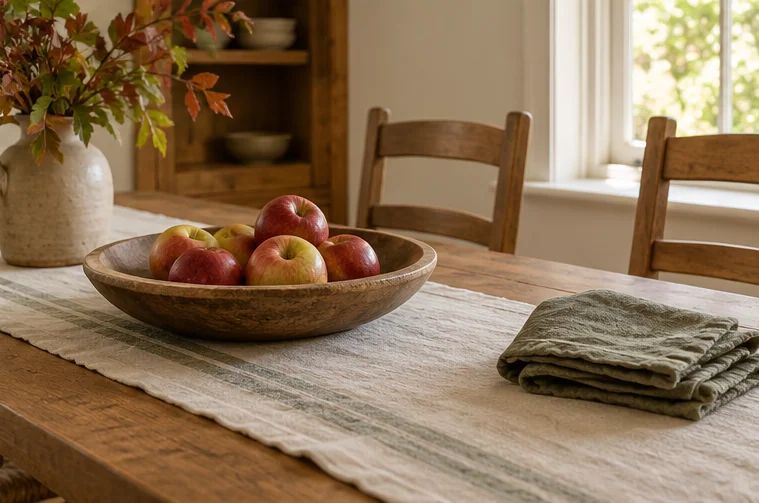
Apples and folded linen on an otherwise clear dining table
Set out everyday pieces that already have seasonal weight: a dark baking dish, brown glazed mugs, or a wooden serving board used during dinner. A warm-toned tea towel on the oven rail may be enough for a compact kitchen, provided it is positioned safely according to the appliance instructions. Keep work surfaces available for food preparation.
For a table, pair existing plain plates with cloth napkins or a folded cotton cloth. A low bowl of pears can be eaten and replenished rather than packed away. Keep edible items in conditions appropriate to the food, and remove bruised fruit promptly. Decorative gourds should not be assumed edible. Avoid sprinkling loose leaves around plates or coating food with craft finishes. This approach keeps the visual interest in objects and ingredients that belong in the room. It also prevents an affordable display becoming expensive because it obstructs the kitchen and requires duplicate storage for things that were previously within reach.
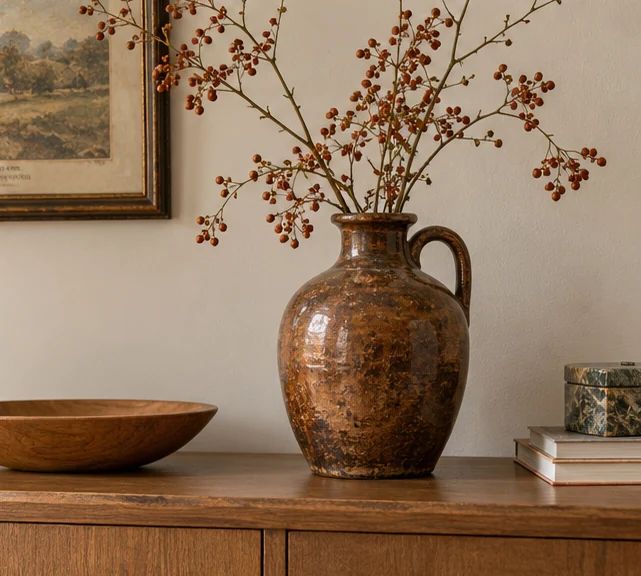
Secondhand brown pottery vase with subtle natural wear on a simple oak sideboard.
If the arrangement still needs something, identify the exact gap before browsing: a narrow amber vase, a small wood bowl, or a frame for an existing print. Write its maximum dimensions and intended position on your phone. Shape and condition matter more than the item being described as seasonal. A suitable plain vessel can be reused for winter greenery and spring flowers. The same sourcing approach works for budget apartment decorating throughout the year.
Inspect ceramics for cracks, loose handles, and damaged bases. Keep decorative vintage containers out of food use unless their suitability is known; use a modern food-safe bowl or a separate inner vase when appropriate. Electrical secondhand pieces need particular care, including recall checks and a sound, appropriate condition rather than a quick visual assumption. If the price or repair cost exceeds the original plan, leave the gap for now. Take another photograph after a few days. Often an arrangement that initially felt unfinished simply needed space around it, and buying nothing is the most useful final decorating decision.
Store the small number of reusable pieces together when the season changes, and note which ones you enjoyed seeing. Next autumn can begin with that useful collection instead of another round of impulse purchases.
Try seven small apartment decorating ideas on a budget, from improving the layout and buying secondhand carefully to choosing useful lighting and washable textiles.
Declutter seven useful categories before the New Year, with clear keep-or-pass-on decisions and responsible routes for clothes, electronics and medicines.
Style a fall living room with seven specific ideas for sofa colors, cushions, throws, rugs, seating, lamps, and one seasonal display that leaves room to live.
May we use Google Analytics cookies to understand visits and which ideas readers find useful? It is optional. You can change your choice below at any time. Privacy details