Try seven small apartment decorating ideas on a budget, from improving the layout and buying secondhand carefully to choosing useful lighting and washable textiles.
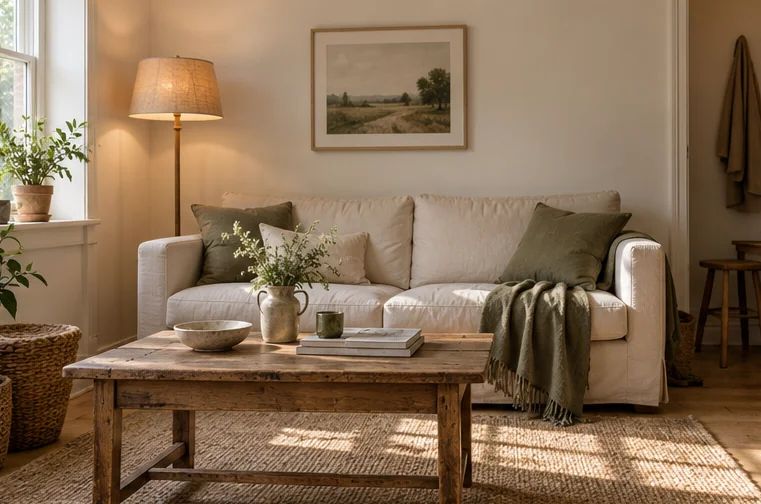
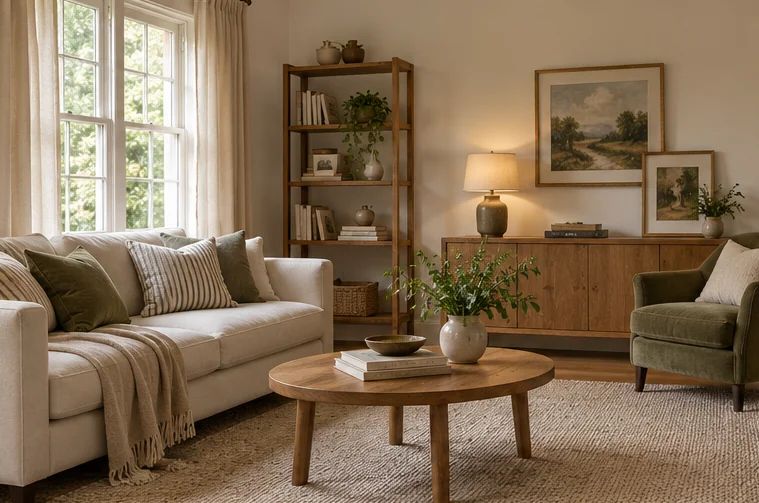
Small apartment with secondhand oak furniture and olive textiles
Small apartment decorating on a budget works best when each change solves a problem you already have. Before buying anything, identify the awkward route, the dim seat or the piece of furniture that is doing too little for the space it occupies.
The aim is a room that feels settled and works well, even if its pieces arrived at different times. Keep the furniture you can use, give purchases a clear job and improve the room in an order that prevents expensive corrections. A slower shopping list can still produce visible progress this weekend.
Make three lists: things that are uncomfortable, things that are inconvenient and things you simply dislike looking at. Set a total spending ceiling that includes delivery, fixings and cleaning. Then choose one room or sightline to improve first. Scattering a little money across every room can leave you with several incomplete schemes and no meaningful improvement.
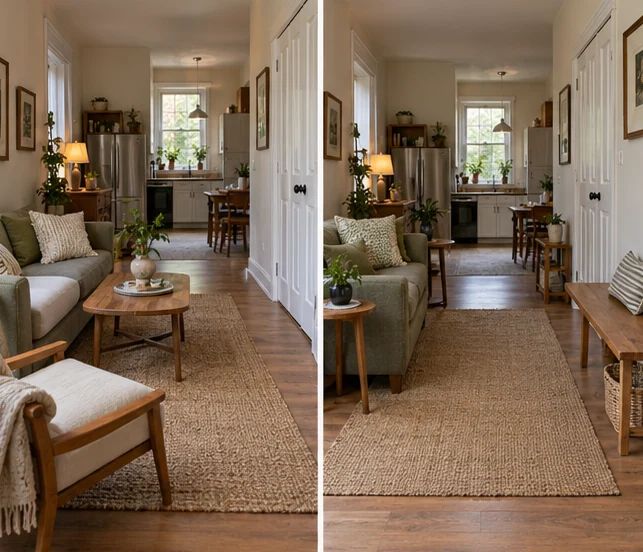
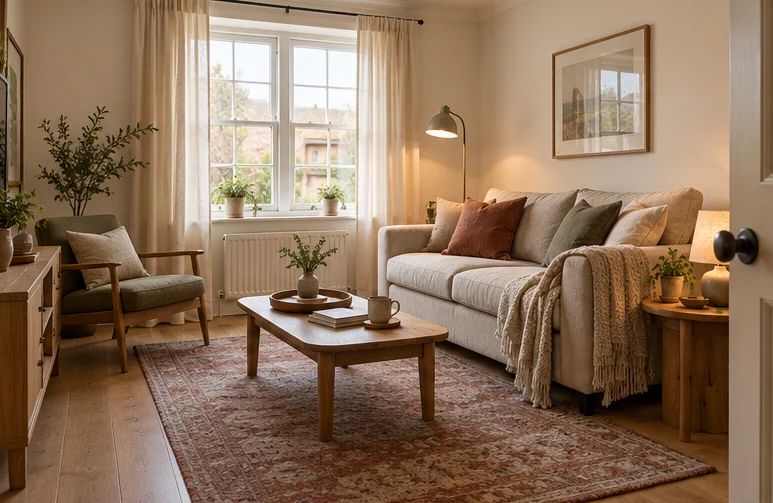
Small apartment living room rearranged to leave cupboard doors and walkway clear.
Move the furniture you own before assuming you need smaller replacements. A side table can become a bedside table; a dining bench may fit along a wall; a chair parked in front of a cupboard may belong elsewhere. Photograph two possible layouts and compare how easily you can reach the everyday things.
Use temporary arrangements for a few days. Check door swings, outlets and the space occupied by people, rather than judging only the empty room. A furniture plan that looks tidy from the entrance may require stepping around the coffee table every time you cross to the kitchen.
Removing one redundant piece can create a more useful improvement than adding a new one. Store or rehome it responsibly if it truly has no role. Keep useful furniture during the trial, though; giving away a table before testing the new layout can turn a free experiment into a replacement purchase. If the living room is your first priority, use these compact living-room layouts to test the arrangement before shopping.
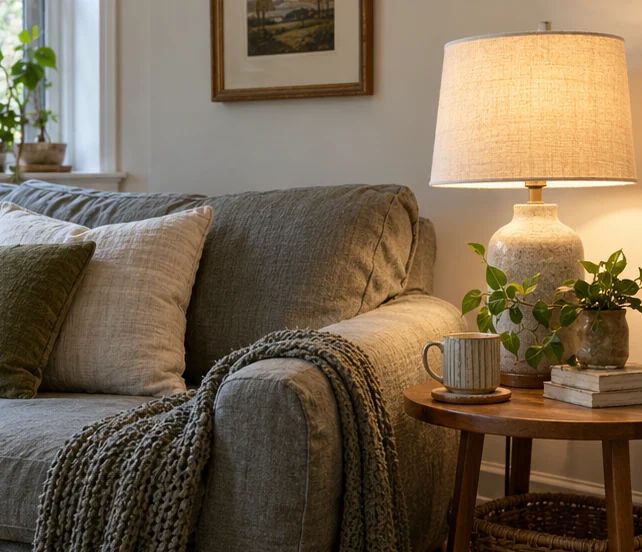
Practical shaded reading lamp beside an older sofa and a washable cotton cover.
Pick the problem you notice most often. If the apartment feels unpleasant after dark, a useful lamp may have more impact than wall art. If the sofa is sound but scratchy, a washable cover may help more than a new coffee table. If the room feels crowded, the priority might be a smaller piece rather than decoration at all.
Write down the expected result before spending: “I can read beside the sofa,” or “the cupboard opens without moving a chair.” That simple test prevents a vague desire for a nicer room from becoming a basket of unrelated purchases. Once the change is in place, check that it delivered the result.
Keep a small portion of the budget uncommitted for practical extras such as a rug underlay, replacement feet or appropriate wall fixings. These unglamorous costs determine whether a purchase is usable. A bargain that cannot be installed or maintained within your budget is an unfinished expense.
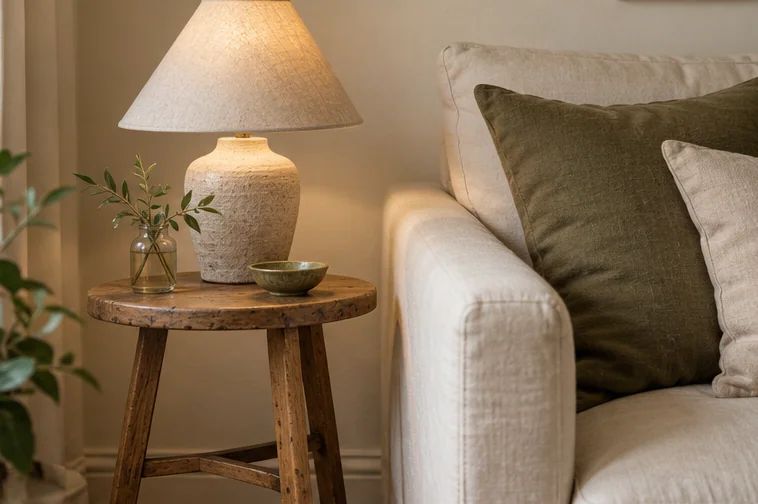
Worn wooden side table and ceramic lamp beside a plain sofa
Take maximum dimensions and doorway measurements when browsing reuse stores or local listings. Habitat ReStores, for example, sell donated furniture and home goods, but stock, condition and price vary. Treat secondhand shopping as a search for suitable pieces, rather than a guarantee that everything will be cheaper.
For a wooden table or chest, inspect joints, drawer travel, missing hardware and the underside. Look for signs of damp or pests, ask relevant questions and decline items whose condition you cannot assess. Upholstery brings extra cleaning and inspection considerations; a low price is not a reason to overlook them.
Calculate the total before agreeing: purchase, delivery, stairs, repairs, cleaning and any required anchoring. Confirm that the item can travel through the building's doors and turns. A sturdy plain side table in the right size is usually more useful than an impressive cabinet that overwhelms the room. Leave without buying when nothing fits the brief.
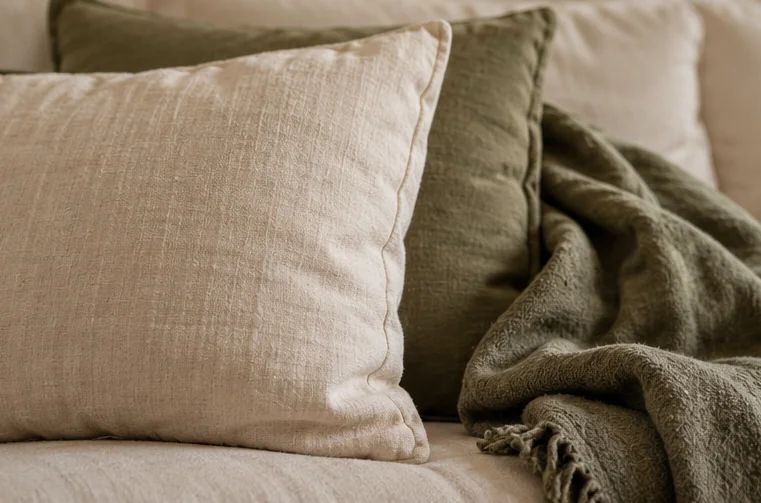
Cotton cushion and olive throw on an existing sofa
Textiles can connect furniture that does not match. Choose one modest palette from an existing item you intend to keep, then repeat it through two or three useful fabrics. For instance, brown flecks in a rug might lead to tobacco cushion covers and oatmeal curtains around a gray sofa.
Measure cushion inserts and curtain positions carefully. Buying covers for existing inserts is often less wasteful than buying complete cushions. Curtains should open clear of the glazing and work with radiators, doors and furniture; more generous fabric is not helpful if it obstructs those functions. Check shrinkage and washing instructions before deciding on length.
Avoid trying to disguise every surface at once. A throw that constantly slides off the sofa or a chair cover that needs readjusting after each meal will become frustrating. Spend on the fabric you touch or see most often, then let quieter existing pieces remain in the background.
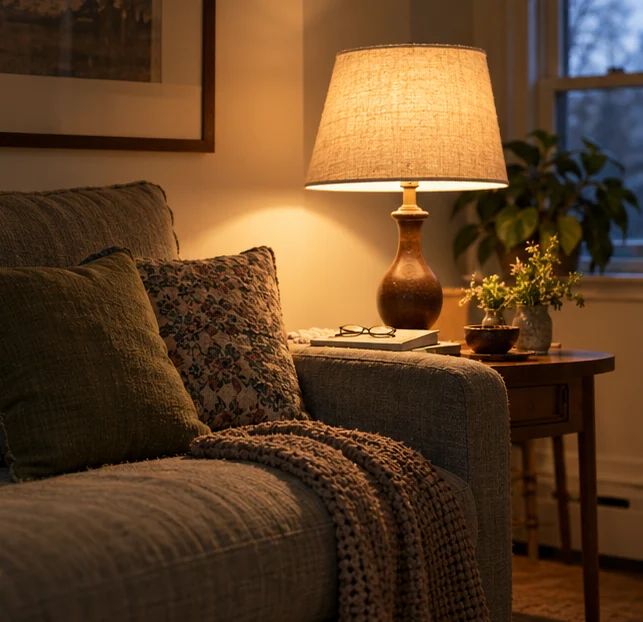
Single shaded secondhand lamp lighting the sofa end at dusk.
Begin at the place used most in the evening. A secondhand lamp with a sound shade can be a good find, but electrical condition matters more than appearance. Check for damage, use a bulb within the fixture rating and seek competent repair when wiring or the plug is suspect. A decorative bargain should not require improvised electrical work.
Try one warm white LED bulb before replacing all the bulbs in the apartment. Compare its brightness, color and glare in the actual room. The Department of Energy distinguishes color appearance from color fidelity; both affect how a room and its materials look, while lumens describe light output.
Move the lamp before concluding that it is too dim. A shaded source near the task can be more useful than a brighter source across the room. Keep a ceiling light for broader tasks, and add a second local lamp only when you know which activity needs it.
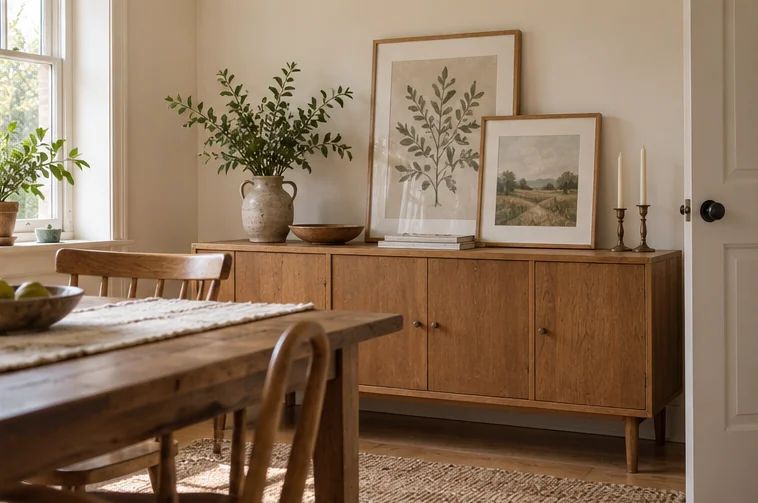
Framed botanical art resting on a rental apartment sideboard
A limited set of images can look cohesive through a repeated frame finish or shared mat color. Use prints you already own, postcards with personal meaning or your own photographs. Arrange the group on the floor first, then make paper templates to check its relationship with the furniture below.
For a low-cost frame, inspect the corners and hanging hardware. Replace damaged glazing appropriately and avoid unstable leaning arrangements where children, pets or passing bags can knock them down. A freestanding frame on a sound shelf may be enough when wall mounting is impractical.
Removable hanging products still require compatible surfaces and exact installation instructions. Command's guidance excludes wallpaper and warns that fresh paint needs to cure. Do not assume “rental friendly” means every adhesive will leave every painted wall intact. If wall condition is uncertain, a smaller tabletop display can give the room personal character without committing to a large hanging scheme. For permissions, surface limitations and changes you can carry to the next home, see our rental decorating guide.
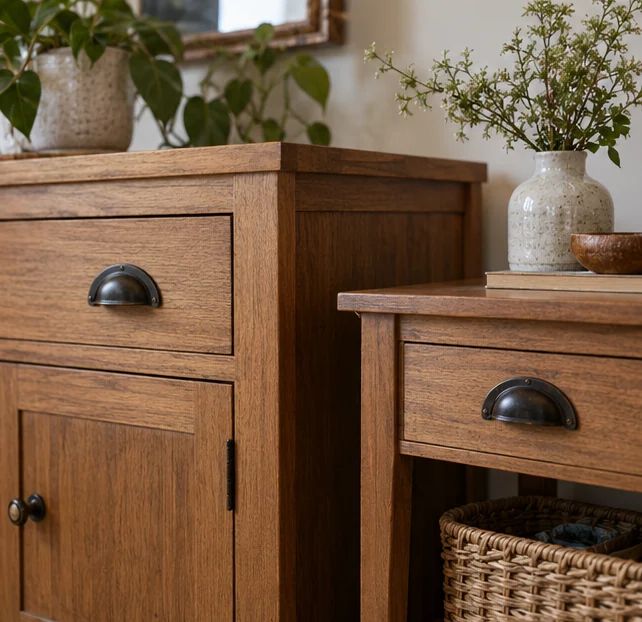
Close view of repaired oak cabinet and side table with repeated dark metal pulls.
A mixed collection can become more coherent without becoming a matching set. Tighten the joints, replace missing handles and clean the surfaces first. Then decide whether one repeated element, such as dark metal pulls or a warm wood finish, can connect a few pieces. Existing wear is not automatically a defect that needs covering.
If painting is appropriate, identify the material and research a coating system for that surface. Laminate, veneer and solid wood need different preparation. Test discreetly and work within the product's ventilation and curing instructions. Avoid sanding old coatings when their composition is unknown; obtain suitable advice before disturbing them.
Small repairs may be enough. New felt pads, adjusted hinges or a properly fitted shade can make a familiar piece feel cared for again. Buy only the materials needed for the planned repair. A cupboard full of unused paint and hardware is an easy way for a modest decorating project to exceed its original cost.
Keep a short list with sizes, finishes and a maximum total cost, and let it guide each purchase. An apartment can become more comfortable one resolved problem at a time. When the useful improvements are in place, the remaining decorative choices become easier to judge.
Learn how to make a rental feel like home with five practical ideas for lighting, personal displays, useful storage and reversible changes that suit your lease.
Seven small space organization ideas built for everyday use, with practical storage choices, access rules and simple ways to prevent clutter returning.
May we use Google Analytics cookies to understand visits and which ideas readers find useful? It is optional. You can change your choice below at any time. Privacy details