Small winter table with stoneware, linen and a bowl of pears and apples
Winter table decor ideas have to survive the arrival of dinner. The centerpiece that fills an empty table may leave nowhere for a bread board, a water jug, or a guest’s elbows. Start with place settings and serving dishes, then decide how much decorative space is genuinely available.
The five arrangements below offer different materials and moods, from everyday stoneware to a more formal cream-and-brass setting. Each works without a large collection of seasonal tableware. For a small table, choose one compact central element; for a long table, repeat a few low elements with generous breaks between them. Measurements are planning examples, so test the actual plates and chairs rather than treating them as fixed dining rules.
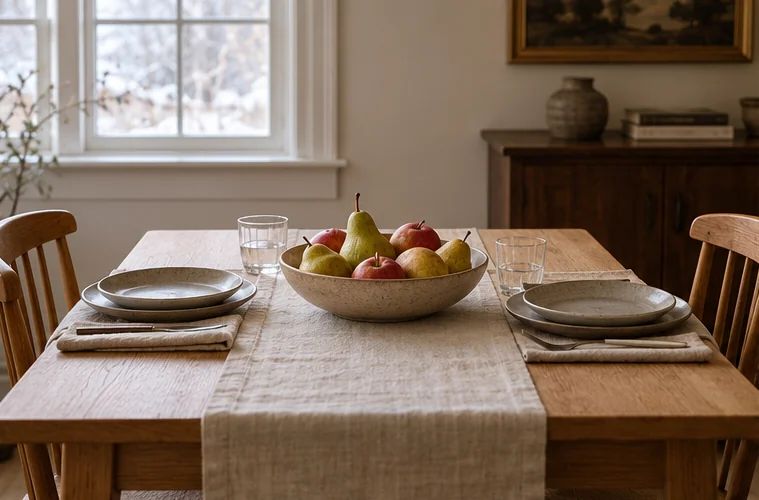
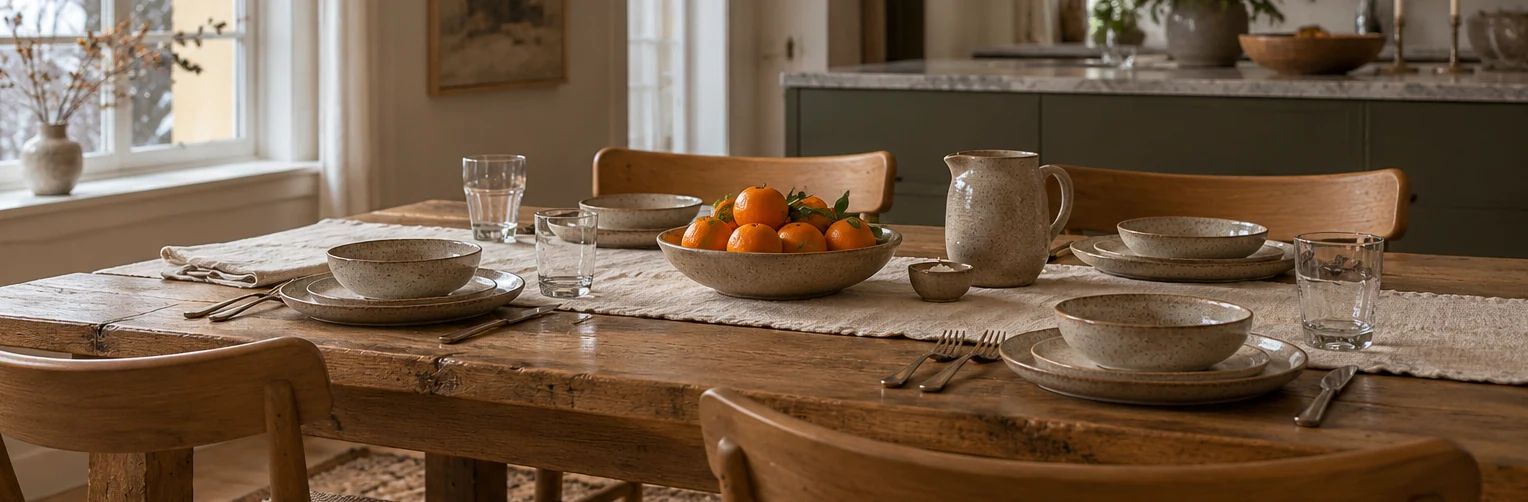
Winter dining table with oatmeal linen, handmade stoneware and a single low bowl of citrus.
Lay a plain linen or cotton runner along the table and set it with the stoneware you use every day. Cream, gray, or brown plates all work with a low bowl of clementines or pears. The fruit supplies color and volume, while the restrained fabric lets the glaze and grain of the table remain visible. Keep patterned napkins for another setting if the dishes already have strong markings.
For a compact round table, start with a bowl roughly the size of a side plate and test four complete place settings around it. The right size is the one that leaves room for glasses and shared food without guests moving things all evening. Use a food-safe bowl, inspect fruit regularly, and avoid piling it so high that it rolls when someone reaches across. Protect the table from damp or scratching with an appropriate mat underneath.
Serve the main dish from the kitchen if space is tight, keeping one shared salad or bread plate at the table. Afterward, return the fruit to its usual position and fold the runner for the next meal. This is a winter table that can remain in use on an ordinary weekday, rather than an installation that only makes sense before anyone sits down.
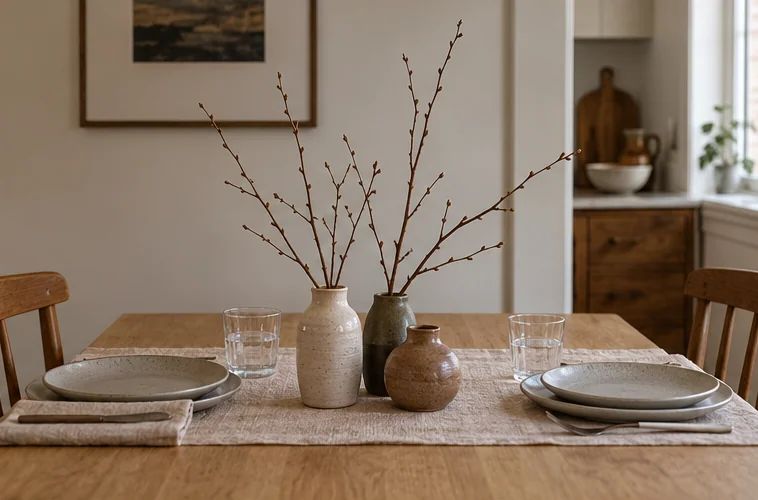
Three short ceramic vases with bare stems on a small dining table
Use three short vessels in different widths but a related finish: clear glass, cream ceramic, or brown stoneware. Add a small number of identified bare branches with appealing shapes. Their lines create a winter silhouette without forming a dense wall between diners. Keep the vessels low and trim any sideways growth that would reach a sleeve, glass, or serving spoon.
Arrange the vases along the center of a rectangular table with an empty stretch between each. Sit at both sides and check sightlines before guests arrive. A branch that seems delicate while standing can sit exactly at eye level when you take a seat. If the table is narrow, use a single small vase at one end and remove it when serving a shared platter. Any tray under the vessels should lift comfortably with their weight included.
Avoid unidentified berries, fragile shedding material, and stems that could be unsafe around the household’s pets or children. Keep dry branches clear of candles and heating appliances. Battery candles can provide light without bringing a flame into the arrangement. Tie the table back to the room with a napkin color from the curtains or rug; the branch shape already supplies enough seasonal detail without pinecones at every place setting.
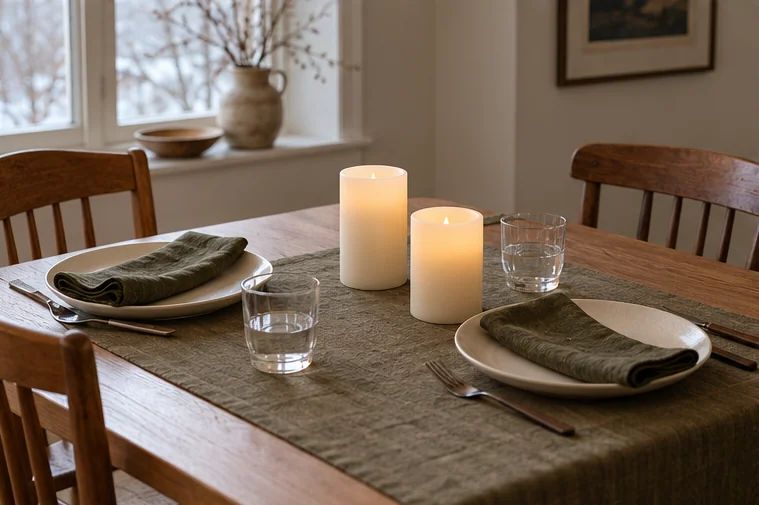
Cream plates, dark olive napkins and flameless winter candlelight
Pair plain cream or white plates with dark green, brown, or navy napkins. The contrast gives the table definition under winter evening light, particularly when the room has pale walls. Use simple clear glasses and one repeated metal finish if you own suitable cutlery or candleholders. Mixing every warm metallic object in the house usually makes this otherwise quiet setting feel busy.
Place two or three good-quality flameless candles in stable holders down the middle, checking that their bases actually fit. Choose a steady or gentle light rather than an aggressive flicker if people will eat and read place cards nearby. Keep battery compartments secured and small batteries inaccessible to children. The table still needs useful ambient lighting from lamps or a pendant; simulated candlelight alone is often insufficient for seeing food clearly.
Fold napkins loosely beside or beneath the cutlery so guests can lift them without disturbing a tower of decorations. Leave room for a small salt dish and water bottle. If you prefer real candles, follow candle and holder instructions and maintain proper clearance from fabric and other combustible materials; never leave them unattended. On a crowded table, choosing flameless light allows the composition to stay low and practical throughout the meal.
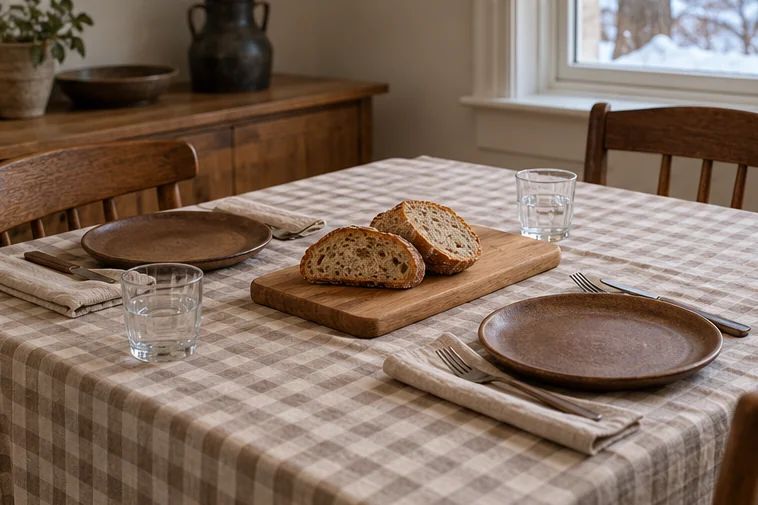
Checked tablecloth and wooden serving board with bread between brown plates
For a more relaxed table, use a small check in muted red, moss, or brown, then keep the remaining pieces plain. Spread the cloth evenly and check its overhang with chairs pushed in and pulled out. Fabric should not tangle around feet or catch a child’s chair. If the cloth is too large, fold it neatly into a runner rather than leaving long corners hanging into the route around the table.
Make a wooden serving board the center of the arrangement, provided it is suitable for food and cared for according to its instructions. It can begin with a jug and napkins, then hold bread during dinner. This avoids introducing a decorative piece that must be relocated the moment food arrives. Keep a separate heatproof trivet ready; an attractive board should not be assumed safe beneath a very hot pot.
Choose mismatched plain mugs or tumblers in a related color family, and use a small side surface for extra plates. For a simple soup supper, bowls, spoons, bread, and water are enough to establish the table. Skip loose greenery that could fall into food and heavily scented additions that compete with the meal. The checked fabric carries the winter character while the center stays useful from the first course to clearing away.
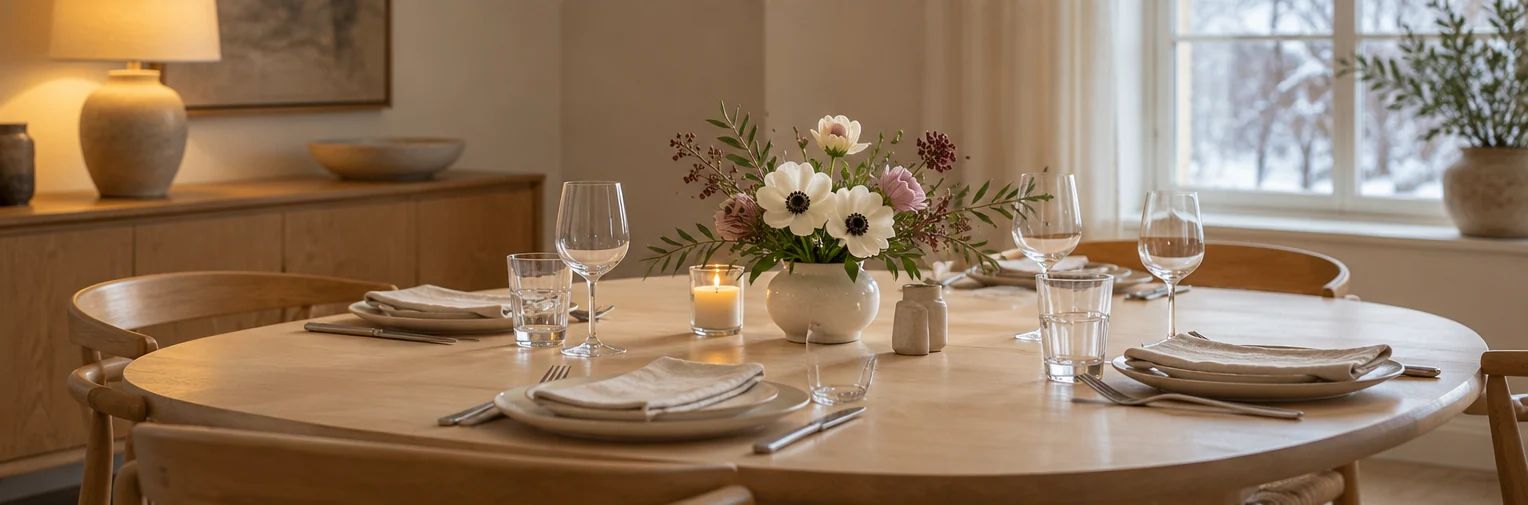
Pale dining table with small low cluster of white flowers allowing sightlines across the table.
Use pale napkins and ordinary glassware, then concentrate the color in one small flower arrangement. White flowers with a few muted pink or burgundy stems create a softer winter setting than a full evergreen centerpiece. Choose species that suit the household; avoid true lilies in a home with cats, and check other flowers before bringing them within reach of pets or children.
Build the arrangement in a clean, stable vase with foliage removed below the waterline. Trim it low enough that the diners can see one another comfortably. A compact cluster should have enough water to stay fresh throughout the meal, with no stems protruding over a plate. If the table is particularly small, put the flowers on the sideboard and bring one bloom in a small, stable vessel to the table.
Use flower food as directed and keep the arrangement away from direct heat. Inspect the water each day rather than leaving the vase in place as an untouched decoration. For an evening meal, add light through nearby lamps and let the flowers remain the only centerpiece. Winter lighting and textile changes can carry the rest of the room, so the table does not need to communicate the whole season by itself.
Set out one place and the largest serving dish before arranging anything decorative. That small rehearsal reveals the usable center of the table, and it makes every one of these settings easier to live with.
Set up a compact coffee corner that leaves room to cook, with five layouts for counters, shelves, drawers and carts, plus appliance and steam precautions.
Make winter evenings more comfortable with seven practical decor ideas, from layered lamps and washable throws to curtains, rugs, and restrained greenery.
Cook five easy cozy soup recipes: lentil-tomato, chicken-rice, potato-leek, white bean-kale and carrot-ginger, with quantities, substitutions and storage.