Set up a compact coffee corner that leaves room to cook, with five layouts for counters, shelves, drawers and carts, plus appliance and steam precautions.
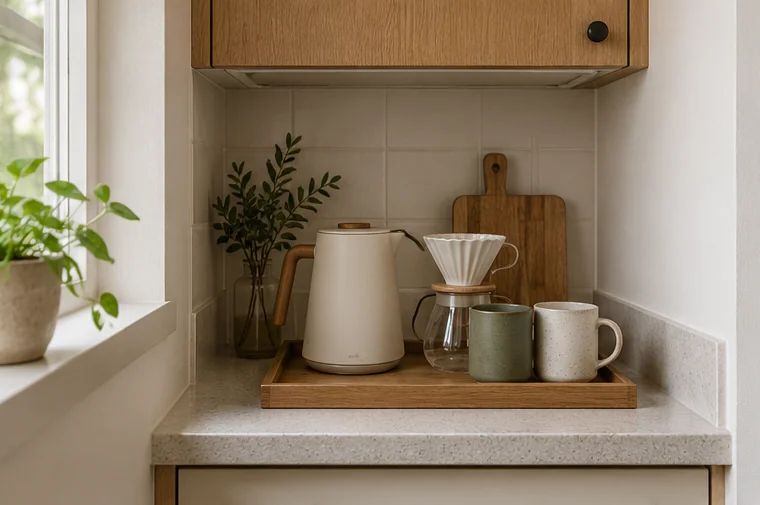
Compact coffee station on a narrow kitchen counter
Good coffee corner ideas begin with how you make the drink. In a small kitchen, a place for the machine or kettle, a few mugs and the supplies you actually use can be enough; the working counter still needs room for food preparation.
These coffee corner ideas for small kitchens offer five different arrangements. Choose one that suits your equipment and routine rather than trying to fit a large café-style station into a narrow worktop. A manual brewer and two mugs deserve a different solution from an espresso machine, grinder and milk pitcher.
Measure the equipment in use: lid open, water tank removed and drip tray pulled forward. Read your own appliance's manual for surface, ventilation and operating restrictions. For example, the Nespresso CitiZ instructions require a stable surface resistant to heat and fluids and prohibit using that model in a cabinet. An open cupboard door does not override a manufacturer's restriction. Keep the principal food-preparation area available before assigning space to coffee.
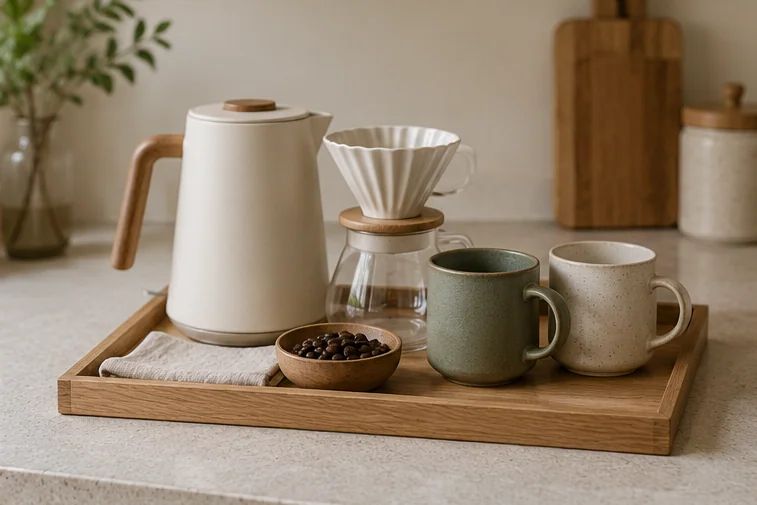
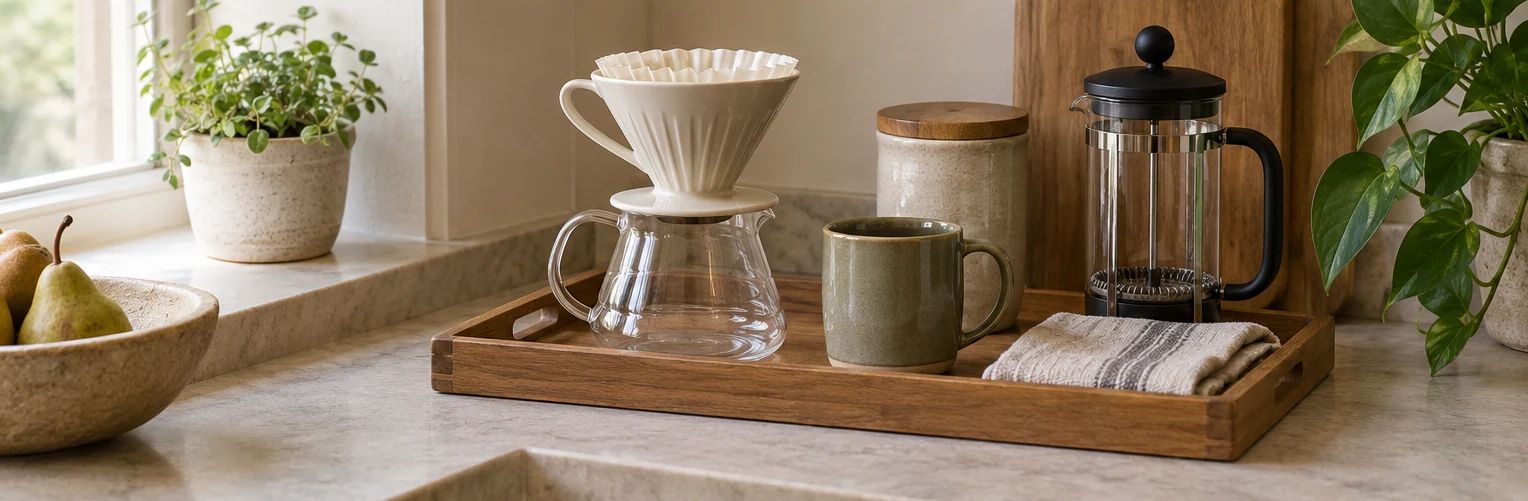
Kettle, ceramic dripper and two cups arranged on an oak tray
At the end of a clear counter run, group the supplies you handle together on a shallow tray: two mugs, a coffee container and the scoop or spoon. Keep a machine on the worktop unless its manual and the tray's stability make another placement suitable. A tray is most useful for moving small accessories out of the way, not for making a heavy hot appliance portable.
Choose a wipeable material with enough room to pick things up without knocking their neighbors. A decorative tray with high handles can be awkward below wall cabinets, and an absorbent woven base is difficult to keep clean around spills. Test the footprint with a piece of paper before buying.
Place the station within sensible reach of water, but avoid crowding the sink splash zone or positioning cords where they can get wet. Leave the machine's controls, tank and ventilation accessible. Keep it away from cooking heat in accordance with its instructions.
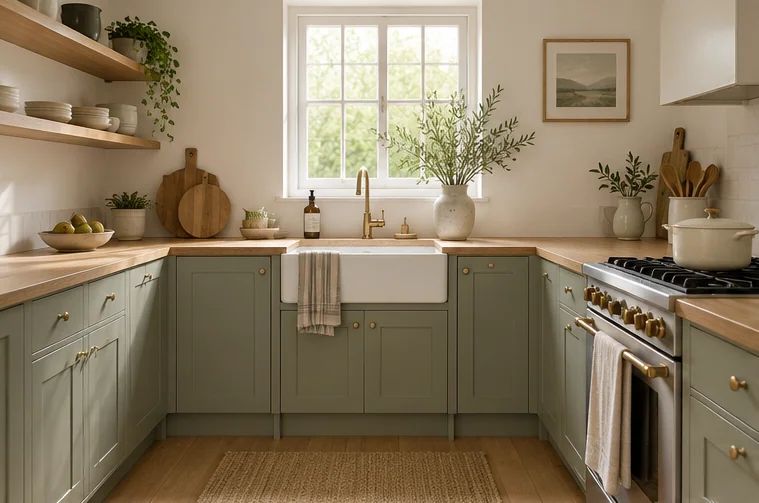
Use color through one mug pair or a small ceramic container rather than multiple ornaments. A daily reset should mean washing the tools, wiping the counter and returning a few objects. If clearing the station is a project, reduce its contents. If you want to introduce a quiet accent color here, these sage green combinations begin with the existing countertop and light.
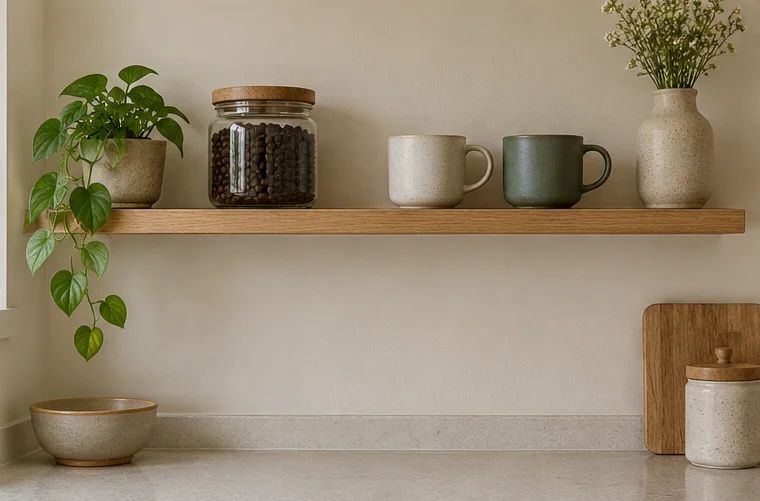
Mugs and coffee jar on a shallow shelf above a clear counter
A wall shelf can take clean mugs and a small coffee container off the counter while leaving the appliance on a suitable working surface. Position it beside the steam path rather than directly above it where possible. The required separation depends on the equipment and shelf material, so follow the appliance instructions instead of borrowing a standard height from a photograph.
Choose depth by the objects you intend to store. A shallow shelf that fully supports a mug may be sufficient; a deep shelf above a narrow worktop can feel intrusive and make the rear of the counter difficult to use. Keep the items you reach for most within comfortable reach without leaning over a hot appliance.
Mount the shelf with load-rated hardware suitable for the wall, accounting for the combined weight of the shelf and its contents. Adhesive hooks are not a substitute for structural shelf fixings. In a rental, obtain permission or keep the accessories inside an existing cupboard instead.
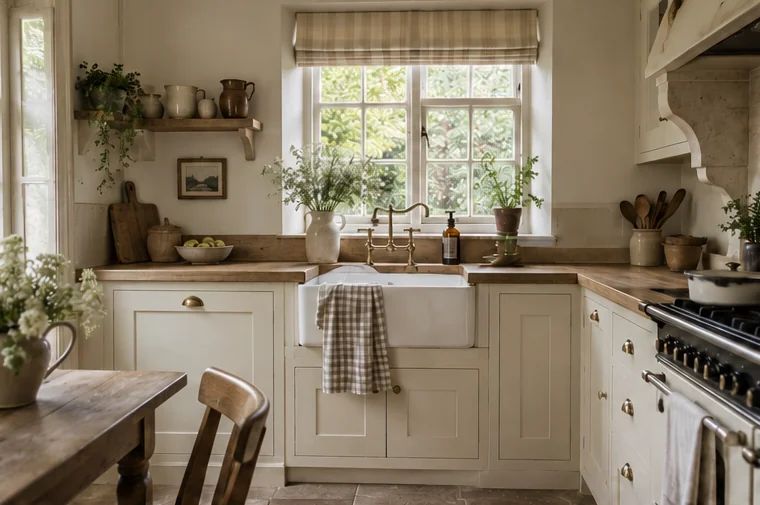
Limit the display to the mugs used regularly. Dust and kitchen residue still collect on open storage. If cups need washing before every use, the shelf has become a display rather than a helpful part of the routine. For a similar balance of useful display and closed storage, see our cottage-inspired kitchen ideas.
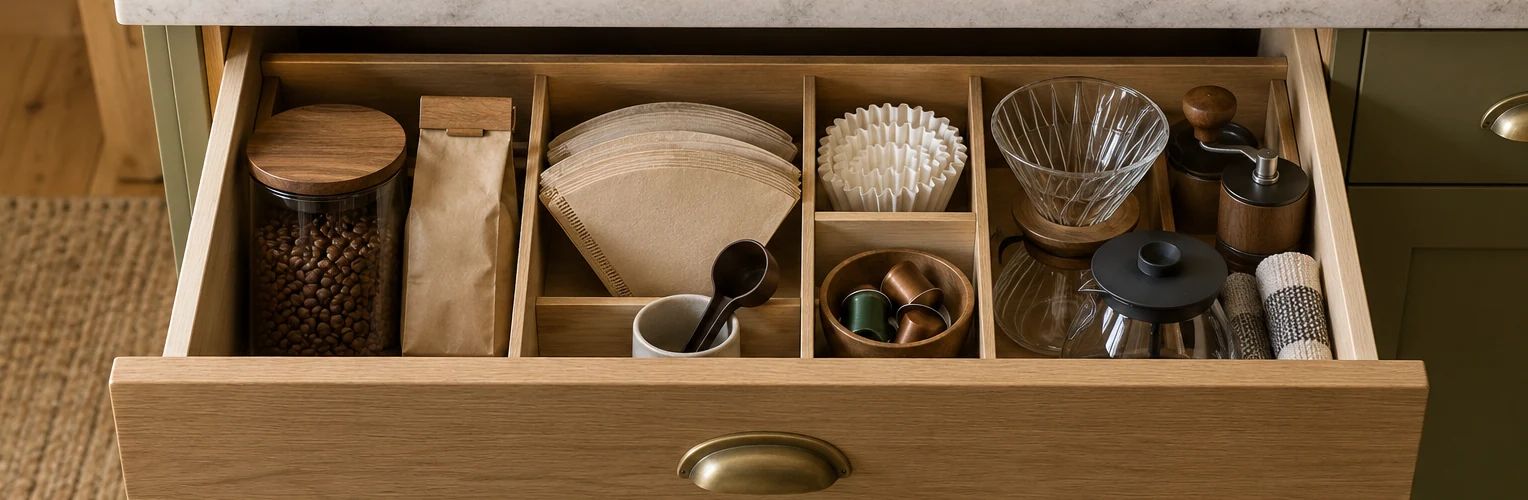
Open shallow kitchen drawer with dry coffee filters, scoop, brewer tools and dividers.
A nearby drawer can hold filters, a scoop, spare pods or the manual-brew tools while only the appliance remains on the counter. This is often the cleanest-looking solution in a narrow kitchen because it gives small supplies accessible storage without adding another object above the worktop.
Measure the drawer's interior width, depth and usable height, including any obstruction from its runners. Fit a few shallow dividers around the real contents. Store coffee in its suitable airtight container or well-closed packaging as directed, rather than decanting solely to make every compartment look the same. Keep identification and relevant dates available.
Do not place damp tools straight into closed storage. Dry the brewer parts, scoop and reusable filter appropriately before returning them. Put cleaning products elsewhere, separate from food and drink supplies. A drawer is a home for the equipment between uses, not a place to operate a hot appliance.
Keep only a practical reserve of consumables here. A month's supply may suit your space; bulk buying can quickly occupy the drawer meant for useful tools. Check what you actually use before ordering organizers or committing the whole drawer to a display of identical pods.
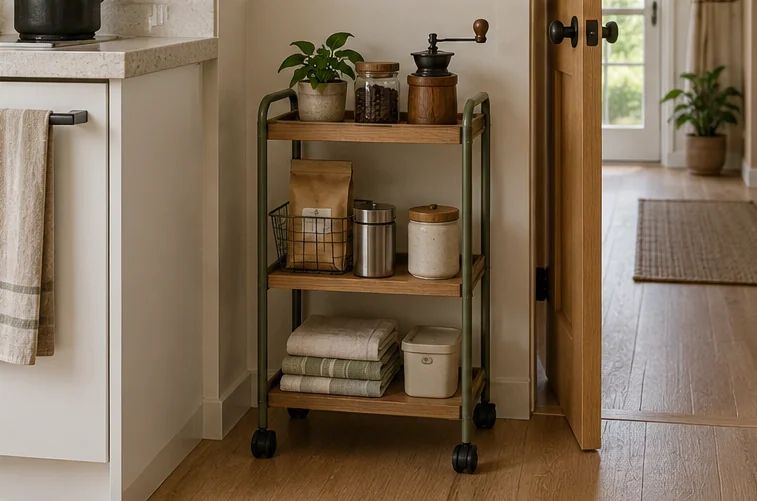
Slender coffee trolley beside a small kitchen counter
A small cart can hold mugs, beans and brewing tools when there is no spare cupboard, but first identify a place where it can remain without narrowing the kitchen route. Measure the handles and wheels as well as the shelves. A cart that must be moved whenever the oven opens is a recurring inconvenience.
Put heavier items low and use the cart within its load limits. Choose a stable base and effective wheel locks where applicable. Do not assume a narrow rolling trolley is an appropriate operating platform for a hot coffee machine. A fixed worktop is often the better place for the appliance, while the cart carries dry accessories.
Keep the top mostly clear if you want it to provide an occasional landing space. A tray of mugs can be lifted away, but it needs a destination; otherwise the promised extra surface never becomes available. Check that the finish can tolerate the kitchen's cleaning and moisture conditions.
Plan electrical use at the fixed counter, with safe outlet access and no trailing lead across the route. A cart's appeal is flexibility, which disappears when it is tethered awkwardly. If there is no sensible parking space, a drawer-based station will be less visually charming and more useful.
Dry pour-over cone, glass server and mug together on a removable tray beside a cupboard.
A pour-over cone, French press or other manual brewer can work well when a small kitchen cannot spare a permanent machine footprint. Keep the dry brewing equipment together on a tray or in a shallow cupboard so you can set it out in one movement. Choose the method you enjoy using, accounting for its cleaning as well as its size.
Store the kettle on a stable surface with the clearances its instructions require, keeping steam away from vulnerable finishes and cords away from the sink and hob. During brewing, give hot water and the brewer a secure position; a tray balanced over the sink is not an extra countertop.
Allow wet equipment to cool and dry before putting it into closed storage. Wash and maintain reusable filters according to their instructions, and keep glass brewers where they cannot be knocked from an edge. Reserve an appropriate place for used grounds or filters so the counter can be cleared easily.
Let the small kit provide the decorative detail: a good-looking mug, a simple canister and the natural shape of the brewer. It does not need a sign or a row of flavoring bottles to read as a coffee corner. When packed away, the kitchen regains the surface for cooking.
Choose the arrangement that preserves your most useful preparation space and makes cleaning straightforward. Before adding shelves or a cart, run the proposed station through a normal morning. Refill, brew, rinse and put away: those movements will reveal whether the corner is actually the right size.
Explore seven cottagecore kitchen ideas using practical storage, washable linens, useful ceramics and gentle color, while keeping your working surfaces clear.
Choose sage green for your actual kitchen light, then pair it with warm whites, wood or a small set of accessories, including practical rental-friendly options.
Seven small space organization ideas built for everyday use, with practical storage choices, access rules and simple ways to prevent clutter returning.
May we use Google Analytics cookies to understand visits and which ideas readers find useful? It is optional. You can change your choice below at any time. Privacy details