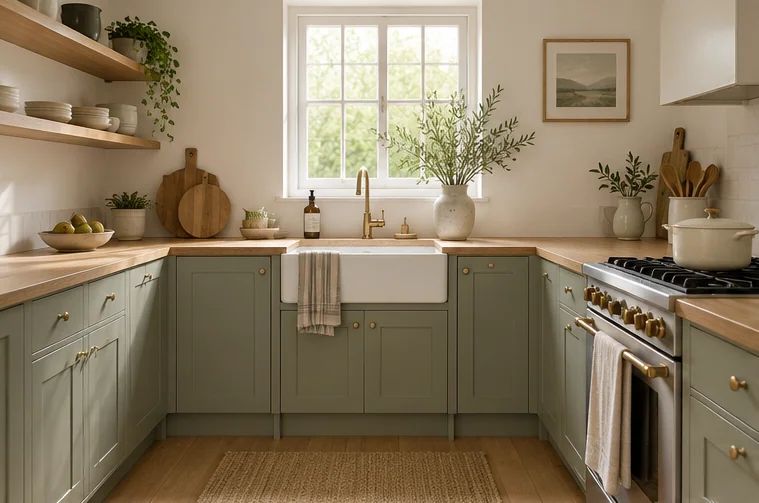
Explore seven cottagecore kitchen ideas using practical storage, washable linens, useful ceramics and gentle color, while keeping your working surfaces clear.
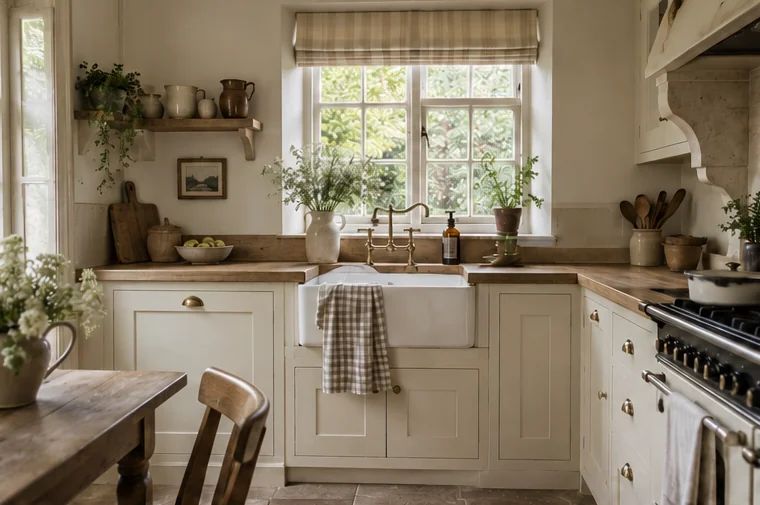
Small cream cottage kitchen with oak shelf and pottery
A cottagecore kitchen can feel welcoming without turning every surface into a display. Everyday utensils, washable linens and a few well-chosen details can bring the gentle, collected feeling while leaving enough space to cook.
These cozy cottagecore kitchen ideas suit an ordinary fitted kitchen as well as an older home. They introduce warmth through a restrained palette, a little visible storage and practical pieces with variation. You can keep modern appliances and existing cabinets; the room does not need to pretend it belongs to another century.
Choose one clear preparation area and protect it from display. Check where heat, grease and splashes reach before adding fabrics, shelves or wooden objects. Look at the cabinet color, countertop and floor together. Their existing undertones should guide the decorative additions, especially if a larger renovation is not planned.
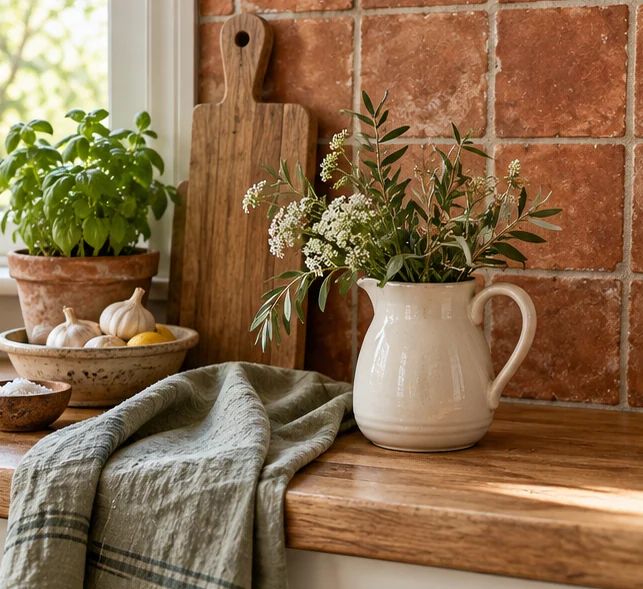
Dusty sage tea towel and cream ceramic jug beside existing terracotta tile.
Choose a color that already has a relationship with the room: a soft green beside warm wood, a subdued cream against terracotta, or a dusty blue beside a quiet stone-colored worktop. Start with a towel, small textile or ceramic piece if you are unsure. A limited addition is easier to judge than a whole set of newly painted cabinets.
Keep the main areas calm enough for ordinary objects to have presence. Patterned tiles, strongly grained wood and a busy countertop already provide detail. In that setting, plain cream ceramics can be more useful than another floral print.
View samples beside fixed surfaces in daylight and under the kitchen lights. A color called sage or linen can have very different undertones between manufacturers. If green is the direction you prefer, use the comparisons in our sage green kitchen guide before deciding whether paint or accessories should carry it.
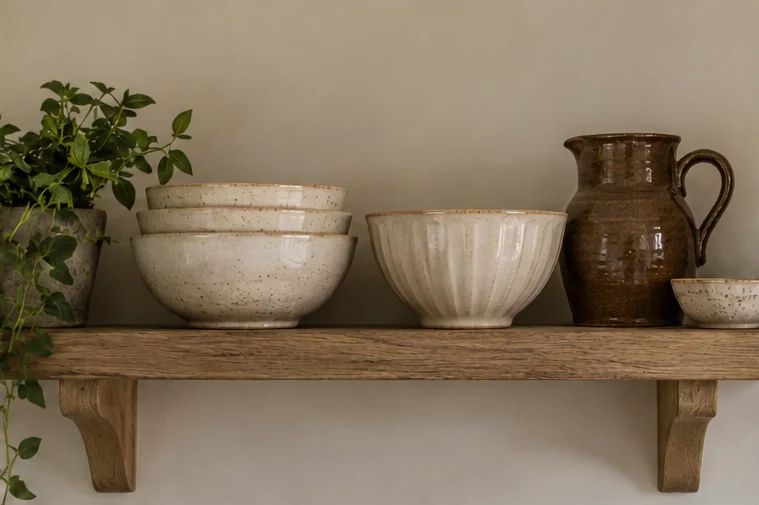
Cream ceramic bowls and brown jug on a short oak shelf
A small display of plates, bowls and a jug can give the kitchen a lived-in character while keeping useful items close. Choose the pieces you use often enough to wash regularly. One restrained shelf can deliver the effect without exposing every mug and mixing bowl to cooking residue.
Measure the shelf depth against the actual dishes and support their full bases. Mount it with appropriate fixings and load capacity, keeping heavy items low and reachable. Avoid positioning display directly where grease or steam accumulates, and leave enough room around objects to lift them safely.
Use similar tones rather than identical sets if you enjoy a collected appearance. A plain white plate, speckled bowl and cream jug can share a shelf comfortably. Chips, crazing and unknown provenance need more caution: decorative or vintage ceramics should not automatically be assumed suitable for food. Keep uncertain pieces for non-food display and choose verified food-safe items for daily use.
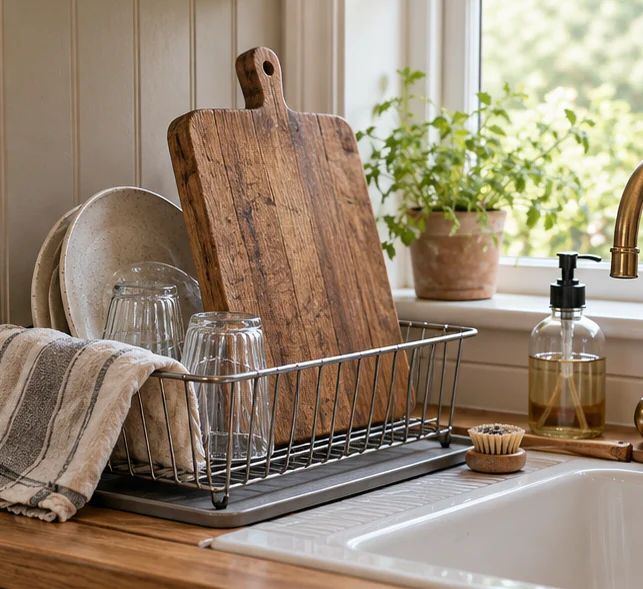
Dry wooden chopping board upright in a draining rack far from the hob.
A wooden board, utensil handle or small stool can bring grain and a useful warm tone into a fitted kitchen. Start with functional items instead of adding wooden accessories to every surface. A sound board used for food preparation has more purpose than several decorative boards arranged where they collect splashes.
Care for each item according to its material and instructions. Dry boards and utensils appropriately before storing them, and avoid trapping moisture between a board and the wall or countertop. Do not use a damaged or unstable board simply because its wear looks appealing.
Let the finish relate to the kitchen's existing wood without forcing an exact match. A medium-brown board can bridge pale cabinets and a darker table. Keep combustible objects away from cooking heat according to the appliance requirements. Leaning wood behind a hob may be common in styled images, but it is not a sensible default position for a working kitchen.
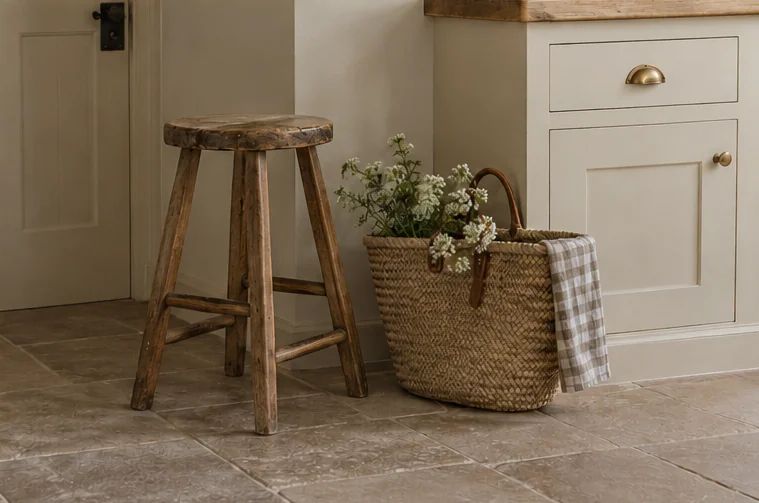
Vintage wooden stool and woven basket beside cream cabinets
Look for a piece whose size and condition suit something you already do: a small wooden stool for a plant away from food preparation, a sturdy basket for clean tea towels or a wall clock. One useful vintage object can provide more character than a cluster of distressed-looking reproductions.
Inspect it before buying. Check joints, stability, sharp edges, signs of pests and the condition of any coating. Old paint or an unknown glaze deserves caution rather than casual sanding or food use. A vintage electrical item needs appropriate inspection or repair; age and an attractive finish do not establish safe operation.
Keep the surrounding arrangement fairly simple so the piece reads clearly. A patterned jug may only need plain cups beside it. If the object has no usable home or job, leave it at the shop. Secondhand purchases still consume money and space, as the total-cost approach in our budget apartment decorating ideas explains.
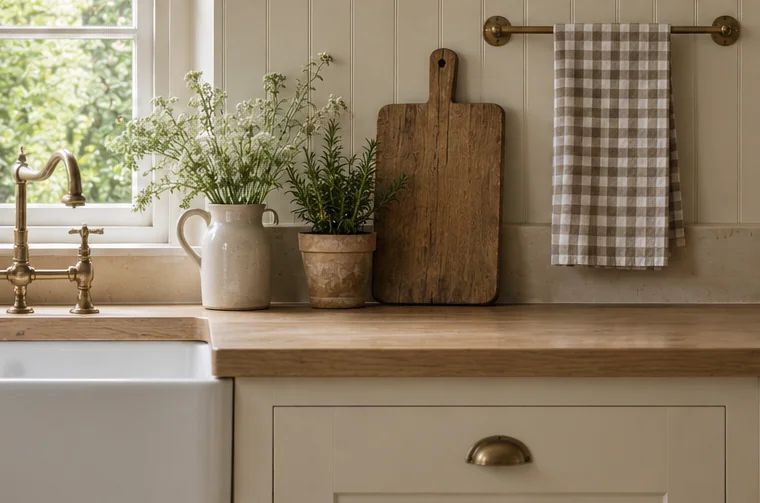
Checked tea towel and upright wooden board near a kitchen sink
A cotton or linen-blend tea towel, simple café curtain or modest tablecloth can soften hard cabinetry. Choose one pattern scale: a small check, narrow stripe or quiet floral. Repeat a related plain color elsewhere so the fabric feels connected to the room rather than added as a theme.
Put practicality first. Keep loose fabric away from hobs, toasters and other heat sources according to their instructions. A sink skirt should not obstruct ventilation, access to plumbing or appliances, and it needs to tolerate the washing routine the location demands. Curtains must allow safe window operation.
Measure before buying and check shrinkage instructions. A textile that drags through splashes will need more attention than a shorter, well-positioned piece. If a curtain is impractical, a fresh towel hanging in a safe place can provide enough softness. Avoid layering several decorative towels over the one everyone needs to use.
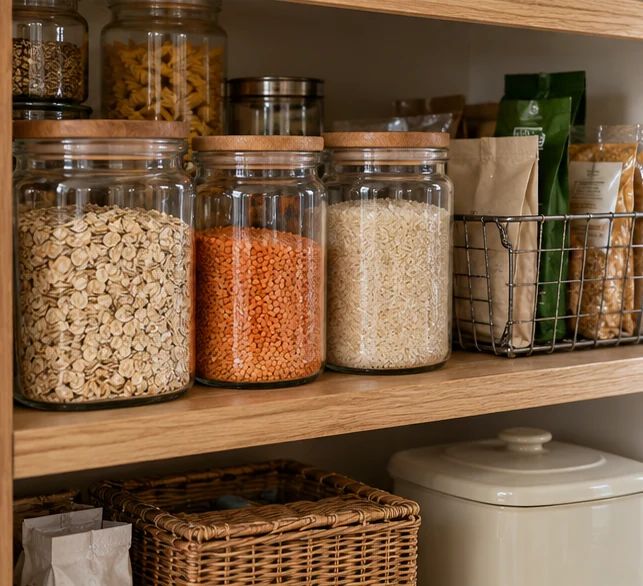
Clear airtight ingredient jars containing oats, lentils and rice beside organized original packets.
A few clear jars can look appealing when they hold ingredients you regularly use, but decanting should make cooking easier. Keep the product name, relevant allergen information and dates available, and use containers appropriate for the food. A photograph-friendly jar is less useful if you cannot identify its contents or fit a measuring cup through the opening.
Choose a small number of stable, cleanable containers that fit the cupboard or shelf. Leave enough room to lift them without knocking adjacent glass. Avoid high displays of heavy jars over a work surface where people regularly reach beneath them.
Keep the rest in suitable original packaging if that works better. A mixed cupboard can still function well when categories are clear. Use a basket for packets or a tray for baking supplies, then put it away after use. The cottage impression can come from a few honest everyday objects; the entire pantry does not need to be on display.
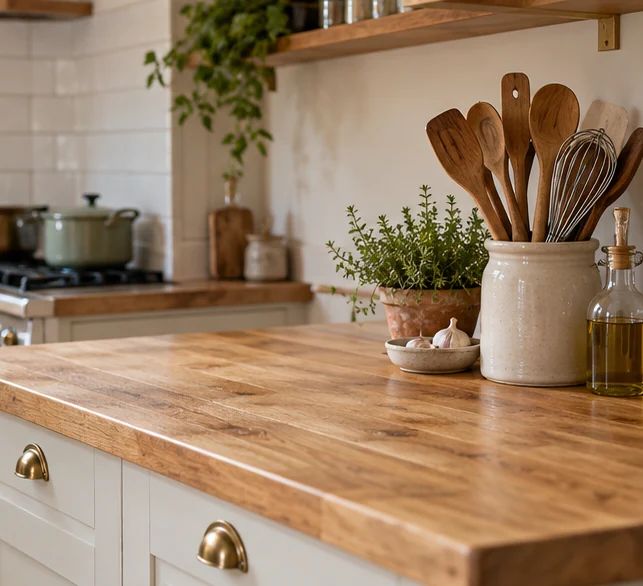
Cottage kitchen worktop with a broad empty preparation area beside one utensil crock.
A cottage kitchen can look abundant without occupying every usable surface. Keep the principal preparation area clear, then group a few regularly handled items at one end: utensils near their work zone, a board stored safely and perhaps a small jug. Let the negative space show that the kitchen is ready for a task.
After making a normal meal, notice which objects had to move. If the decorative arrangement migrated to the dining table before you could chop an onion, reduce it. Place occasional appliances and extra utensils in accessible storage where possible, rather than building displays around them.
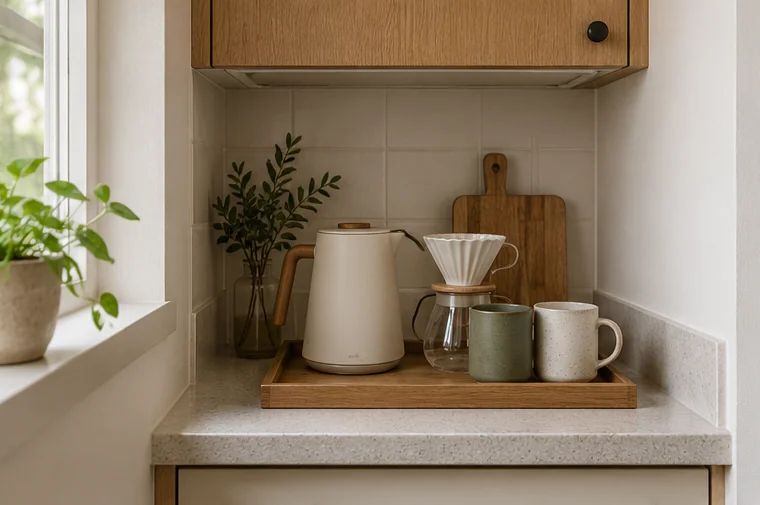
A tiny coffee corner can contribute character when it remains compact and easy to clean; these five small-kitchen coffee layouts help choose a footprint. Finish the counter with one easy wipe-down, not a sequence of lifting numerous ornaments. The kitchen's warmth should survive cooking, spills and a busy morning.
Choose the one addition that will be used most: better-looking everyday dishes, a washable textile or a practical piece of wood. Let it establish the character, then stop before the preparation space shrinks. A working kitchen gains charm through repeated use and care.
Choose sage green for your actual kitchen light, then pair it with warm whites, wood or a small set of accessories, including practical rental-friendly options.
Set up a compact coffee corner that leaves room to cook, with five layouts for counters, shelves, drawers and carts, plus appliance and steam precautions.
Try seven small apartment decorating ideas on a budget, from improving the layout and buying secondhand carefully to choosing useful lighting and washable textiles.
May we use Google Analytics cookies to understand visits and which ideas readers find useful? It is optional. You can change your choice below at any time. Privacy details