Choose sage green for your actual kitchen light, then pair it with warm whites, wood or a small set of accessories, including practical rental-friendly options.
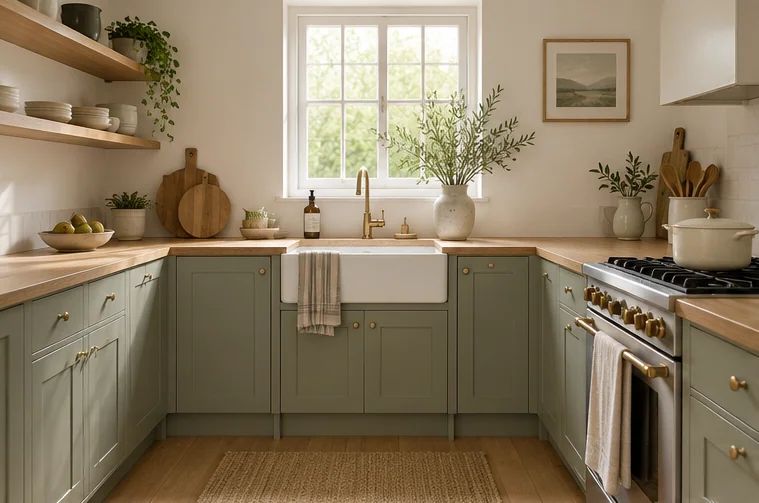
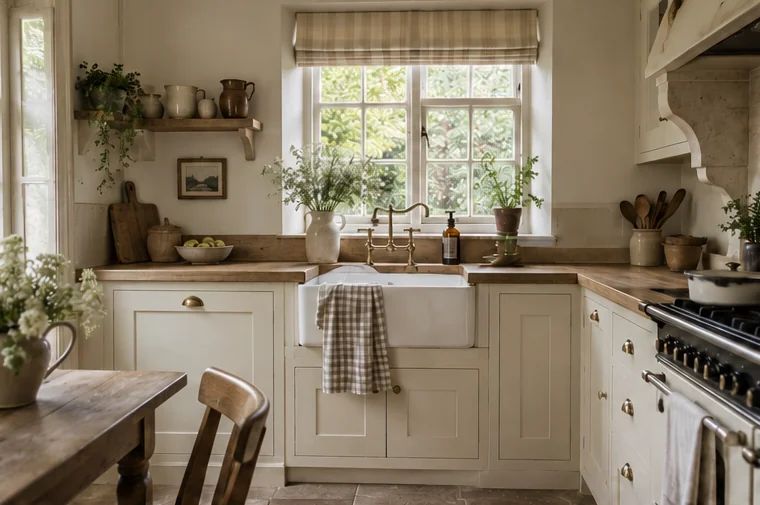
Small kitchen with muted sage lower cupboards and oak counter
Sage green is a family of muted greens rather than one dependable shade. Some versions lean blue-gray, others carry more yellow or brown, and the same sample can look quite different beside white tile or honey-colored wood. That makes the surrounding kitchen as important as the color name.
These sage green kitchen decor ideas offer different levels of commitment, from testing a palette to repainting suitable cabinets. You do not need green walls, green doors and green accessories together. Choose one place for the color to lead, then use the materials already in the kitchen to support it.
Collect samples beside the countertop, backsplash and flooring. Check them in daytime and with the normal kitchen lights on. A screen image is useful for direction but unreliable for final color choice. If cabinets are under consideration, identify their substrate and finish before choosing products; painting wood, laminate and factory-coated doors involves different preparation and compatibility questions.
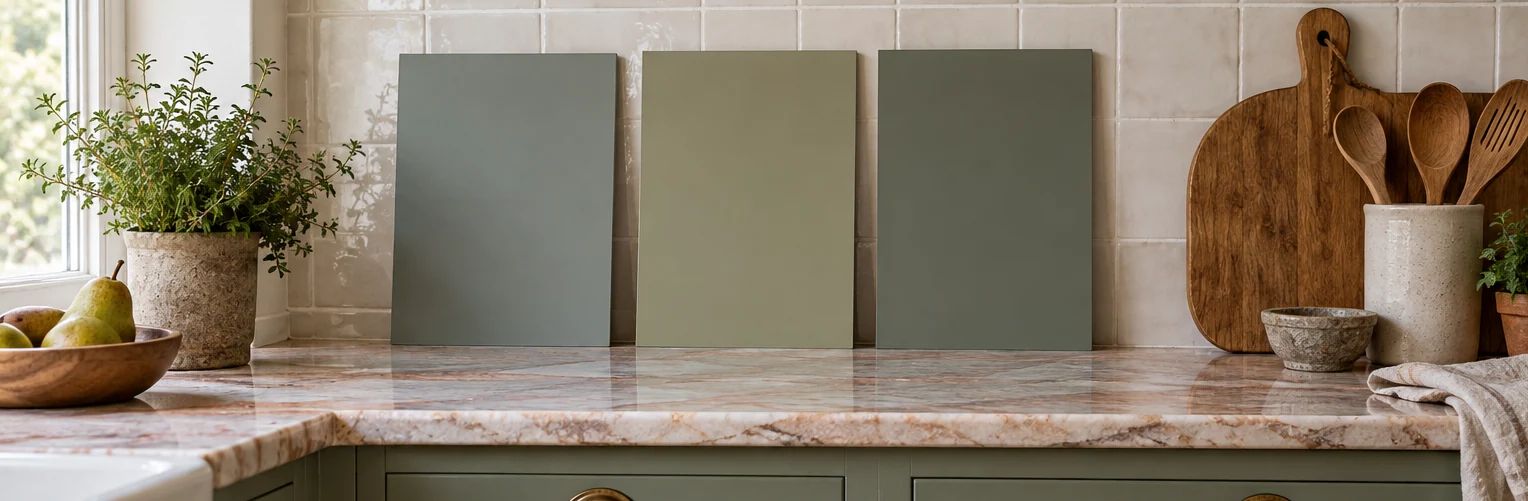
Three different muted green paint samples against fixed kitchen worktop and cabinet finish.
Choose a few muted greens that differ in undertone, not a dozen nearly identical shades. Compare one slightly blue-gray sample with a warmer yellow-green and a quieter gray-green. Place them against the countertop edge and backsplash where the new color would actually meet those surfaces.
Farrow & Ball's description of Vert de Terre, for example, identifies a blue undertone in a soft green. That is a useful reminder that a gentle-looking green can still be cool. It is not a universal recommendation for your room. Warm wood, cool white tile and pinkish stone each change how neighboring green reads.
Use large movable samples where possible, following the paint maker's sampling guidance. View them on more than one cabinet position and under evening task lighting. A sample near the window can look clearer than the same color in a shaded recess. Keep the surrounding surfaces visible rather than judging the green on an isolated white board alone.
If no sample works comfortably, pause rather than forcing a fashionable shade. A small textile may provide enough green, or a different muted color may suit the fixed kitchen better. The goal is a coherent room, not loyalty to a name on the tin.
A warm white can keep sage from feeling stark, but warmth needs to relate to the other finishes. Compare whites beside the selected green, the existing ceiling and any tile you will keep. A creamy white may look yellow against cool tiles, while a clean neutral white can make an already muted green appear grayer.
Choose which white is staying before buying more. If the kitchen has a strong existing white in the countertop or appliances, use it as a reference. You can repeat a softer version in tea towels or ceramics without trying to make every painted and glazed surface identical.
Keep the transition simple. Sage lower cabinets with pale upper walls can work when their undertones agree, while a green accessory group on a pale counter may be sufficient in a rental. Introduce only one or two accent colors initially, such as a little muted clay or charcoal, and judge them in the room.
For a deeper comparison method, use our guide to warm neutral undertones. Its principle applies here: the successful combination is the one that works with the surfaces you already have, rather than the one with the most reassuring color names.
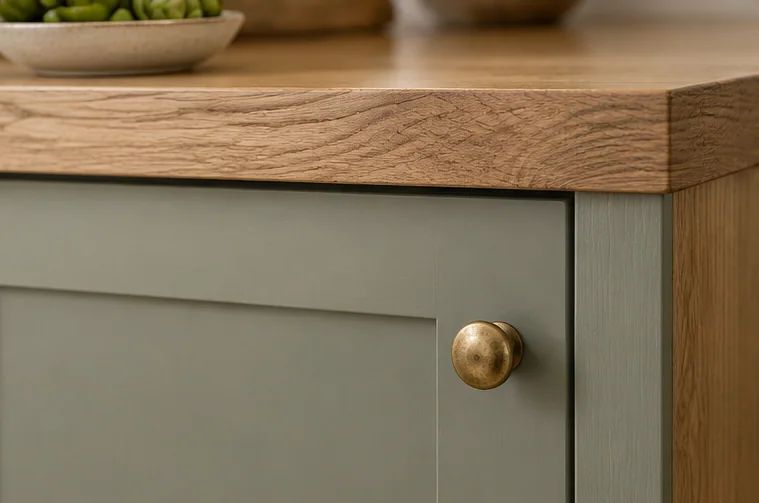
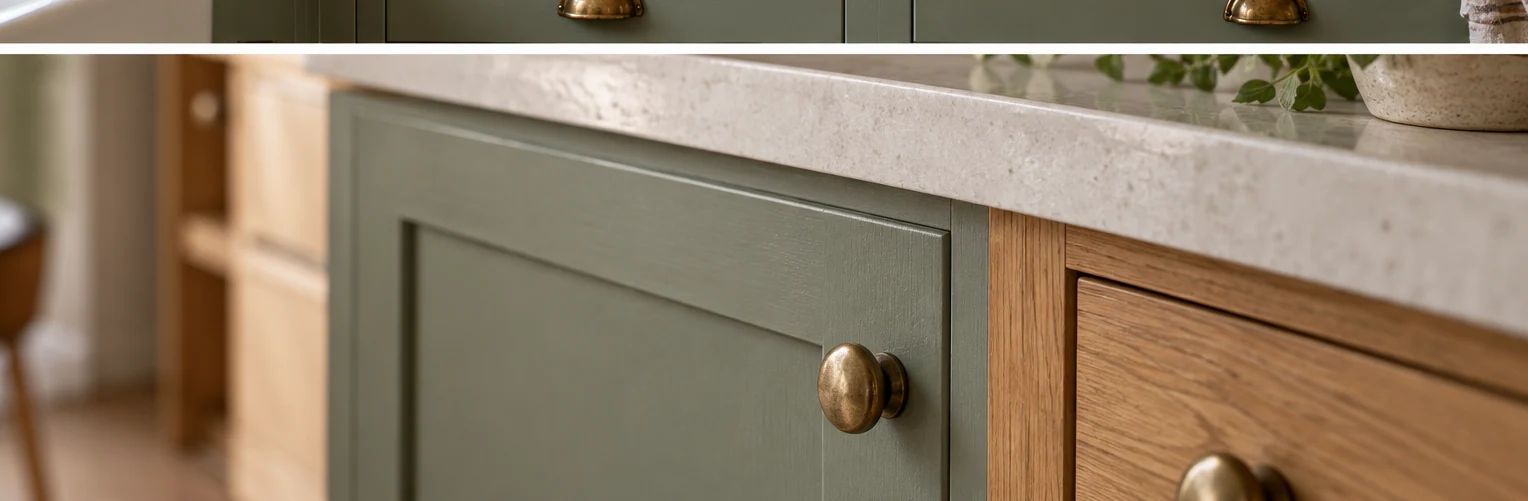
Muted sage cabinet beside honey oak and an aged brass knob
Natural-looking wood provides variation beside a flat green surface. In a cool sage kitchen, a medium warm wood can make the combination feel less austere; where the floor is already orange-toned, a quieter brown or pale finish may be easier to use. Work from existing materials before adding another wood tone.
Try the relationship with a practical board, stool or dining chair. Keep the object where its purpose makes sense and where it can be maintained appropriately. A board stored upright needs a stable position and room to dry; it should not be leaned behind a hob merely for the color combination.
Use one repeated wood tone if the kitchen already has several competing finishes. A table and small frame with similar warmth can connect the eating area and cabinetry without matching precisely. Clear enough space to see the grain rather than burying every surface under accessories.
Metal finishes can support the palette as well. Muted brass often looks warm, while dark metal gives definition, but either should relate to the existing tap and handles. There is no need to replace functioning fittings just to achieve a prescribed sage-and-brass formula.
Close view of a smooth painted sage kitchen cabinet door beside its original wood edge.
Painting cabinet fronts is a more substantial change than adding accessories. Identify whether the doors are solid wood, veneer, laminate or another factory finish, then consult a compatible coating system's preparation and curing instructions. A suitable primer and finish depend on that surface and its condition; a color choice does not determine the method.
Test discreetly before committing to every door. Remove and label hardware where appropriate, plan the drying and curing space and allow the kitchen to remain usable. If an old coating is unknown, seek appropriate advice before sanding or disturbing it. Do not promise yourself a one-afternoon makeover when the product requires a longer process.
Choose the painted area deliberately. Lower doors can carry green while upper cabinets remain pale, but a small run of cabinets may look calmer in one consistent finish. Check that the chosen green works beside the countertop edge, not only on a wall sample.
In a rental, obtain written permission before painting. Adhesive cabinet films can still damage finishes and have heat or moisture restrictions; they are not automatically a reversible substitute. For a lower-commitment approach, keep the cabinetry and introduce green through items you can take with you.
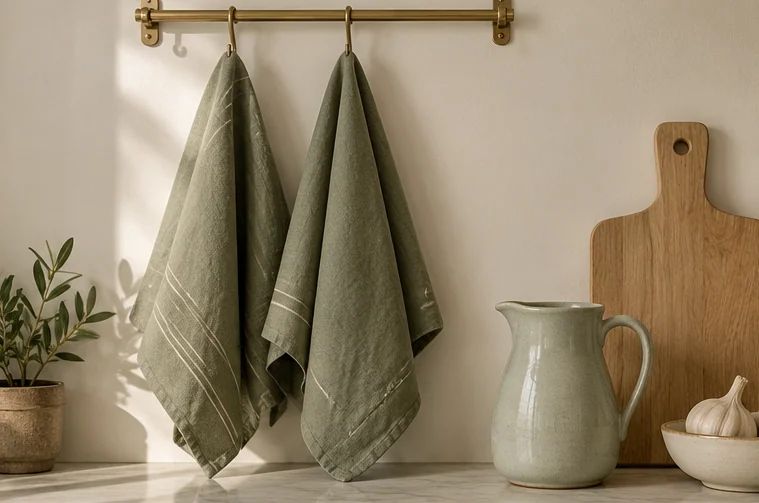
Sage tea towels and pale green jug in a cream kitchen
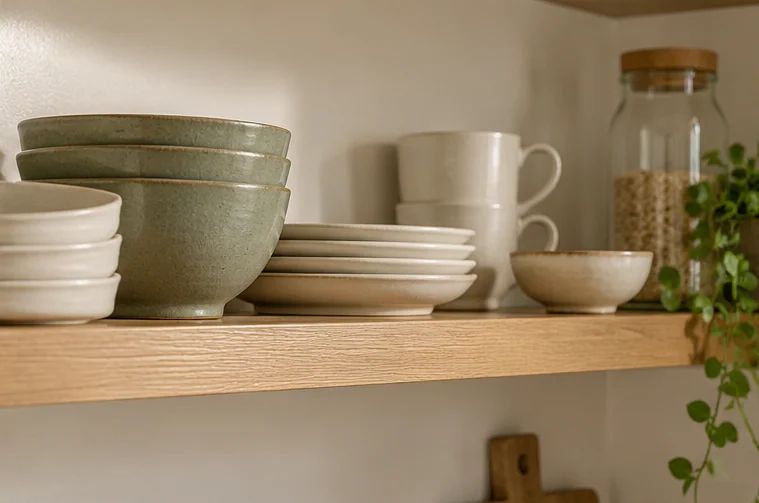
Begin with two or three useful items: a pair of green mugs, a washable towel and a small utensil pot if you need one. Place them in related positions rather than lining every green object along the backsplash. A modest repeat gives the color enough presence without making the kitchen feel themed.
Look for variation in finish while keeping the undertones reasonably related. A matte textile and glazed ceramic can sit comfortably together even when their shades are not identical. Compare them against the counter in person; product photographs and screens can exaggerate or mute the green.
Keep each object functional. A utensil pot needs a stable base and enough room to remove tools, while a tray should be wipeable and appropriately sized. Avoid putting decorative textiles close to cooking heat or adding a plant to a dark worktop simply because its leaves match the palette.
This approach is particularly useful for renters, alongside other reversible ways to personalize an apartment. Live with the small group before buying more. If the green consistently looks right and you still want a larger change, you will have a more reliable reference for future paint samples.
Choose the shade beside the fixed finishes, then decide how much of the room it deserves. A carefully selected towel and a pair of mugs can be a complete result. Cabinet color is worthwhile when the surface, preparation and surrounding palette all support the change.
Explore seven cottagecore kitchen ideas using practical storage, washable linens, useful ceramics and gentle color, while keeping your working surfaces clear.
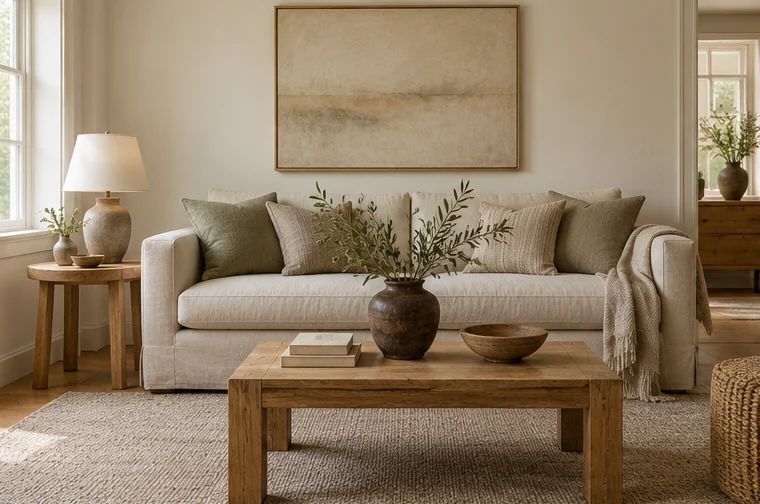
Try seven warm neutral decor ideas using texture, lighting, wood and a restrained palette. Work with the furniture, finishes and daylight your home already has.
Learn how to make a rental feel like home with five practical ideas for lighting, personal displays, useful storage and reversible changes that suit your lease.
May we use Google Analytics cookies to understand visits and which ideas readers find useful? It is optional. You can change your choice below at any time. Privacy details