Cook five easy cozy soup recipes: lentil-tomato, chicken-rice, potato-leek, white bean-kale and carrot-ginger, with quantities, substitutions and storage.
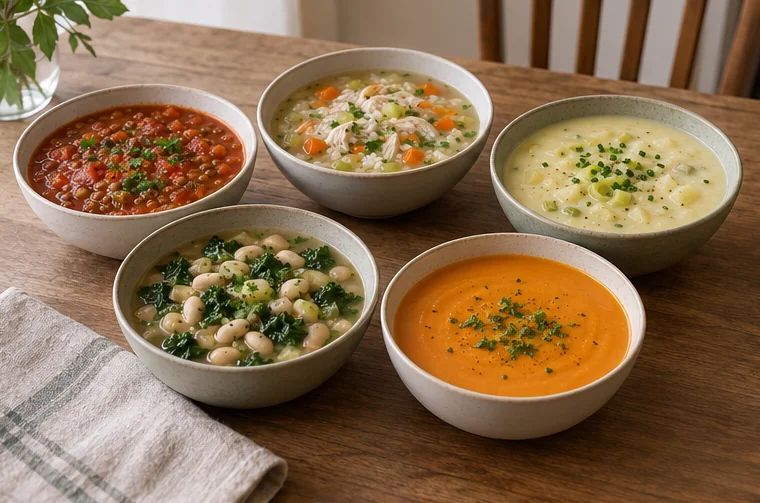
Five bowls of lentil, chicken rice, potato leek, white bean and carrot soups
These five easy cozy soup recipes use different textures and pantry staples, so they offer a real choice: whole brown lentils in a tomato broth, clear chicken soup with rice, softly mashed potato and leek, whole white beans with kale, or a smooth carrot and ginger soup.
Each makes four meal-sized portions, especially with bread or another accompaniment. Use a heavy saucepan of about 3–4 litres for the soup; the chicken recipe also needs a small lidded pan for rice. Preparation and cooking times are estimates, and vegetables should be cooked to the stated texture rather than stopped by the clock. If you plan to cook ahead, the simple Sunday reset routine can help you choose a meal and clear preparation space before you start.
These are original recipe formulations informed by the culinary references below. They have not been kitchen-tested by Nook and Season. Salt needs will vary with the stock and canned ingredients, so use the stated small starting amount and adjust at the end.
Read the complete recipe and measure the ingredients before heating the pan. A tablespoon means 15 ml and a teaspoon 5 ml; ingredient weights refer to the prepared edible portion unless stated otherwise.
Use lower-salt stock where possible. Check labels for relevant allergens and dietary requirements; stock, plant milks and garnishes vary.
Wash hands, utensils and preparation surfaces after handling raw chicken. Keep it separate from ready-to-eat ingredients, and use a food thermometer to confirm a safe internal temperature.
For leftovers, follow USDA guidance: refrigerate promptly in shallow containers within two hours, or within one hour above 32°C/90°F; keep the fridge at 4°C/40°F or below. Do not leave a large pot out until it reaches room temperature. The rice recipe has a shorter cooling and storage schedule below.
Reheat only the portion needed, stirring for even heating, to at least 74°C/165°F throughout; USDA also advises bringing soups to a boil. Add a little water if necessary. Thaw frozen portions in the fridge before reheating.
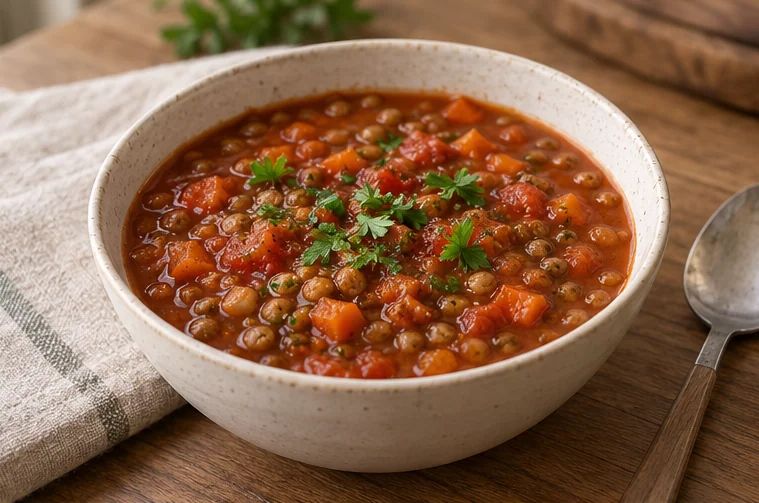
Brown lentil and tomato soup with carrot and parsley in a cream bowl
Whole brown lentils keep their recognizable shape in a rustic tomato broth. A small amount of cumin gives the soup a savory warmth; lemon at the end keeps the result from tasting flat. Cook the lentils until tender before adding the tomatoes, since acidic ingredients can slow their softening.
Chop the carrot fairly small, about 5 mm, so it softens alongside the lentils. Begin checking the lentils after about 25 minutes: they should yield easily when bitten, with no hard or chalky center, while remaining mostly whole. Older lentils and different brands may take longer. A spoonful of parsley finishes this pantry-led soup without a complicated topping.
Serves
4
Prep
10 minutes
Cook
50 minutes
Total
60 minutes
Ingredients
1 tablespoon olive oil (15 ml)
1 medium onion (150 g), finely chopped
1 medium carrot (100 g), cut into 5 mm pieces
2 garlic cloves, finely chopped
1 teaspoon ground cumin
½ teaspoon sweet paprika
180 g dried whole brown lentils, picked over and rinsed
1.2 litres lower-salt vegetable stock, plus a little extra water if needed
1 can chopped tomatoes (400 g), including the juice
¼ teaspoon fine salt, plus more to taste
¼ teaspoon ground black pepper
1 tablespoon lemon juice, plus more to taste
2 tablespoons chopped fresh parsley, to serve
Method
Heat the oil in a 3–4 litre saucepan over medium heat. Add the onion and carrot and cook for 6–8 minutes, stirring, until the onion softens. Lower the heat if the vegetables begin to brown.
Add the garlic, cumin and paprika. Stir for 30 seconds, just until fragrant, then add the lentils and stock. Bring to a boil over medium-high heat.
Reduce to a gentle simmer and partially cover. Cook for about 25–35 minutes, stirring occasionally, until the lentils are tender but still mostly whole. Bite a few cooled lentils: none should have a hard or chalky center. If needed, continue cooking and checking every 5 minutes; older lentils can take longer. Add water if the liquid level drops too far.
Stir in the tomatoes, salt and pepper. Simmer uncovered for another 10 minutes, until the flavors come together and the carrot is tender. The soup should have whole lentils in a tomato broth rather than a smooth puree.
Turn off the heat and stir in the lemon juice. Taste and adjust salt or lemon, adding hot water a little at a time if you prefer a looser soup. Divide among four bowls and scatter with parsley.
Substitutions
Use ½ teaspoon ground coriander in place of cumin for a different flavor. Smooth passata can replace the chopped tomatoes by weight. Whole green lentils can be used with the same tenderness check, allowing their cooking time to vary. Red split lentils soften and break apart much faster, so they are not a direct substitution for this method or texture.
Storage and reheating
Refrigerate promptly using the cooling guidance above and eat within 3 days. Freeze portions for up to 2 months for best quality. Thaw in the fridge, add a little water if needed and reheat, stirring, to a boil and at least 74°C/165°F throughout.
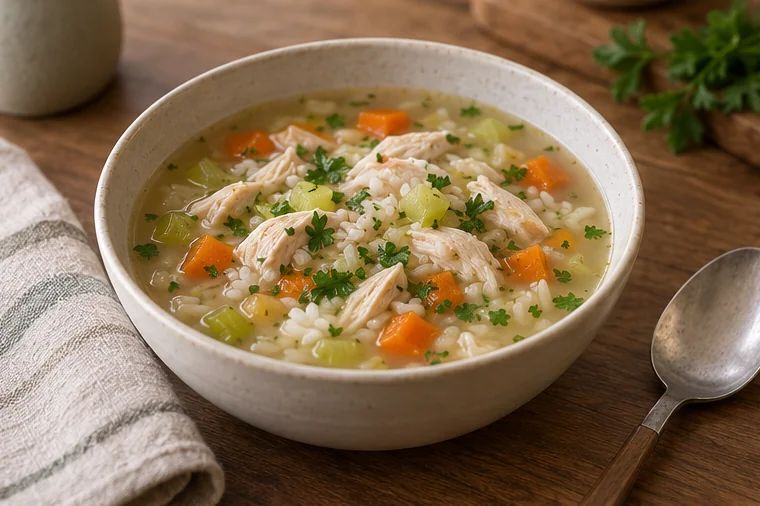
Chicken and rice soup with carrot, celery and parsley in a ceramic bowl
Cooking the rice separately keeps the broth clearer and prevents the grains from absorbing most of the soup during storage. This approach is informed by Serious Eats’ explanation of rice texture, while the quick stock-based formulation below avoids making a separate roasted chicken stock.
Use boneless chicken breast cut into even pieces so it cooks predictably. Check the largest pieces with a thermometer rather than relying on their color. If you are cooking for fewer people, keep unused rice and broth separate and cool both promptly; the rice has a shorter storage window.
Serves
4
Prep
15 minutes
Cook
30 minutes
Total
45 minutes
Ingredients
100 g dry long-grain white rice, rinsed
240 ml water for the rice, or the amount specified for this rice on its packet
1 tablespoon olive oil (15 ml)
1 medium onion (150 g), finely chopped
2 medium carrots (150 g), cut into 1 cm pieces
2 celery stalks (100 g), cut into 1 cm pieces
2 garlic cloves, finely chopped
½ teaspoon dried thyme
1.25 litres lower-salt chicken stock
350 g raw boneless, skinless chicken breast, cut into even 2 cm pieces
¼ teaspoon fine salt, plus more to taste
¼ teaspoon ground black pepper
1 tablespoon lemon juice, plus more to taste
2 tablespoons chopped fresh parsley
Method
Put the rice and water in a small lidded saucepan. Bring to a boil, cover and cook over low heat for about 15–18 minutes, or follow the packet timing and water quantity. Once the water is absorbed and the grains are tender, remove from the heat and rest, covered, for 5 minutes.
While the rice cooks, heat the oil in a separate 3–4 litre saucepan over medium heat. Add the onion, carrots and celery. Cook for 7–8 minutes, stirring, until the onion softens. Add the garlic and thyme and stir for 30 seconds.
Pour in the stock and bring to a boil. Carefully add the raw chicken using clean utensils. Return to a gentle simmer, partly cover and cook for about 10–15 minutes, until the carrots are tender and the largest chicken pieces register at least 74°C/165°F in the center.
Lift a few cooked chicken pieces onto a clean plate if you would like to shred them; use clean forks, then return the meat to the soup. Stir in the salt, pepper, lemon juice and parsley. Taste and adjust seasoning.
Divide the hot cooked rice among four bowls, then ladle the hot chicken soup over it. Serve immediately. Keep any portions intended for storage separate from the rice.
Substitutions
Boneless chicken thigh cut into the same size pieces can replace breast; use the same thermometer endpoint and allow more time if needed. Cook brown rice separately according to its packet. For a meat-free version, use vegetable stock and 480 g drained canned chickpeas instead of chicken, simmering until the vegetables are tender.
Storage and reheating
Cool rice promptly in small portions and refrigerate ideally within 1 hour; following UK FSA guidance, eat it within 24 hours and reheat only once. Cool the separate soup as directed above and refrigerate up to 3 days, or freeze up to 2 months. Reheat soup and rice to at least 74°C/165°F throughout; bring the soup to a boil. If already mixed, use the shorter rice storage limit.
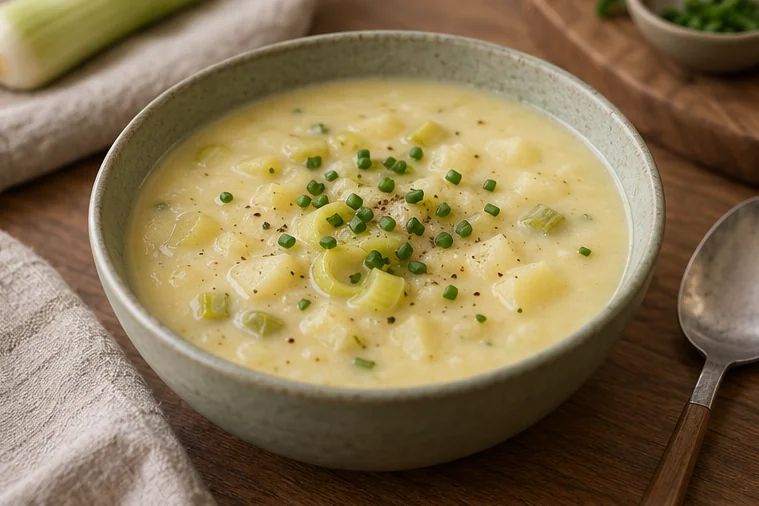
Creamy potato and leek soup with a small chive garnish
A potato masher makes this soup creamy around the edges while leaving enough pieces to recognize. It is a useful choice when you do not have a blender. Softening the leeks gently keeps their flavor mild; browning them would change the pale soup’s character.
Leeks can hold soil between their layers. Split them lengthways and rinse carefully before slicing, or swish the sliced leeks in a bowl of water and lift them out, leaving grit behind. The ingredient weight below is for the cleaned white and pale-green parts.
Serves
4
Prep
15 minutes
Cook
35 minutes
Total
50 minutes
Ingredients
20 g unsalted butter
1 small onion (100 g), finely chopped
300 g cleaned leeks, white and pale-green parts, thinly sliced
1 garlic clove, finely chopped
500 g floury or all-purpose potatoes, peeled and cut into 1.5 cm cubes
900 ml lower-salt vegetable stock
1 dried bay leaf
¼ teaspoon fine salt, plus more to taste
¼ teaspoon ground black pepper
120 ml whole milk
1 tablespoon chopped fresh chives, to serve
Method
Melt the butter in a 3–4 litre saucepan over medium-low heat. Add the onion and leeks. Cook for 8–10 minutes, stirring often, until softened without browning. Add 1 tablespoon water if the pan looks dry.
Add the garlic and cook for 30 seconds. Stir in the potatoes, stock, bay leaf, salt and pepper. Bring to a boil over medium-high heat.
Lower the heat, partly cover and simmer for about 18–22 minutes, until a fork easily breaks a potato cube. Check several pieces; they need to be fully tender for mashing.
Remove and discard the bay leaf. Take the pan off the heat and use a potato masher to break down roughly half the potatoes, leaving a mixture of small pieces and thickened broth.
Return the pan to low heat, stir in the milk and warm for 2–3 minutes, stirring, until hot throughout. Taste and adjust seasoning. Add a little hot water if the soup is too thick, then serve with chives.
Substitutions
Use 1 tablespoon olive oil instead of butter and 120 ml unsweetened oat milk or extra vegetable stock instead of milk for a dairy-free version. Check plant-milk labels for allergens. If using waxy potatoes, expect firmer pieces and a less fluffy, thickened texture.
Storage and reheating
Refrigerate promptly as directed above and use within 3 days. Freeze for up to 2 months for best quality, though potato and dairy texture may become grainier. Thaw in the fridge and stir well while reheating to a boil and at least 74°C/165°F throughout, loosening with water if needed.
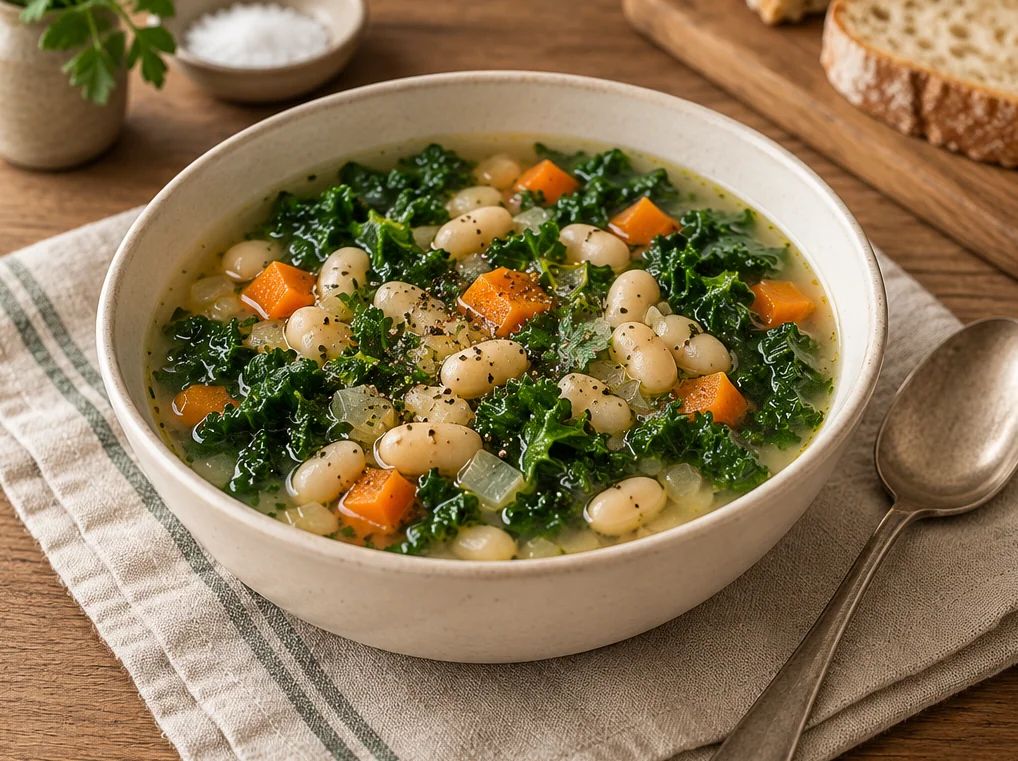
White bean and kale soup with carrots in a cream bowl
Canned cannellini beans make a substantial soup without an overnight soak. Mashing a portion before it goes into the pan thickens the broth while leaving most beans whole. Kale brings a different texture from the root-vegetable soups, and lemon adds contrast at the end.
Strip out tough kale stalks and cut the leaves into small pieces so they are easy to eat with a spoon. Taste a leaf before serving: tender kale may need less time than a mature, sturdy bunch. Keep the soup at a gentle simmer to avoid breaking all the beans apart.
Serves
4
Prep
15 minutes
Cook
30 minutes
Total
45 minutes
Ingredients
2 tablespoons olive oil (30 ml)
1 medium onion (150 g), finely chopped
1 medium carrot (100 g), cut into 5 mm pieces
1 celery stalk (50 g), finely chopped
2 garlic cloves, finely chopped
½ teaspoon dried rosemary, crumbled
2 cans cannellini beans (400 g each), drained and rinsed; about 480 g drained beans total
1 litre lower-salt vegetable stock
100 g kale leaves, tough stalks removed, cut into 1–2 cm pieces
¼ teaspoon fine salt, plus more to taste
¼ teaspoon ground black pepper
1 tablespoon lemon juice, plus more to taste
Method
Put about 150 g of the drained beans in a bowl. Add 100 ml of the measured stock and mash with a fork until mostly broken down. Leave the remaining beans whole.
Heat the oil in a 3–4 litre saucepan over medium heat. Add the onion, carrot and celery. Cook for 7–8 minutes, stirring, until the onion is softened. Add the garlic and rosemary and stir for 30 seconds.
Stir in the mashed beans, whole beans, remaining 900 ml stock, salt and pepper. Bring to a boil, then reduce to a gentle simmer. Cook, partly covered, for 10 minutes.
Add the chopped kale and simmer gently for another 8–10 minutes, or until the carrot and kale are tender. Stir occasionally without crushing the whole beans.
Remove from the heat, stir in the lemon juice and taste. Adjust seasoning and add a little hot water if a thinner broth is preferred. Ladle into four bowls, distributing the beans and greens evenly.
Substitutions
Use drained canned butter beans or great northern beans by the same drained weight. Replace kale with 100 g spinach, adding it only for the final 1–2 minutes. Dried beans are not a direct substitution; cook them fully and safely first, then weigh 480 g for this recipe.
Storage and reheating
Cool promptly in shallow containers and refrigerate as directed above for up to 3 days. Freeze portions for up to 2 months for best quality; the greens will soften further. Thaw in the fridge and reheat with stirring to a boil and at least 74°C/165°F throughout.
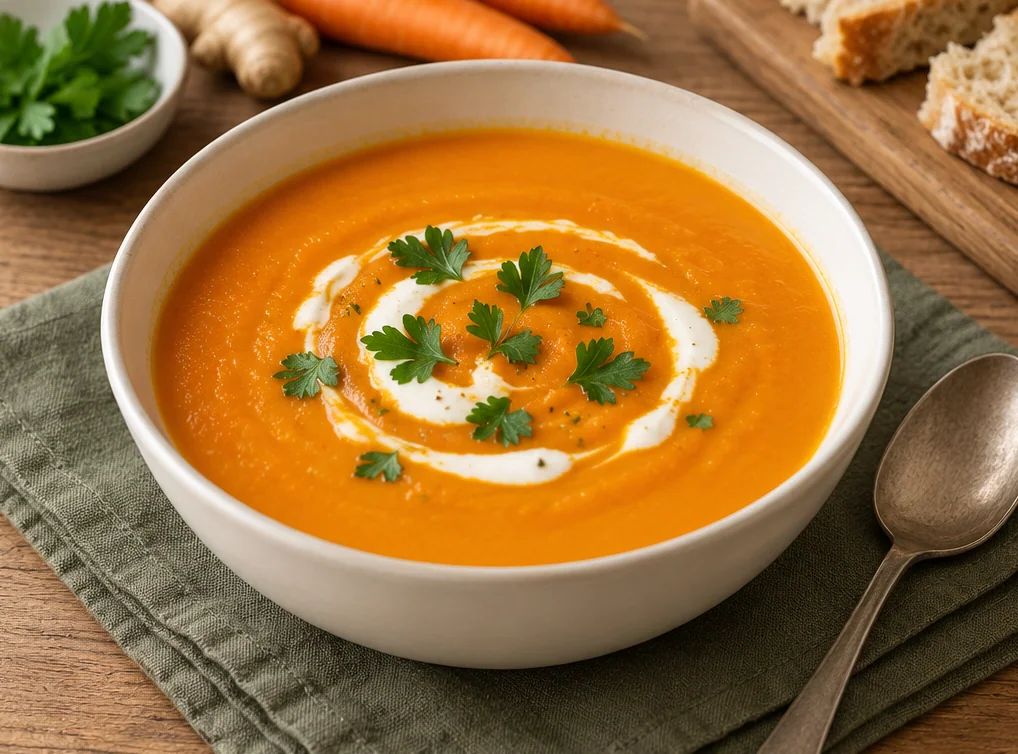
Smooth carrot and ginger soup with yogurt and a few parsley leaves
Carrots and a small potato make a smooth soup without relying on a large amount of cream. Fresh ginger provides a noticeable savory edge, while a little lemon balances the sweetness. Slice the carrots evenly so they soften together.
Use an immersion blender only as its manufacturer directs: remove the pan from the heat, keep the blade submerged while blending and switch it off before lifting it out. If using a countertop blender, check that it is suitable for hot liquids, cool the soup as instructed and work in small vented batches. Never seal steaming soup in a sealed personal blender.
Serves
4
Prep
15 minutes
Cook
35 minutes
Total
50 minutes
Ingredients
1 tablespoon olive oil (15 ml)
1 medium onion (150 g), finely chopped
20 g peeled fresh ginger, finely grated
1 garlic clove, finely chopped
700 g carrots, peeled or scrubbed and cut into 1 cm slices
150 g potato, peeled and cut into 1 cm cubes
1 litre lower-salt vegetable stock
¼ teaspoon fine salt, plus more to taste
¼ teaspoon ground black pepper
1 tablespoon lemon juice, plus more to taste
4 tablespoons canned coconut milk or plain yogurt, optional, for a small swirl in each bowl
1 tablespoon fresh parsley leaves, optional, to finish
Method
Heat the oil in a 3–4 litre saucepan over medium heat. Add the onion and cook for 6–7 minutes, stirring, until soft. Add the grated ginger and garlic and stir for 30 seconds.
Add the carrots, potato, stock, salt and pepper. Bring to a boil over medium-high heat, then reduce to a gentle simmer and partly cover.
Cook for about 22–25 minutes, until the carrot and potato pieces are fully tender and yield easily when pressed with a fork. Add a little water if the vegetables are no longer covered.
Remove the pan from the heat. Blend carefully until smooth using an appliance suitable for the temperature, following its hot-liquid instructions. If necessary, return to the pan and warm over low heat, stirring.
Stir in the lemon juice and taste for seasoning. Adjust the thickness with hot water if needed. Divide among four bowls and, if using, finish each with 1 tablespoon coconut milk or yogurt and a few optional parsley leaves.
Substitutions
For a gentler ginger flavor, begin with 10 g fresh ginger. Use 150 g peeled sweet potato instead of the potato for a slightly sweeter result. Coconut milk keeps the optional garnish dairy-free; yogurt contains milk. Leave the garnish out entirely if preferred.
Storage and reheating
Store the soup separately from the optional garnish. Refrigerate promptly in shallow containers as directed above and use within 3 days, or freeze for up to 2 months for best quality. Thaw in the fridge, then reheat to a boil and at least 74°C/165°F throughout; add fresh garnish after reheating.
Choose one soup that fits your ingredients and the texture you want. Keep the extra portions manageable, label them with the cooking date and give them a definite next meal. For a relaxed cold-day plan around the cooking, browse the winter self-care ideas.
Set up a compact coffee corner that leaves room to cook, with five layouts for counters, shelves, drawers and carts, plus appliance and steam precautions.