Use seven fall journal prompts to reflect on attention, commitments and the pace of autumn. Choose one original question and write about a specific everyday moment.
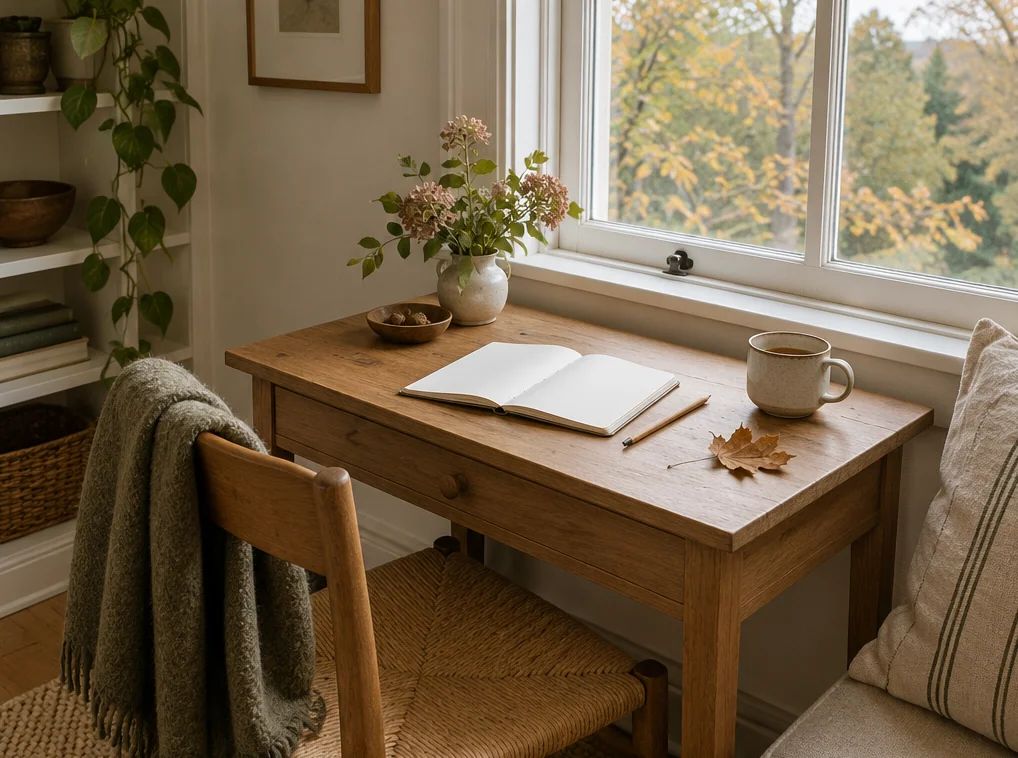
Blank journal, pencil, brown leaf and ceramic cup on a desk by a window
Fall journal prompts can help you notice what is changing in an ordinary week. These seven autumn questions focus on attention, commitments and the pace that is possible now, without assuming the season feels restful for everyone.
These seven prompts move from observation into the practical changes a season can bring. Choose one at a time and return to it later if you like. A short record from a familiar window or walk can be more revealing than an idealized description of autumn borrowed from elsewhere.
The Woodland Trust’s Nature’s Calendar records seasonal observations at particular places and times. That practice offers a useful starting principle for a personal journal: note the date, notice the detail and allow the season to vary. You are recording your experience, without having to make it representative.
Blank cream journal, pencil and single autumn leaf on a wooden tabletop
Choose a familiar view or route and describe three details you can actually observe. Include something beyond color: the sound of wind, when a pavement dries, a fruit arriving at the market or a different pattern of people using a park. Note the date and conditions.
Separate observation from expectation. If it is still hot, write that rather than inventing a crisp day. Return to the same place in a week or two and compare the entries. The interest lies in the small differences, and in what your own attention happened to catch on each visit.
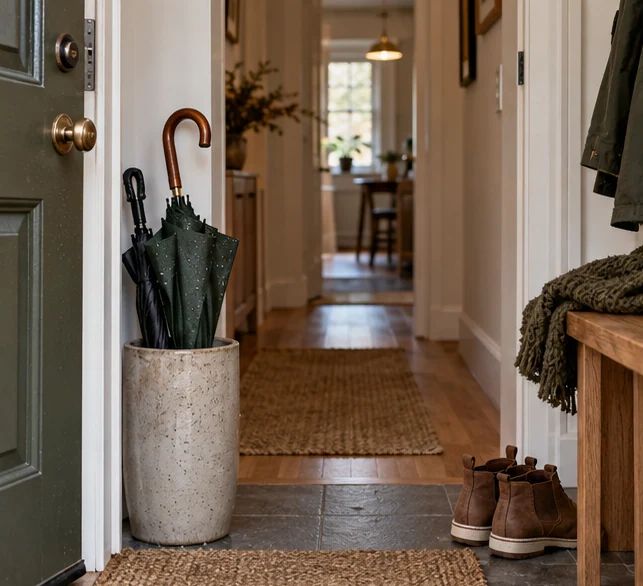
Wet umbrella in a stable entry stand beside dry shoes and a clear hallway.
Think of one repeated action that has become awkward: an evening errand after dark, a meal plan that no longer suits the household schedule or a bag without a place for a wet umbrella. Describe when you first noticed the mismatch.
List the smallest adjustment that would make it work now. You might move the errand, keep a shelf free for shoes or choose a different lunch. Avoid rebuilding the whole day around a seasonal ideal. Write what you will keep because it still works, alongside the part that needs changing.
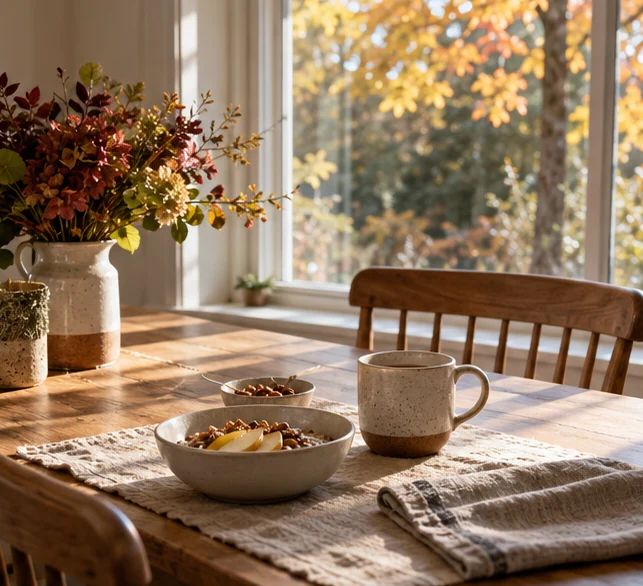
Autumn light falling across breakfast table beside window with changing leaves outside.
Choose one spot, such as the breakfast table, a window ledge or the chair you use after work. Describe the light, temperature, sound and daily activity there. Does the room serve you differently as the season changes? Stay with what the space is like before deciding what it should become.
Write about one functional adjustment, if needed: a better reading light, a washable mat or a blanket within reach. A new purchase is optional. The fall living room ideas can help translate a specific observation into a small decorating change, without requiring the whole room to look seasonal.
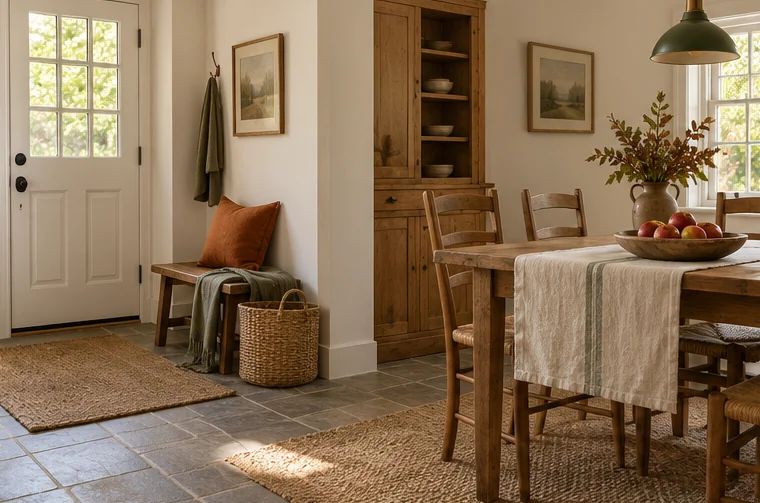
Quiet midweek evening kitchen with simple shared meal and clear counter.
Choose a specific period rather than writing that you want to slow down generally. Describe a Wednesday evening or the first hour of a day off. What currently fills it? Which parts are fixed, and which are choices, habits or expectations?
Imagine removing or simplifying one thing. Include any consequences for other people and any help required. A slower pace may mean repeating a simple meal or declining an optional errand, rather than acquiring a new ritual. If there is no room to slow this week, write what would need to change before that became possible.
Small unfinished mending task in a pouch beside neatly stored supplies that can wait.
Bring to mind a small number of tasks or projects that keep returning to your thoughts. Choose two: one that would improve daily life if moved forward, and one that matters less right now. Explain the difference in practical terms.
For the first, name the next visible action and a plausible time. For the second, choose a review point or deliberately let it go. A season changing does not create a deadline for every unfinished idea. You can appreciate an earlier intention while deciding that it no longer needs to occupy your attention.
Autumn tradition of shared soup lunch with two bowls and bread on a simple table.
Choose something associated with this part of the year: making a particular meal, visiting a place, seeing someone or arranging a small celebration. Describe what you value in it, including the sensory details or people that make it meaningful.
Then look at the work and cost involved. Does the current version still fit? A familiar gathering can become a shared soup lunch, or a long outing can become a short local visit. Write which element you most want to protect and which part you can change. Repetition does not require preserving every practical detail.
Ordinary autumn home scene with simmering pot, fallen leaves beyond window and familiar book.
Imagine reading this page in a few months. Record a scene from ordinary life now: who is at the table, what you are cooking, the sound outside or the book beside your chair. Include a detail that would otherwise be easy to lose.
Finish by naming something you want to give a little more attention during the remaining season. It might be a relationship, a local place or a familiar activity. Keep the intention open enough to fit your circumstances. You can return to the page later and add what happened, without measuring whether autumn was used well enough.
Leave room between entries for the season to change. What matters is a record specific enough to belong to your life. If a prompt points toward a practical routine, choose one of the simple living habits and adapt it to the time and energy available.
Style a fall living room with seven specific ideas for sofa colors, cushions, throws, rugs, seating, lamps, and one seasonal display that leaves room to live.
Use seven simple living tips to reduce everyday friction, make more deliberate choices and shape manageable habits around the life and responsibilities you have.