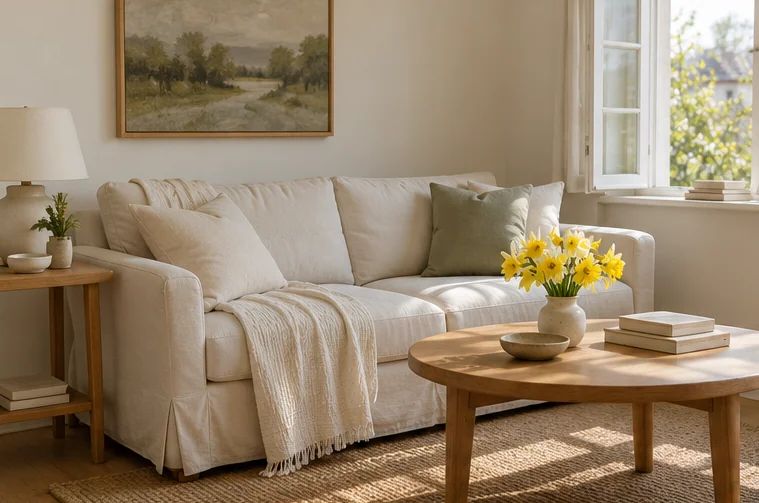
Spring sitting room with light cotton and a small daffodil arrangement
Spring decorating is often described as taking everything heavy away. In a real home, the evenings may still be cold and the everyday clutter has nowhere else to go. Simple spring home decor ideas work better when they lighten the appearance of a room while respecting its daily jobs.
Look for one change in fabric weight, one small introduction of color, and one clearer surface. Keep warm layers accessible until the weather settles. This approach creates a visible seasonal shift without demanding a new rug, an entirely different set of cushions, or storage space for half the living room. If the room needs a deeper clean first, use the small-home spring cleaning checklist.
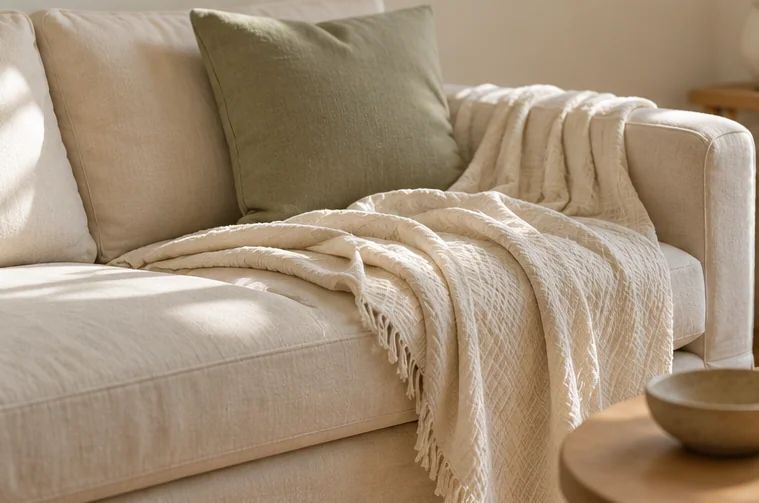
Light cotton throw and pale sage cushion on a sofa
Start with the textile that occupies the most visible area after the sofa or bed itself. On a bed, that might mean folding a thick quilt lower and adding a cotton coverlet across the top. On the sofa, replace a dark throw with a lighter woven one while keeping the warmer blanket in a nearby cupboard. The underlying arrangement stays useful during cool spring evenings.
Compare actual texture rather than assuming every pale fabric will look fresh. A chalk-white fleece may appear heavier than a muted green linen blend. Check dimensions before ordering covers for existing cushions, including the closure and the way the fabric behaves when filled. Wash or air winter pieces according to their care instructions before storing them dry. A small home benefits from a seasonal swap that fits into the same storage volume: if changing the look requires another large box, reduce the number of pieces. The room should become easier to use as it becomes visually lighter.
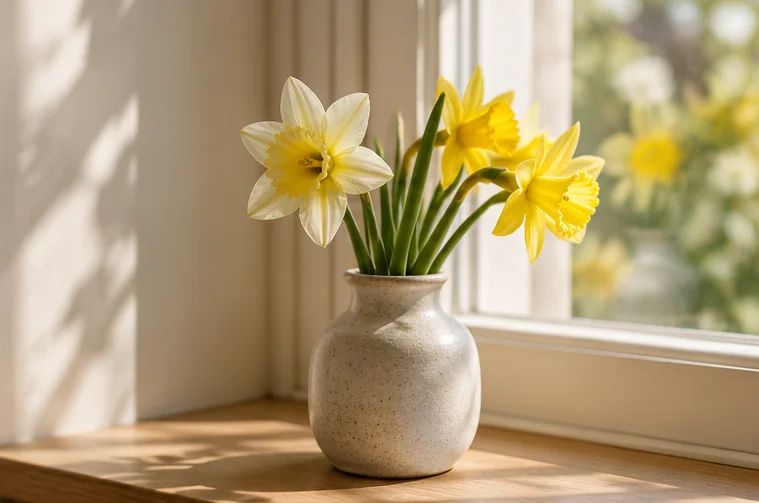
Instead of buying a mixed bouquet and dividing it among five vases, choose a few stems with an appealing line and give them one clean vessel. A narrow-neck jug can hold a small arrangement upright without floristry foam. Place it where it is seen often but will not be knocked by a bag or an opening cupboard: the far end of a console is usually easier than a busy kitchen corner.
Remove foliage that would sit under water, use clean cutting tools, and follow the directions on commercial flower food if supplied. Iowa State recommends clean water over improvised household additives when preservative is unavailable. Check the water level daily and replace cloudy water. Move the vase away from a heater or strong direct sun if the flowers wilt quickly. Check the safety of the actual species around pets; true lilies are particularly unsuitable in homes with cats. A small, maintained arrangement looks fresher than a lavish one left deteriorating.
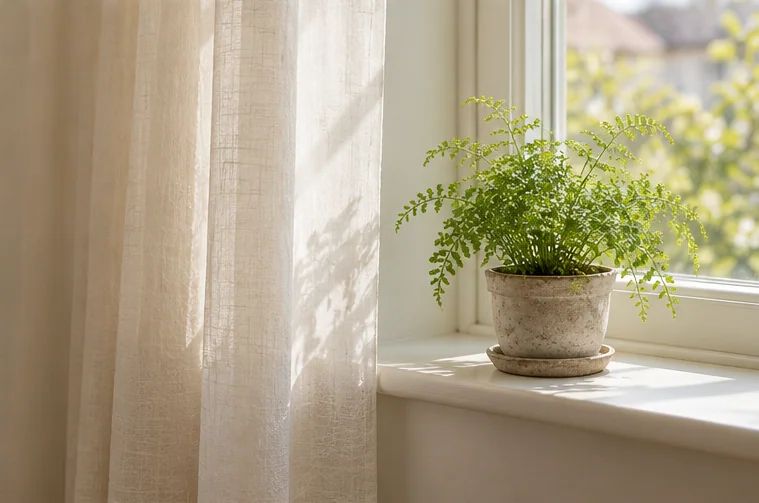
Fern and airy linen curtain beside a cleared windowsill
Stand in the room during the hours you use it and see what interrupts the window. A tall stack of storage boxes, a dense plant, or curtain panels parked partly over the glass can make a small room feel closed even on a bright day. Move one obstruction, clean the accessible interior glass using a product suitable for it, and pull curtains back as far as the existing hardware allows.
Keep the solution appropriate to privacy and temperature. A street-facing room may need a sheer or blind even when the curtains are open. Lightweight panels are useful only if they still offer the privacy you want; test them from outside with the lights on after dark. Do not remove useful shading from a room that overheats as spring progresses. Where glare reaches a desk or television, a controllable blind is more practical than permanently exposing the glass. Brightness is most pleasant when the room still works for reading, resting, and an ordinary afternoon on a screen.
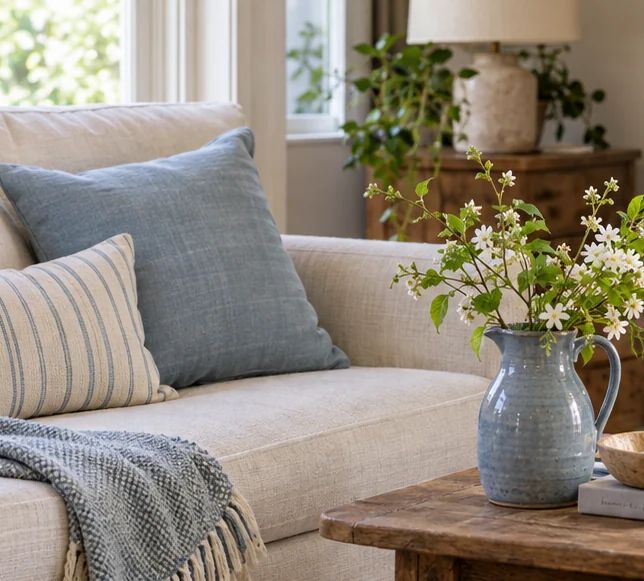
Muted spring blue repeated in a cotton cushion and a useful ceramic jug.
Choose a shade that belongs beside the permanent finishes. Sage can work with warm wood and cream; pale blue may connect to cool tile; a muted yellow can lift a room with brown furniture. These are starting points, not rules. Place a sample or an existing garment beside the sofa and check it at different times of day before buying several matching accessories.
Use the color in two items with everyday roles, such as a cushion and a cloth napkin, or a tea towel and a small ceramic bowl. Repetition creates a relationship across the room without a large area of new color. Keep their shades related rather than perfectly identical; variation prevents a boxed-set appearance. Avoid combining several pastel families unless the existing room already supports that variety. If your home is strongly patterned, a plain textile in a color drawn from that pattern may provide a quieter seasonal update than another floral print competing for attention.
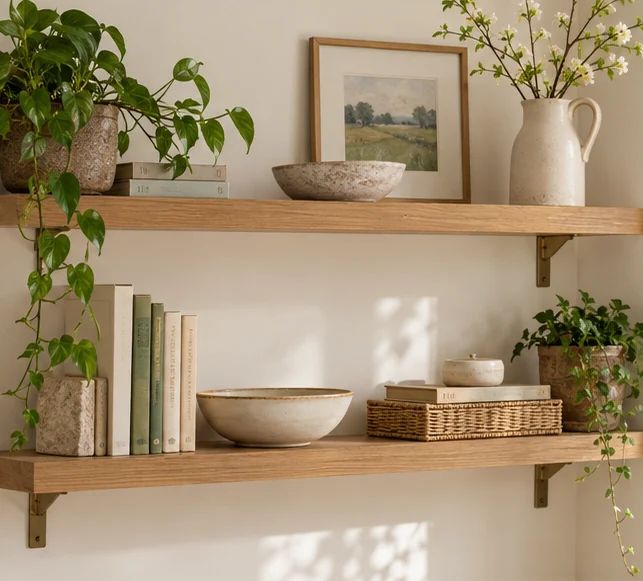
Lightly arranged spring shelf with cream pottery, one branch and space between objects.
Choose the shelf you see from the doorway and remove everything temporarily. Return the books and objects you want to see, arranging weight toward the ends supported by the brackets and respecting the shelf’s stated capacity. A low bowl beside upright books and a single taller piece creates variation without needing a collection of miniature seasonal ornaments.
Leave a patch of visible shelf between groups. The space makes each object legible, especially in a narrow room where you view the shelf at an angle. Store the temporarily removed pieces together and label the container so they can be reused later. Do not hide daily necessities in an inaccessible place merely for a cleaner photograph: a covered box on the shelf can hold the unattractive essentials. If the shelf is freestanding furniture, retain any required anti-tip anchoring. An edited display should improve retrieval as well as appearance, not turn books and baskets into a fragile arrangement nobody dares to touch.
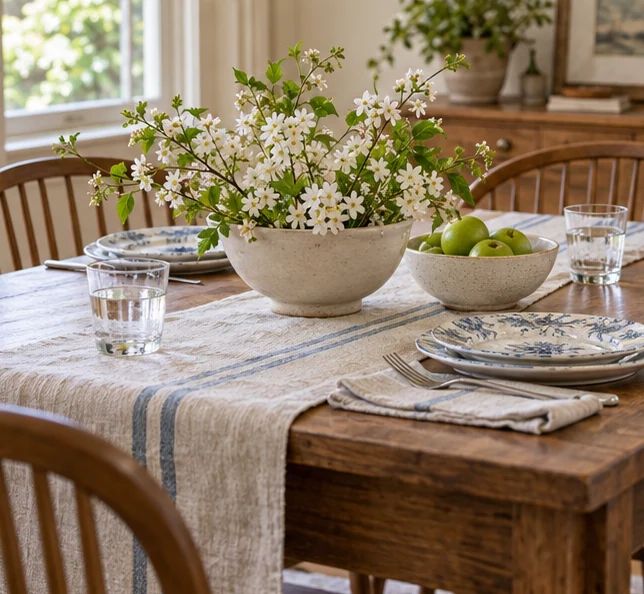
Small dining table with linen runner and a low bowl of spring blossom.
A table that is used several times a day can carry a seasonal change without adding a new display zone. Lay a cotton runner or use the napkins you normally save for guests. Pair them with existing crockery and a low bowl of fruit. Green apples against cream ceramics or a few lemons beside blue-and-white plates give a clear color relationship without novelty tableware.
Set the table for a normal meal before deciding where anything decorative belongs. Check that glasses, plates, and a shared dish fit comfortably; place the fruit bowl on a sideboard if they do not. Choose washable fabric that can tolerate the household’s actual habits. A delicate runner underneath a daily laptop and children’s craft supplies may become frustrating quickly. Avoid scented candles next to food, and protect finishes from condensation. The most convincing spring table is one that can shift from breakfast to lunch with a quick wipe rather than a full dismantling of the centerpiece.
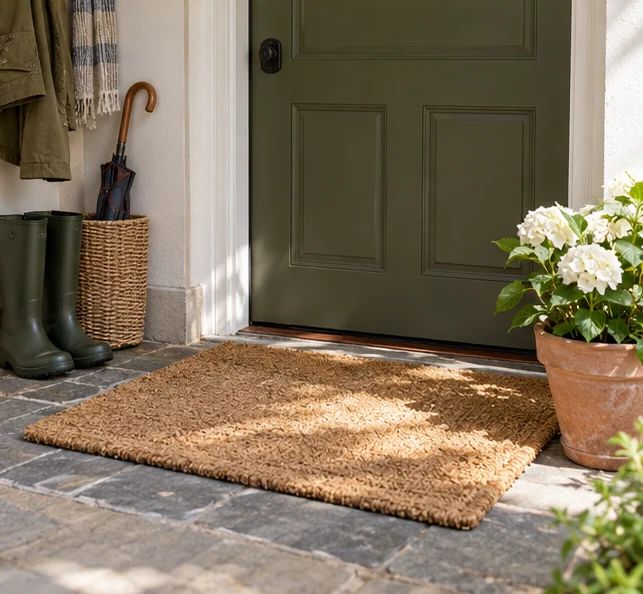
Practical clean doormat and single potted spring flower at a modest front threshold.
The entry is where changing seasons are most obvious: winter coats remain, lighter shoes arrive, and bags accumulate around them. Remove items no longer in current use, clean the mat according to its label, and make room for the footwear being worn this week. A tidy landing space helps a home feel renewed before a visitor sees a single flower.
Choose one small decorative addition only after the storage works. A light-colored washable mat, a framed botanical print, or a compact vase on an existing ledge can provide the seasonal note. Check the door swing, and keep mats flat so corners do not catch. Hooks and baskets should suit the wall and their load; adhesive products are not universally damage-free. If the entry is a shared building corridor, follow building rules rather than extending your decor outside the apartment. Spring styling should make coming home easier, with a clear place to put an umbrella when the weather changes again. Carry the same practical approach outside with spring balcony ideas.
Keep the refresh provisional for a week. If a light textile stays useful, a vase is easy to water, and the entry remains clear, the new arrangement has earned its place.
Try seven warm neutral decor ideas using texture, lighting, wood and a restrained palette. Work with the furniture, finishes and daylight your home already has.
Use this spring cleaning checklist for small homes to tackle each room in manageable sessions, with clear priorities, sensible time blocks, and product safety.
Plan a small spring balcony with seven practical ideas for seating, containers, flowers, washable textiles, and lighting suited to your building and weather.
May we use Google Analytics cookies to understand visits and which ideas readers find useful? It is optional. You can change your choice below at any time. Privacy details