Plan a small spring balcony with seven practical ideas for seating, containers, flowers, washable textiles, and lighting suited to your building and weather.
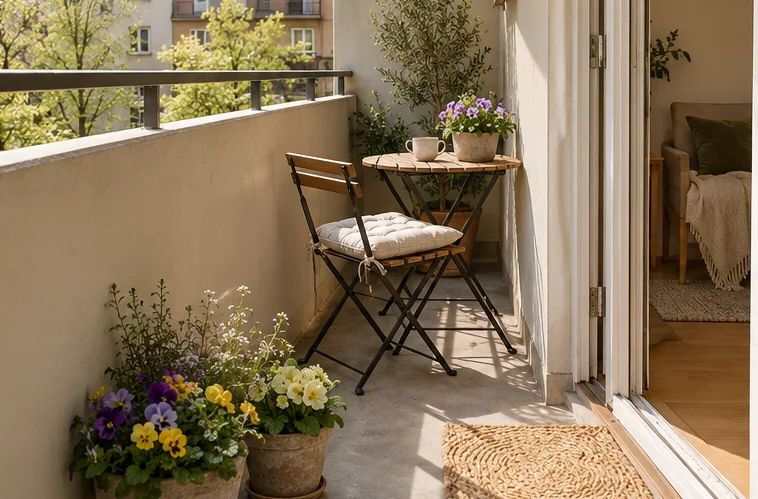
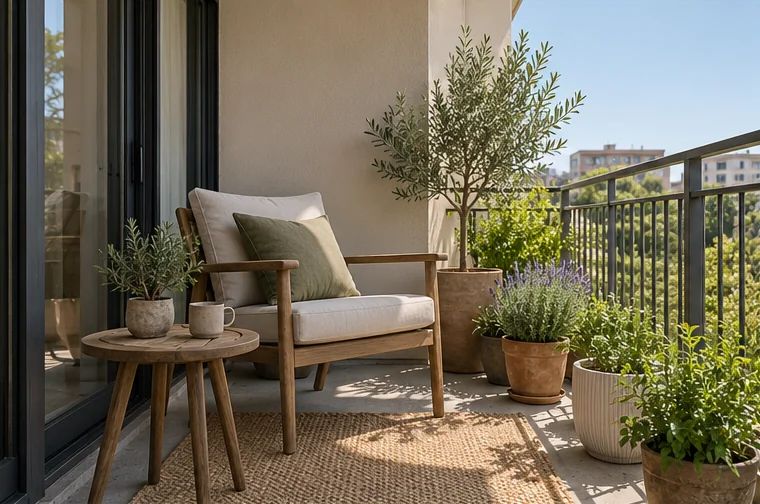
Compact spring balcony with bistro chair and floor-standing flowerpots
The first mild afternoon can make a balcony look like an extra room waiting to happen. In practice, its door swings inward or outward, wind moves around corners, and a sunny photograph says little about where rain collects. Useful spring balcony decor ideas begin with those conditions rather than a shopping list.
Before changing the space, check the building’s rules and confirm any structural or attachment questions with the property manager or an appropriate professional. Never estimate a balcony’s safe load from its appearance. Record the sunlight, exposure, and usable floor area, then choose a small arrangement you can maintain through changeable weather. Spring timing and suitable plants depend on local conditions, not a calendar month alone.
Narrow balcony with small chair and balcony door fully open showing clear swing.
Measure the balcony with the door in its working position, including any threshold that needs to remain clear. Mark a chair footprint and a small table with removable floor markers where allowed, then step through carrying a mug. Leave access to drainage points and any required route clear. A layout that only works when the door is shut is unlikely to feel relaxed in daily use.
Choose one main activity before adding furniture: morning coffee, a short reading break, or a modest planting area. A narrow balcony may support a single comfortable seat better than a two-person dining set. Keep furniture away from the guardrail where it could become a climbing aid for a child, and assess the household’s actual safety needs. Do not place a bench or planter against the edge simply because that arrangement appears in a picture. The plan should respect the building and the people using it before decoration begins.
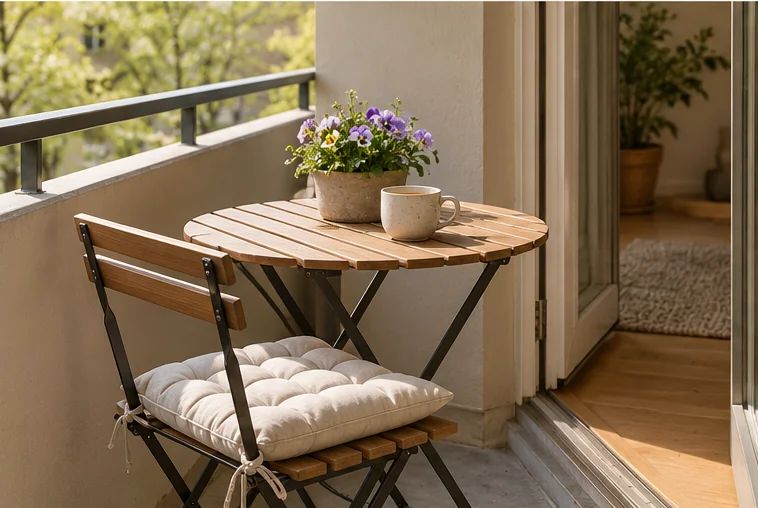
Foldaway bistro table with a cup on a narrow balcony
A folding outdoor chair can suit a spring balcony because it makes the footprint flexible while the weather is unsettled. Check the open dimensions, seat height, weight limit, and the space required to fold it. Some chairs are compact when closed but have wide legs that catch a door or interrupt a narrow route when in use. Sit in the actual chair where possible before buying.
Pair it with a table large enough for the intended use rather than a decorative stool that tips under a mug. Look for materials and finishes intended for outdoor exposure, and follow their care instructions. Lightweight furniture may need to come indoors when winds rise; a heavy item creates different loading and handling considerations. Do not improvise an anchoring system to the rail. Establish an indoor storage position from the start so moving the set does not block the hallway. For renters, a freestanding arrangement is often simpler than fittings requiring permanent attachments.
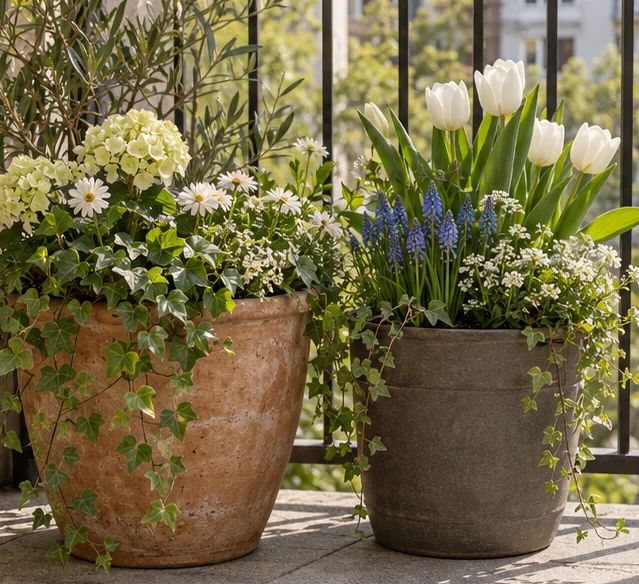
Two substantial planters containing compatible spring flowers rather than many tiny pots.
Group a small number of floor-standing containers on the approved usable part of the balcony, allowing space to reach each one with a watering can. A restrained palette of terracotta tones, charcoal, or off-white makes different plants read as a group. Match the container size to the mature plant and confirm that drainage is appropriate; an attractive sealed outer pot needs a reliable way to avoid trapped water.
Consider the total saturated weight of containers, growing medium, and any stored water when seeking property-specific advice. Adding stones is not a universal solution to wind and can create excessive weight. Never balance pots on a railing or use a hanger without suitable approval and a secure, rated fitting. Keep drainage from spilling onto neighbors or creating slippery patches. Grouping plants with similar light and watering requirements makes care more manageable, while mixed needs in the same container can leave one plant waterlogged as another dries out.
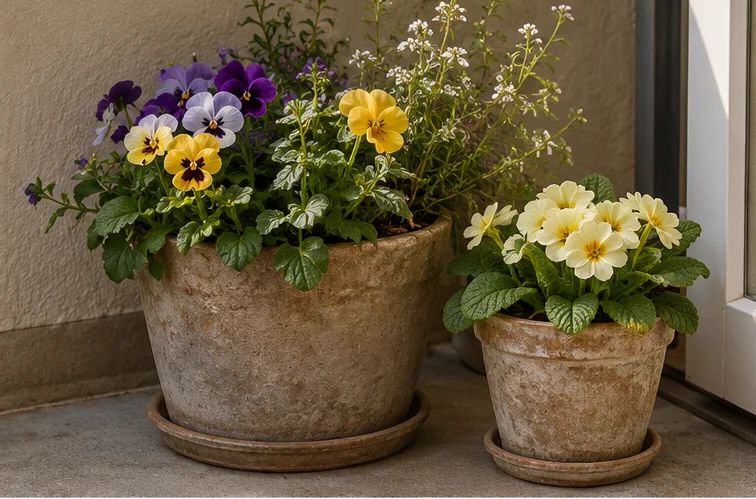
Pansies and primroses in pots inside a balcony railing
Observe how many hours of direct sun reach the proposed planting spot and whether neighboring buildings change that pattern. Then check local frost guidance and plant labels. In suitable cool conditions, pansies or violas can provide spring color; primulas may suit a cooler, partly shaded position depending on the variety and climate. These are possibilities to investigate locally, not plants that will thrive on every balcony.
Start with a modest number and repeat one flower color in two containers. Repetition often looks calmer than buying a different flowering plant for every pot. Keep cold-sensitive plants indoors until conditions are suitable, and introduce protected plants gradually to outdoor exposure. Check whether the chosen species is appropriate around pets and children. Remove faded blooms as recommended for the plant, monitor for pests, and avoid crowding young plants so tightly that there is no room for growth. An arrangement that remains healthy for weeks has more visual value than a large display that struggles immediately.
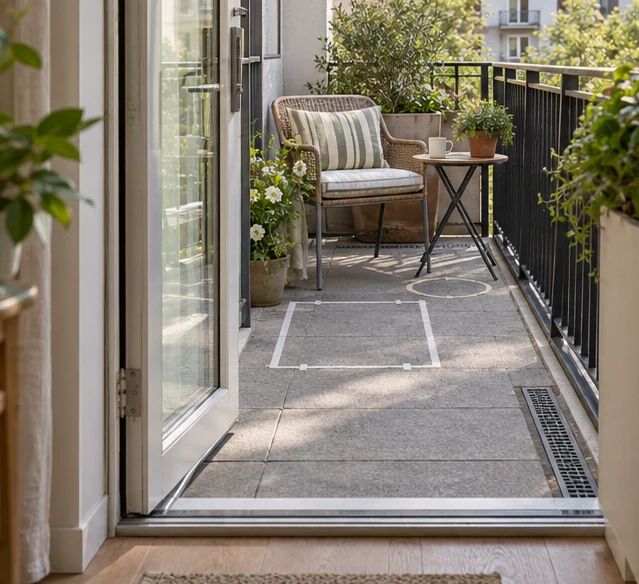
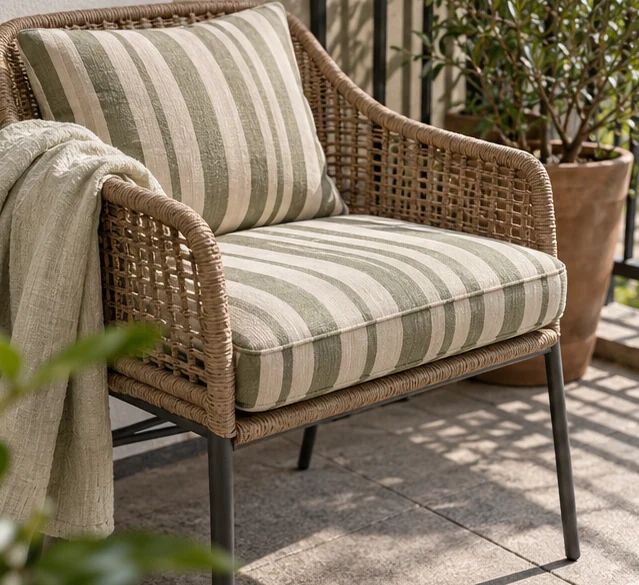
Washable striped cushion on outdoor chair above bare clean balcony paving.
Begin with the place where fabric changes comfort most: the chair seat or back. Use a cushion designed for outdoor conditions and check whether the cover is removable, how it should be washed, and whether the filling dries readily. A plain sage, pale blue, or warm cream can connect the planting to the indoor room seen through the door.
Outdoor fabrics still need care. Bring cushions in during extended rain and dry them fully before putting them in a closed box. In a small apartment, choose a quantity that fits a known indoor shelf rather than acquiring a whole second living-room set. Assess flooring before adding a rug: it must be allowed by the building, suitable for the surface, and positioned so it does not block drainage or create a trip at the threshold. If those conditions are uncertain, leave the floor visible. Lighter spring textiles indoors can carry the same color relationship without adding maintenance outside.
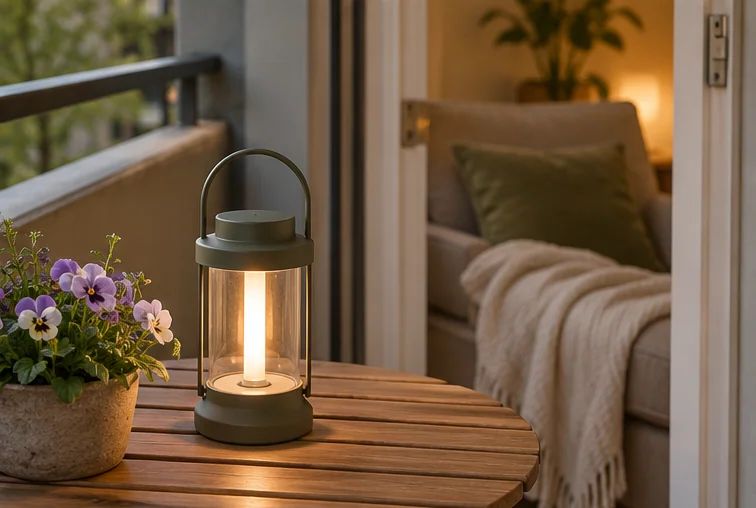
Battery lantern on a small balcony table beside the open doorway
A portable outdoor-rated rechargeable lamp can provide a simple light beside the seat without a long cable route. Check the intended exposure and care requirements: “portable” does not automatically mean weatherproof. A sheltered balcony can still receive wind-driven rain. Bring the lamp indoors when required and follow its charging instructions.
For mains-powered lights, use suitable outdoor-rated products and the protection required for the location, including appropriate GFCI or local RCD protection. Ask a qualified electrician about unsuitable or missing outdoor outlets rather than running an indoor extension through a door. Never pinch cords at the threshold or attach strings to building safety equipment. Respect neighbors by keeping the light modest and aimed into your space. Solar lights depend on actual access to sunlight, so a deeply shaded balcony may not charge them adequately. Test one useful source first; lighting the whole perimeter is unnecessary for a short evening cup of tea.
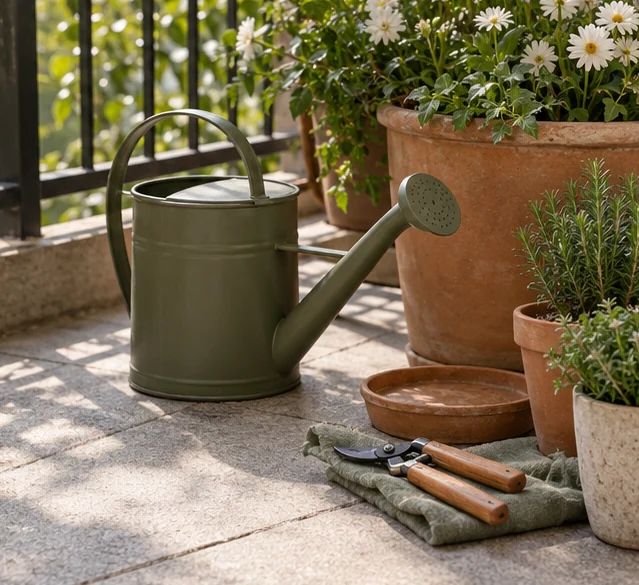
Watering can and pruning shears beside a small balcony planting group with drainage clear.
Place the watering can where it is easy to retrieve, and keep the tools needed for the small number of plants together. Check moisture in the growing medium rather than watering by a fixed calendar. Wind and bright weather can dry containers quickly, while a sheltered cool corner may remain damp. Learn the needs of the particular plants and adjust after rain.
During the same pass, remove fallen leaves, check drainage openings, and inspect furniture for loose fittings or developing rust. Put loose cushions and lightweight objects away when conditions worsen. Avoid using a tall storage cabinet as a windbreak or adding a privacy screen without checking building rules and wind implications. Keep the balcony easy to clear so maintenance does not become a large project. As temperatures rise, reassess the arrangement using the summer balcony guide: the same pleasant spring seat may need shade, a different watering routine, or a shorter daily period of use in hot weather.
Start with one seat, one useful surface, and a few appropriate plants. Use the balcony through several changes in weather before adding more; its best arrangement will come from the conditions you observe there.
Learn how to make a rental feel like home with five practical ideas for lighting, personal displays, useful storage and reversible changes that suit your lease.
Try seven small balcony decorating ideas for summer, with practical seating, shade, herbs and lighting choices that suit the exposure and space you actually have.
May we use Google Analytics cookies to understand visits and which ideas readers find useful? It is optional. You can change your choice below at any time. Privacy details