Try seven small balcony decorating ideas for summer, with practical seating, shade, herbs and lighting choices that suit the exposure and space you actually have.
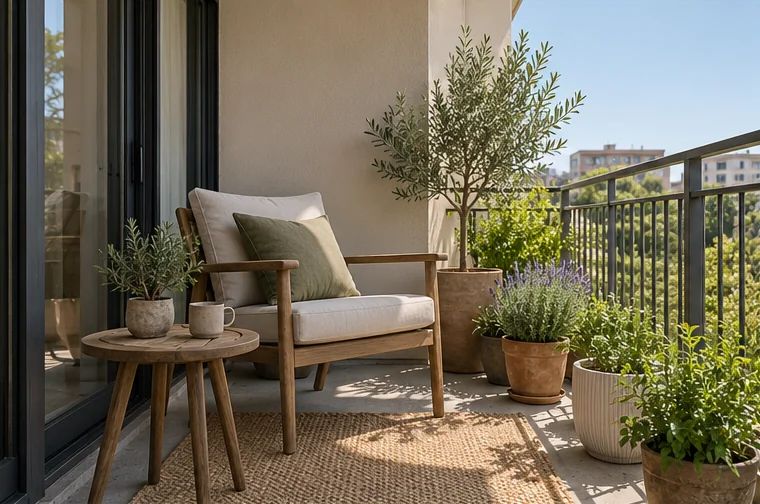
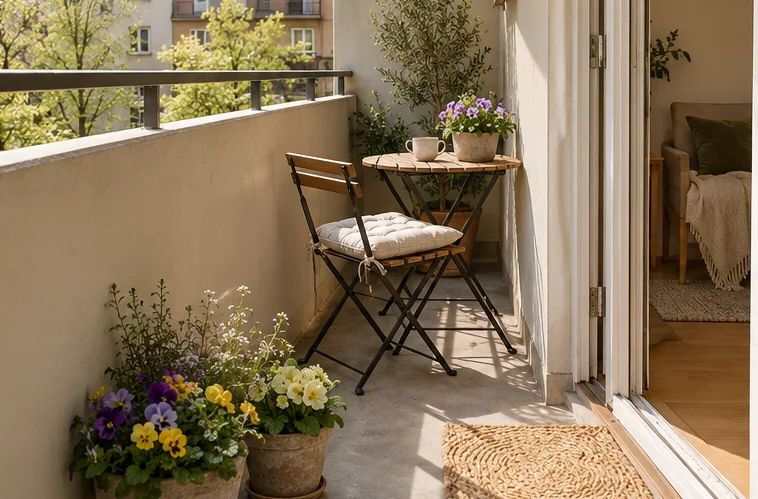
Compact shaded summer balcony with sturdy chair and herb pots
Small balcony decorating ideas need to work with the heat, light and exposure of the actual balcony. These seven summer arrangements start with a place to sit, manageable shade and useful planting, then keep enough clear floor for an ordinary evening outside.
Use the balcony at different times over a few days before deciding what it needs. Note when it has useful shade, which surfaces get hot, and where wind reaches the seating. Keep building rules and structural limits central to the plan. If you are starting from an empty space, the spring balcony layout guide covers the first measurements; the changes here focus on making that arrangement work through hotter, brighter weather.
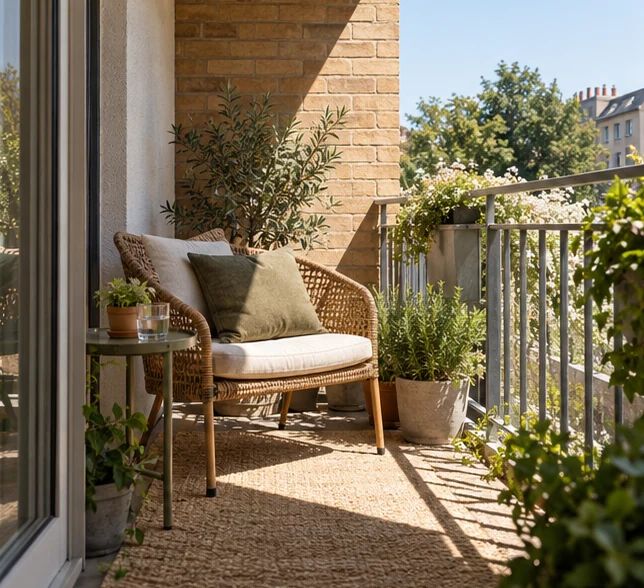
Small balcony chair positioned in shade cast by the building, bright sunshine beyond.
Observe where the building itself casts shade in the morning, midday, and late afternoon. Move the seat into the usable shaded area where the door, drainage, and safe circulation still allow it. A change in position can be more effective than buying a covering for the original spot. Remember that the pattern will shift over the summer.
If additional shade is necessary, check the building’s rules before choosing an umbrella, awning, sail, or screen. These can catch wind and impose loads on their supports; a balcony rail is not automatically an approved anchor. Have structural or fixing questions assessed for the particular building. Follow the product’s wind and storage instructions and do not leave a raised umbrella unattended. Avoid improvised fabric tied across the edge. On a highly exposed balcony with no approved shade option, using the space in the cooler part of the day may be the most practical solution.
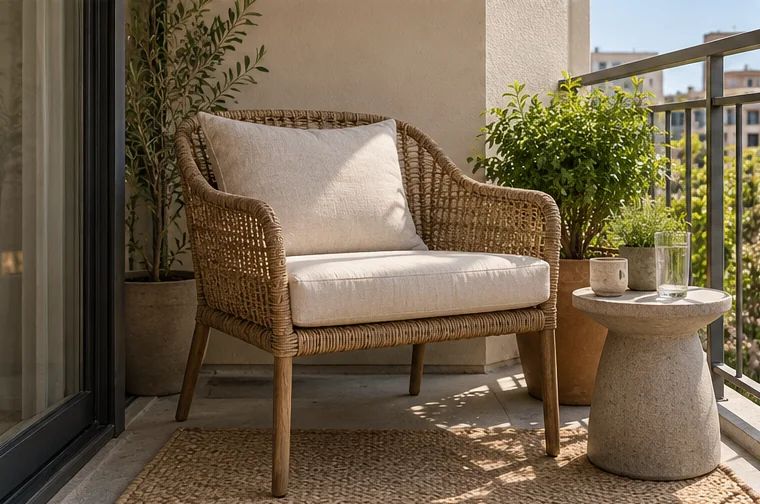
Woven outdoor chair with a removable cushion in balcony shade
Check the surfaces before sitting on them after sun exposure. Metal and dark finishes can become uncomfortable, while some plastics or finishes deteriorate when used beyond their intended conditions. Select furniture rated for outdoor use and maintain it as instructed. A washable outdoor cushion can improve contact comfort, but it does not make a dangerously hot location suitable for prolonged use.
For a narrow balcony, prioritize one supportive chair and a stable drinks surface over a full dining set. Check dimensions with the chair pulled back, and leave the door and drainage accessible. A slatted table may shed water more readily, but its gaps must still support the glassware you intend to use. Keep furniture away from the guardrail where it could become a climbing aid. Avoid adding a deep sofa merely because it fits between the walls: if it leaves no room to stand up, water plants, or move things indoors, it is too much furniture for the space.
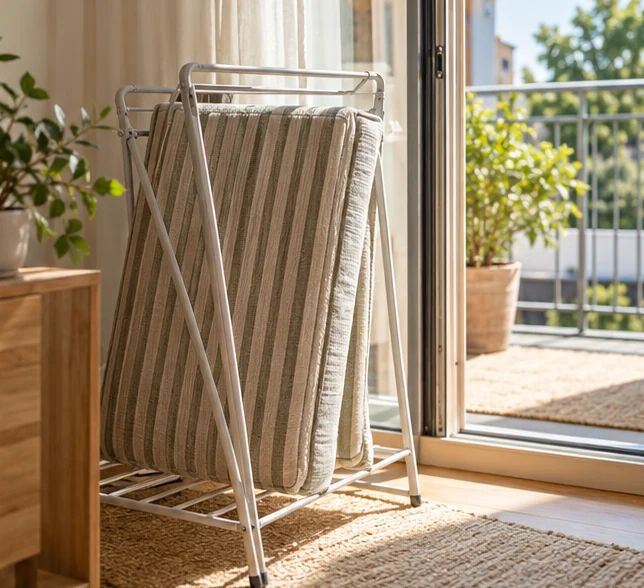
Outdoor cushion drying upright on an indoor rack beside an open balcony doorway.
Choose one or two outdoor cushions in a pale or mid-tone fabric and a simple pattern that relates to the indoor room. A narrow stripe or small check can make practical outdoor pieces feel intentional without a pile of accessories. Read the care and exposure guidance, including whether the cushion should be brought in when not in use.
Give every textile a dry storage position before buying it. Covers described as water-resistant should not be treated as permanently waterproof, and a damp cushion sealed in a storage box can develop odor or mildew. Let it dry fully. If adding an outdoor rug, verify that the building permits it and that it suits the floor, does not trap problematic moisture, and leaves drainage clear. Avoid covering the entire balcony with a mat simply to hide an unattractive surface. A single comfortable seat pad may provide the benefit you need while leaving the floor easy to inspect and clean after summer rain.
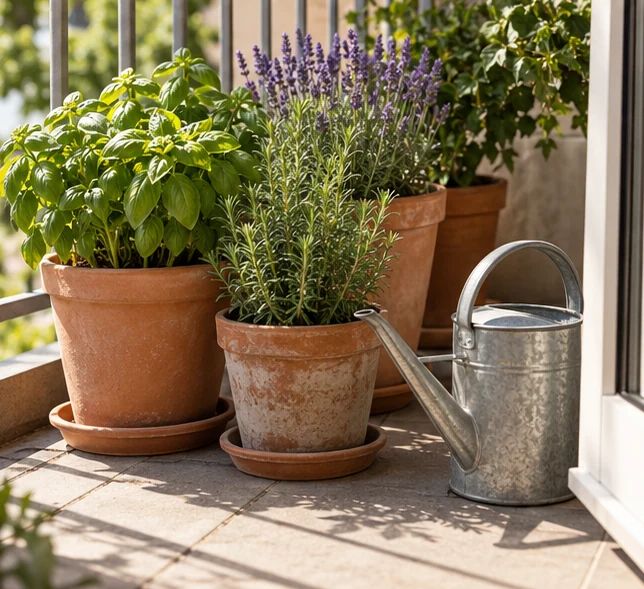
Grouped herb pots with visible drainage trays beside a reachable watering can.
Place plants so you can check each container without leaning over the rail or reaching through foliage. Keep the watering can near the door and group plants with similar moisture needs. Containers may need very frequent attention during hot, dry weather, but the correct interval depends on the plant, exposure, pot size, and growing medium. Check moisture rather than following a rigid once-a-day rule.
Water as appropriate to the plants and container system, allowing excess to escape without dripping onto neighbors or leaving slippery puddles. Inspect drainage and any reservoir overflow. Self-watering pots still need monitoring and do not suit every plant. Confirm structural capacity before increasing container size or adding stored water; do not solve rapid drying by installing a heavy reservoir on assumption. If you will be away, arrange a realistic care plan and trial it before leaving. Three healthy, reachable containers are more useful than a crowded green screen that fails whenever the weather changes.
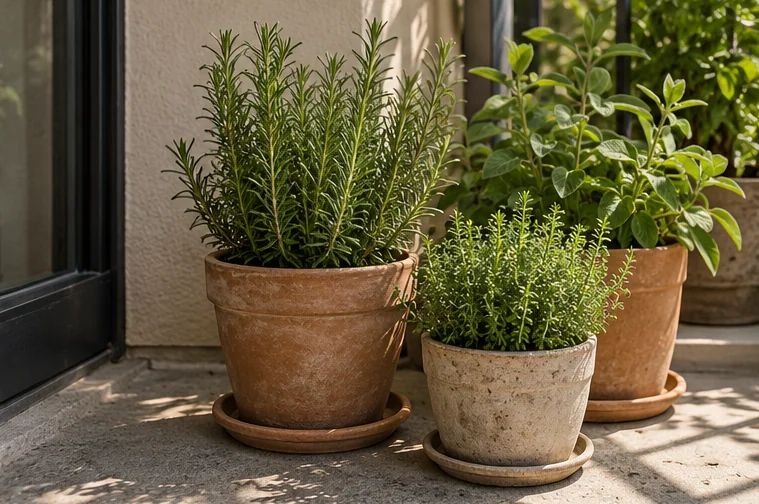
Rosemary and thyme in pots with drainage trays on a balcony
A sunny balcony is not the same growing environment as a sunny garden bed. Containers expose roots to different temperature and moisture conditions, and wind can damage tender growth. Choose plants after checking local climate suitability, their mature size, and the actual light at the container position. Consult local horticultural guidance when conditions are severe or unfamiliar.
In appropriate climates, compact pelargoniums can provide flowers, while thyme or rosemary may suit a bright, well-drained position; none is a universal choice for every balcony. A shadier location needs different plants. Repeat one main foliage shape and one flower color instead of treating each pot as an unrelated miniature garden. Inspect for pests and remove deteriorating material promptly. Check toxicity around pets and children before buying. Avoid very tall, top-heavy plants as an improvised privacy screen: their wind exposure, container size, and support needs may be incompatible with the balcony even when their leaves look appealing in a photograph.
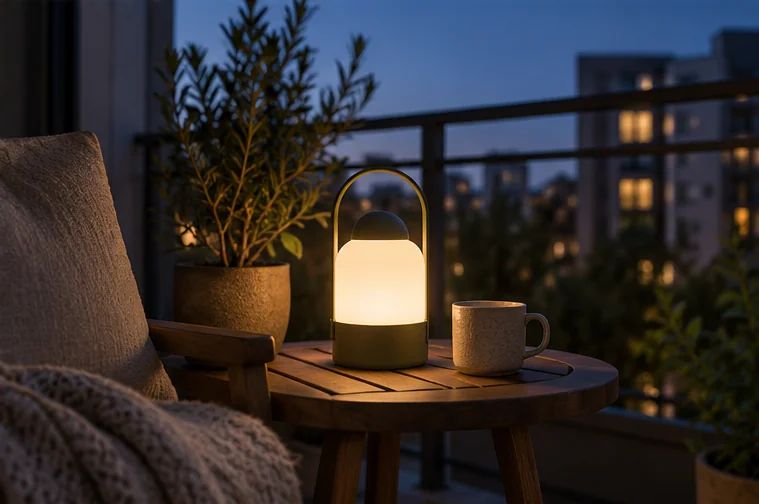
Portable lantern on a small balcony table at summer dusk
For evening use, start with an outdoor-rated portable lamp on the table. It puts light where drinks or a book need it and is usually simpler to store than a perimeter of decorative strings. Confirm the product’s intended weather exposure and follow its charging guidance. A roof overhead does not guarantee protection from wind-driven rain.
If using mains-powered equipment, select correctly rated outdoor products and appropriate electrical protection for the location, including GFCI or local RCD requirements. A qualified electrician should address unsuitable outlets. Keep cords out of walking routes and water, and do not close a door on a cable or fix lights to sprinklers or safety equipment. Point the light inward and switch it off after use so adjacent homes are not unnecessarily illuminated. Avoid exposed flames among textiles and plants. A modest lamp can make a summer balcony useful after sunset without creating an elaborate installation to inspect and dismantle before every storm.
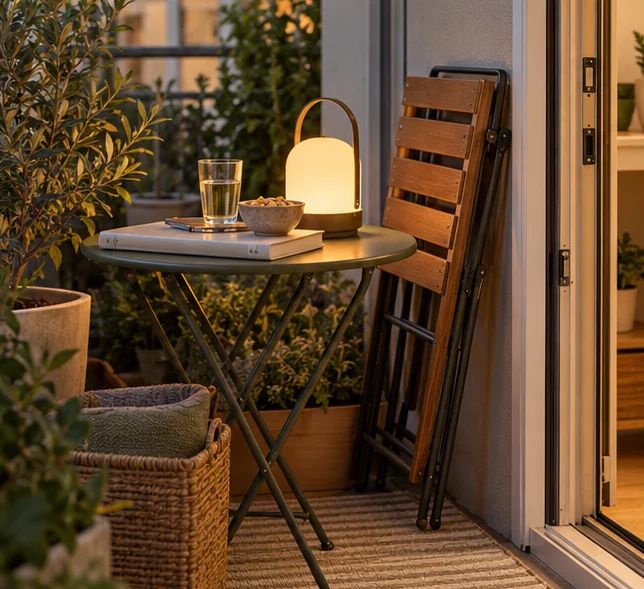
Foldable bistro chair and portable lantern being stored beside a clear balcony doorway.
Make the balcony ready for a short evening break with a small tray carrying a drink, a book, and the portable light. Keep the table free enough to set it down without rearranging plants. Use stable drinkware and an unbreakable option where appropriate. Open food and sweet drinks can attract insects, so bring them back inside when the break ends rather than leaving them overnight.
Establish a simple end-of-use routine: take in textiles and loose items as required, check the forecast, close and store shade equipment according to instructions, and clear any fallen leaves from drainage. Keep the indoor landing place for those objects available. A balcony full of pieces that have nowhere to go becomes difficult to protect when weather changes quickly. The same principle appears in more intentional everyday habits: choose a setup whose upkeep fits the life you actually have. The decoration should support time outside, with the final reset taking less effort than you are willing to give it.
Reassess the space as the season heats up. The most successful summer balcony may have fewer objects than the spring version, with a better-positioned chair, healthy plants, and a dependable route back indoors.
Plan a small spring balcony with seven practical ideas for seating, containers, flowers, washable textiles, and lighting suited to your building and weather.
Use seven simple living tips to reduce everyday friction, make more deliberate choices and shape manageable habits around the life and responsibilities you have.
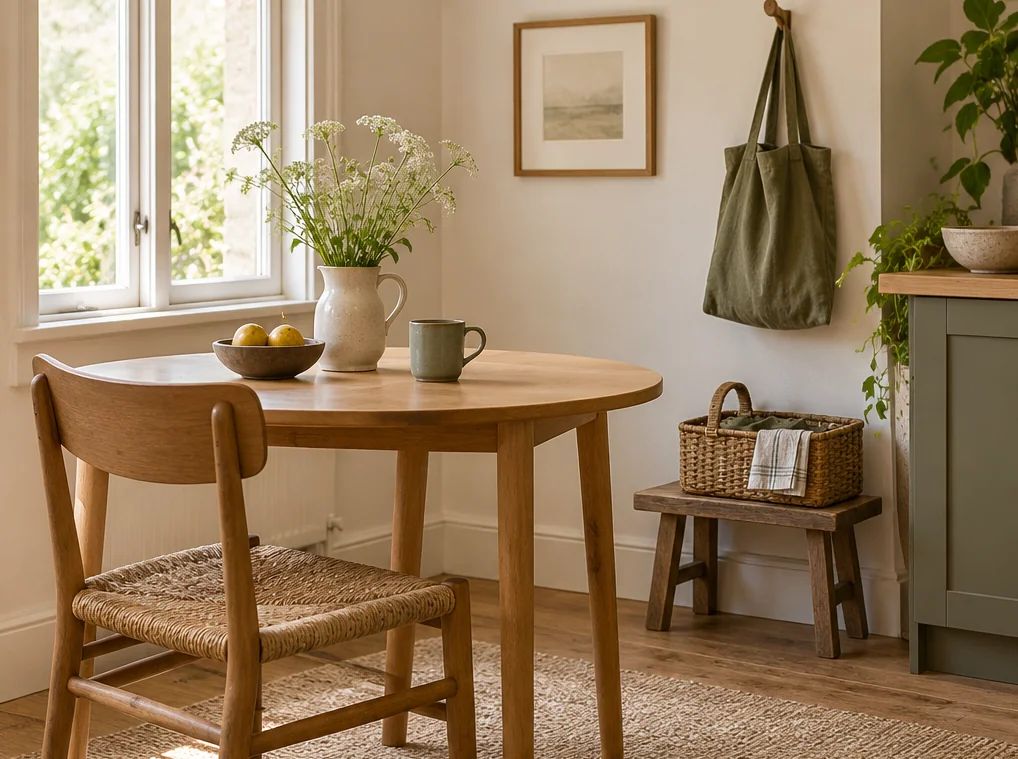
Try seven warm neutral decor ideas using texture, lighting, wood and a restrained palette. Work with the furniture, finishes and daylight your home already has.
May we use Google Analytics cookies to understand visits and which ideas readers find useful? It is optional. You can change your choice below at any time. Privacy details