Find room to read with seven compact nook layouts, from a window-side chair to a bedroom corner, with clear advice on seating, shelves and task lighting.
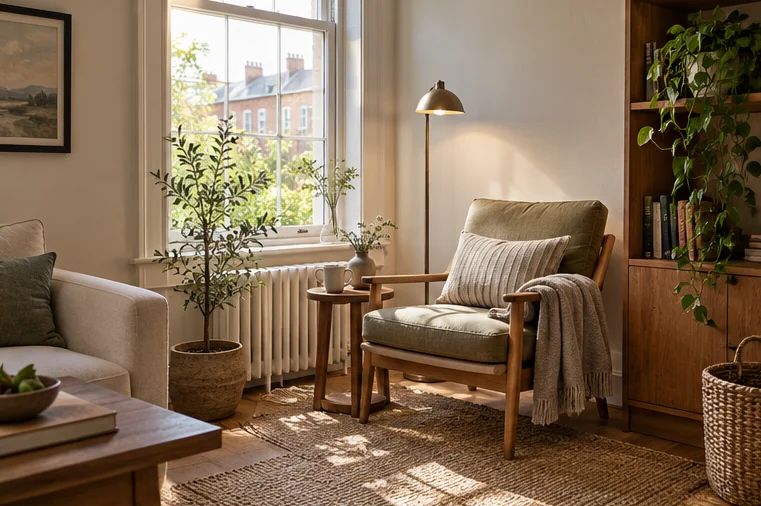
Oak reading chair and task lamp in a small window corner
The best place to read may be a chair you already own, moved closer to the light and given somewhere to put a book. A reading nook does not need an enclosed recess, a wall of books or a dedicated armchair. It needs a comfortable position you can keep for a while, useful light and a small amount of storage within reach.
These reading nook ideas for small spaces begin with seven different situations. Choose the one your home can accommodate instead of squeezing a staged corner into an unsuitable gap. Each can stay modest: one current book, a glass of water and enough room to stand up easily.
Try the location at the time you usually read. Listen for the washing machine, look for screen glare and check the nearest outlet. Measure the seat together with its footrest, table and approach space. A compact chair that fits into a recess may still be impossible to enter comfortably. For all wall shelves and lamps, use fixings appropriate to their loads and the actual wall construction.
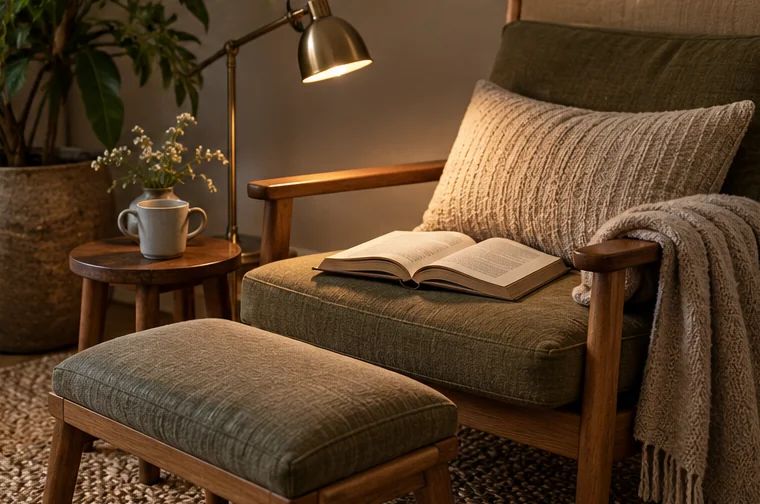
Reading chair cushion, footstool and angled task lamp
Place a chair beside the window rather than directly across the opening. That arrangement can borrow daylight without blocking access to the window handle or occupying a door to the balcony. Angle the seat until the page is evenly lit and reflections are manageable; there is no single window orientation that suits every room.
Give the chair a directional lamp as well. A window nook that becomes unusable after sunset is doing only half its job. Put the lamp on the side that avoids your head or hand casting a shadow across the page, then test it with the book you actually read, including glossy paper if relevant.
A small table on the open side can hold a drink. Keep it clear of curtain movement, and avoid balancing mugs on a narrow sill above a heater. If the chair interferes with ventilation, heating or the escape route, use a different location rather than treating the daylight as compensation.
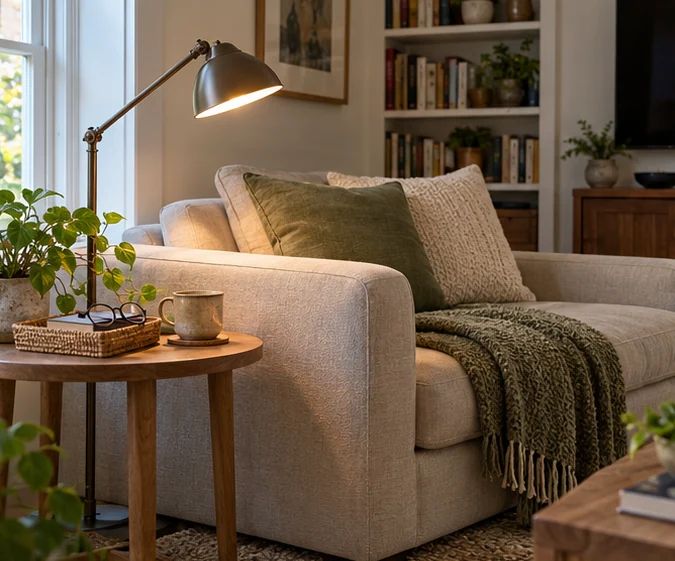
Sofa end with supportive back cushion, angled reading lamp and reachable side table.
When a separate chair will not fit, make one sofa seat the nook. Add a supportive cushion only if the back needs it, place an adjustable lamp nearby and give the outer arm a stable side table. This arrangement borrows an existing footprint, which is often the most realistic solution in a shared living room.
Keep the current book and reading glasses in one shallow basket or a small drawer beside that seat. A large bookcase elsewhere can hold the collection; the nook needs only the books in use. This prevents the side table becoming another stack that must be cleared before sitting down.
Consider the rest of the household. A bright reading bulb aimed toward the television can be irritating, while an exposed lamp behind the seat may reflect in the screen. A shielded adjustable shade helps direct light at the page. If the sofa is frequently needed by others, keep the setup easy to move.
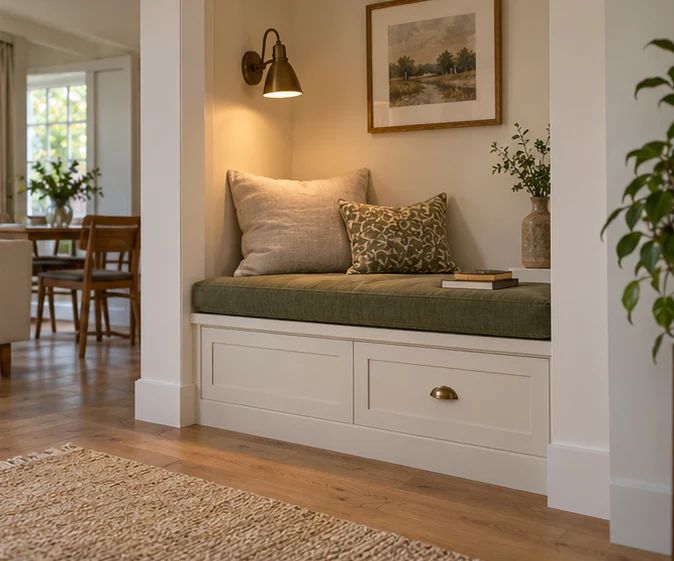
Shallow alcove with supported built-in cushioned bench and clear floor.
A recess can accommodate a bench where an armchair would project into the room. Choose a purpose-made seat with a stated load capacity, or have a properly constructed bench made for the space. A bookcase turned on its side is not automatically a safe seat; furniture should be used as its manufacturer intends.
Allow for the back cushion when considering seat depth. A shallow ledge may look inviting with pillows yet leave too little room for an adult to sit. Test the likely posture with a temporary chair or mock-up before commissioning anything. A firm base cushion and one movable back cushion usually use the space more efficiently than a mound of pillows.
If the bench includes storage, decide how it opens while someone is nearby. Drawers need room in front; a hinged seat requires moving cushions. Add a reading lamp within easy reach and keep the recess away from damp surfaces or service access panels. When a recess needs a different function, compare the shelf, plant and workspace options in our empty-corner guide.
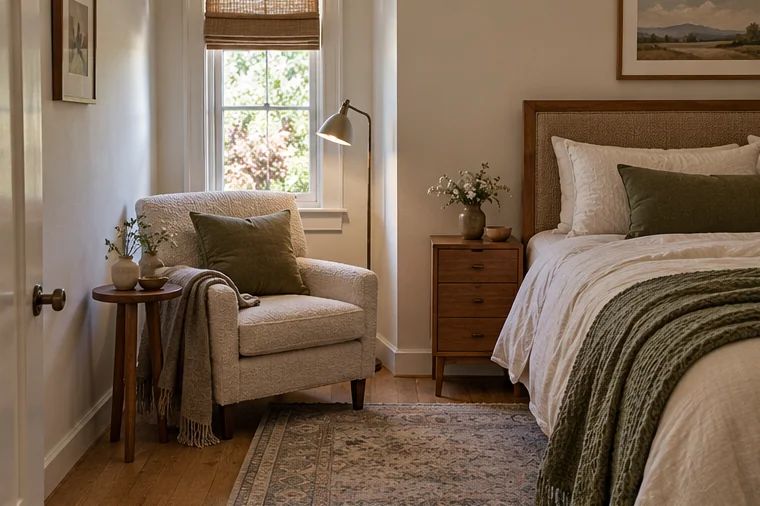
Upright reading chair beside a small bedroom window
A bedroom nook works when the chair fits without making the route around the bed awkward. Try a modest upright chair, a small lamp and a slim shelf beside it. Skip a footstool at first. If stretching your legs means blocking a wardrobe door, the room is asking for a simpler setup.
Use a chair you can read in comfortably for a full session, rather than selecting the narrowest decorative accent seat. Arm height, back angle and the way your feet meet the floor matter more than a photograph. A folded throw can soften a firm seat, but it cannot correct a chair that does not suit your body.
Keep the nook visually separate from clothes storage. A chair used for worn clothing will not stay available for reading unless those clothes have another home. A hook or dedicated airing rail elsewhere may solve more than buying a new chair. Let the bedside lamp serve both places only if it can aim safely at each. The same approach to clear routes and comfortable light runs through these warm minimalist bedroom ideas.
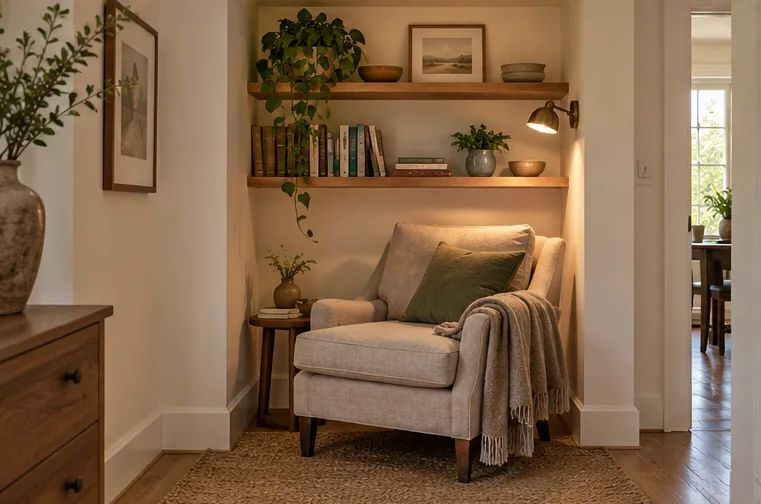
Compact chair beneath shallow bookshelves in an alcove
An unusually broad landing or hallway recess may have enough room for a seat and a short shelf. Treat circulation as the deciding factor: no chair, open drawer or projecting shelf should narrow a required exit route. If the passage is already tight, a framed print is a better use of the wall than a reading station.
Where there is adequate space, shallow storage can hold paperbacks without the depth of a full cabinet. Check the actual books before selecting shelf depth; art books and hardbacks vary considerably. Keep the heaviest volumes low, secure the shelving correctly and avoid placing unsecured stacks above the seat.
Hallways often lack outlets, so plan the lighting before purchasing furniture. A rechargeable task lamp can work if it provides useful illumination and has a convenient charging routine. Avoid trailing an extension cord across a passage to justify the nook. Without safe, reliable light, this is better treated as a pause point than a regular reading spot.
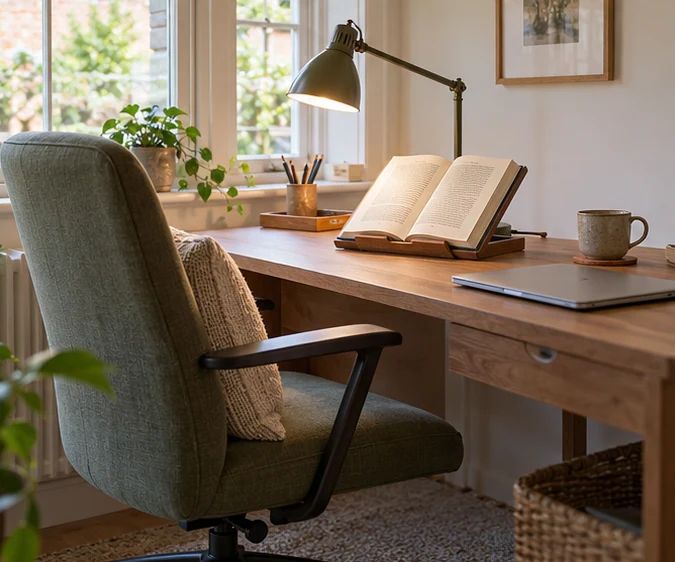
Comfortable desk chair turned toward a window beside a closed laptop.
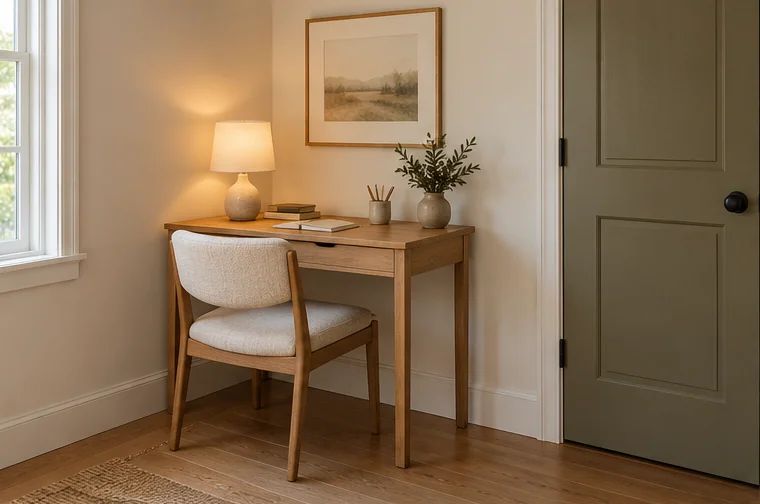
A compact desk can support reading as well as paperwork, especially if you prefer a book resting on a surface. Clear enough space for your forearms, put the screen to sleep or away and turn the task lamp toward the page. The change of use comes from removing distractions and adjusting the light, not buying another desk accessory.
Check the chair's support and height. Your feet should feel comfortably supported and your shoulders should not lift to reach the surface. A footrest may help some setups, but the position needs to suit the individual rather than follow a decorative rule. A book stand can reduce the effort of holding a heavy volume if you find it comfortable.
Keep a small tray for work materials so the desk can change roles quickly. If turning it into a reading space requires a lengthy clean-up every evening, reduce the items left out. This nook succeeds through an easy transition between two genuine uses.
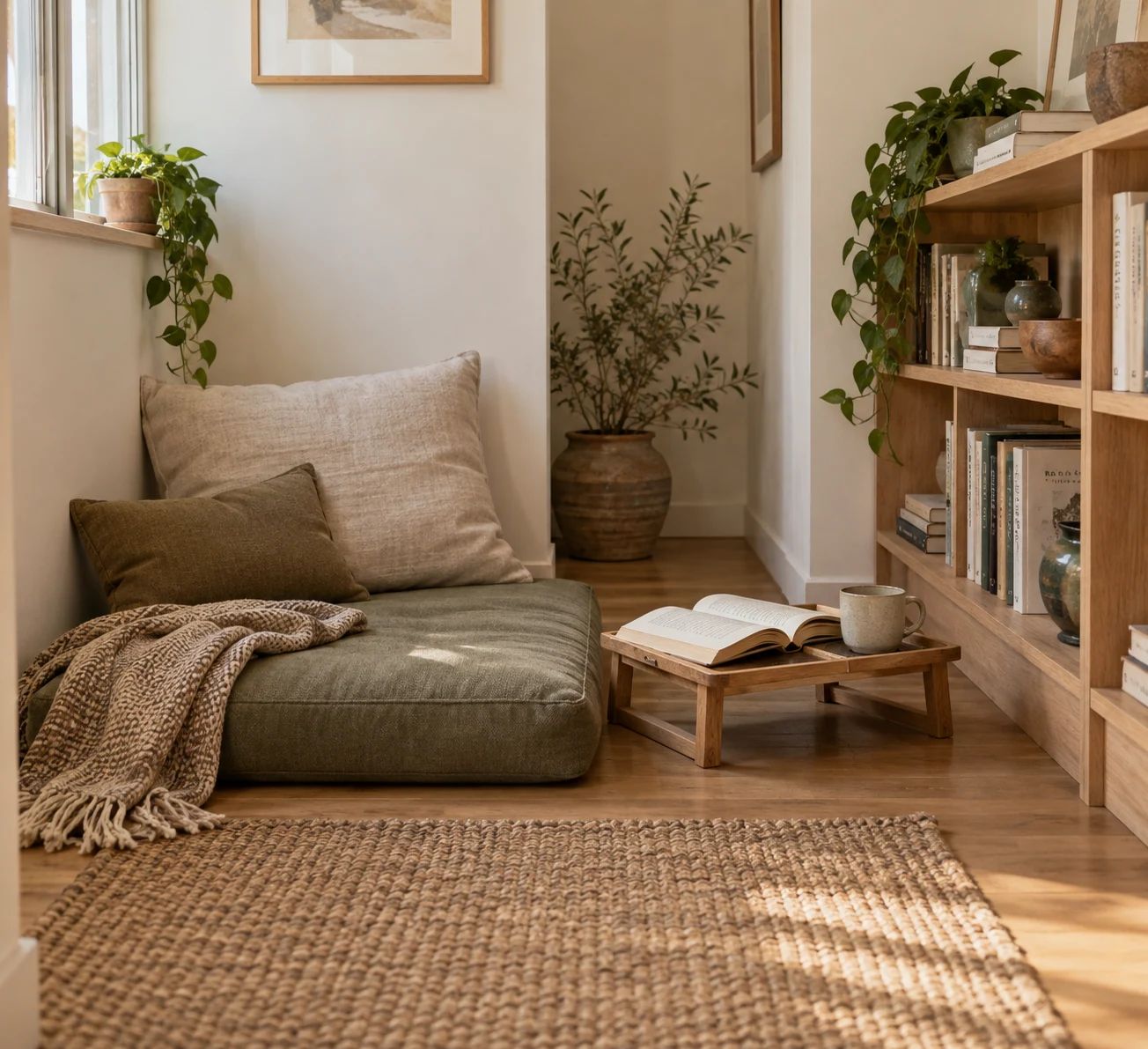
Low floor cushion and a small reading tray beside a low bookshelf in a compact apartment nook.
A firm floor cushion or low folding seat can make a temporary reading spot beside a bookcase, provided getting down and standing up are comfortable for you. Add back support against a suitable wall and keep a small stable surface nearby. This is an option for flexible rooms, rather than a universal substitute for a supportive chair.
Choose a cushion with a removable cover and a defined storage place. A compact mat can mark the area when in use, but keep edges flat and avoid layering loose rugs in a walkway. Put the reading light beside the shoulder, outside the place where you will stand up, with its cord secured out of the route.
Pack the nook away as a complete little kit: seat, throw and current book. Do not add a canopy or hanging fabric close to a lamp or heater. If floor sitting causes discomfort, borrow a dining chair and improve its lighting instead; comfort is the purpose of the arrangement.
Test a proposed nook for several reading sessions before adding shelves or decorative details. The useful discoveries are usually ordinary ones: the lamp needs to move, the mug needs a steadier surface, or the chair needs more room. Let those observations decide what comes next.
Explore five empty corner ideas for reading, storage, plants and everyday use. Measure access first and choose a purpose that the rest of your room actually needs.
Build a warm minimalist bedroom with comfortable cotton or linen bedding, wood, layered lamps and storage that fits, while keeping the room easy to use.
Find useful storage under the bed, inside the wardrobe and beside the mattress, with seven ideas that protect access, keep items visible and reduce clutter.
May we use Google Analytics cookies to understand visits and which ideas readers find useful? It is optional. You can change your choice below at any time. Privacy details