Explore five empty corner ideas for reading, storage, plants and everyday use. Measure access first and choose a purpose that the rest of your room actually needs.
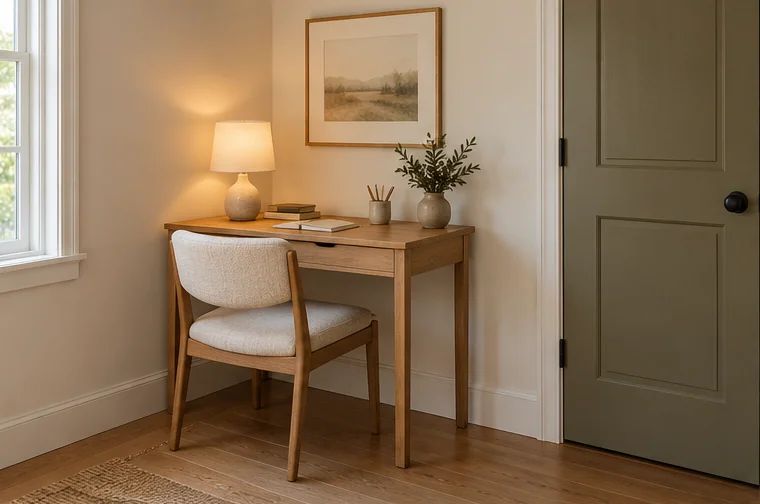
Compact oak writing desk fitted into an apartment corner
Empty corner ideas work best when they answer an actual need. Before filling a gap, decide whether the room is missing a reading light, a place to put something down, useful storage or simply a little breathing room.
These five ways to decorate an empty corner start with those practical requirements. Each creates a different kind of usefulness, from a place to read to a quiet spot for one artwork. If none fits without compromising circulation, leaving the floor clear is a considered decorating choice.
Measure both walls, the usable depth and anything that moves into the space: doors, curtains, radiator controls and nearby drawers. Mark the proposed footprint with paper or tape. Check it from the doorway and while seated in the room. Dimensions below are shopping examples to test, not minimum clearances or accessibility standards; your body's needs and the room's required routes come first.
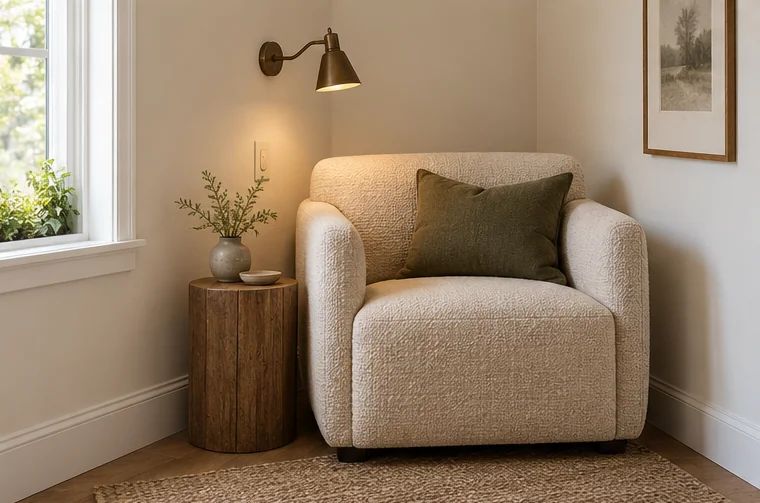
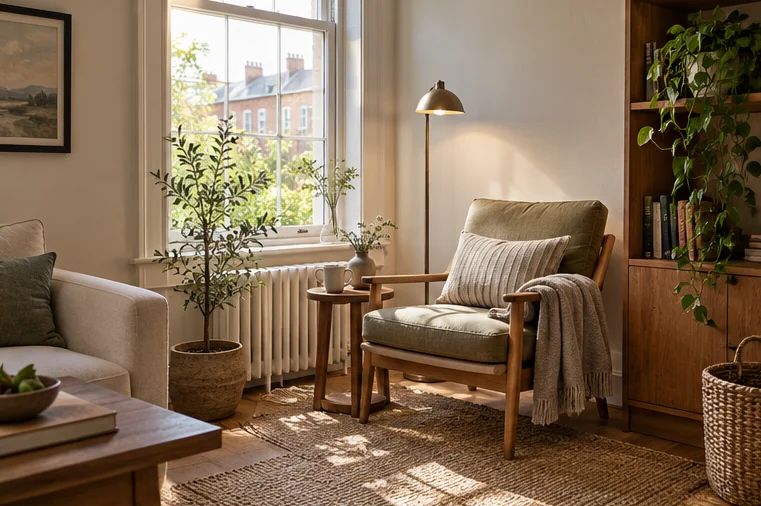
Upholstered reading chair and wall light in a small corner
A compact chair with an overall footprint around 70–80 cm wide may be worth testing in a small corner, but the number is only a starting point. Arm shape, back angle and the space to stand up can make two equally wide chairs behave differently. Measure a chair you find comfortable before browsing replacements.
Angle it slightly toward the room if that improves access. Add a reading lamp on the side that lights the page without shining into the eyes, and use a small stable side table only if it fits outside the walking route. The chair should not need to be dragged forward every time someone wants to sit down.
Keep the arrangement simple at first. A footstool, floor basket and decorative ladder can each look modest alone yet overwhelm the same corner together. If the chair is beside a window, retain access to the handle and keep fabrics clear of heating equipment.
Test the seat for a normal reading session before mounting shelves around it. A nook earns its place through comfort and use, rather than through having all the expected accessories. For more layout options, compare the window, bedroom and shared-seat arrangements in our small-space reading nook guide.
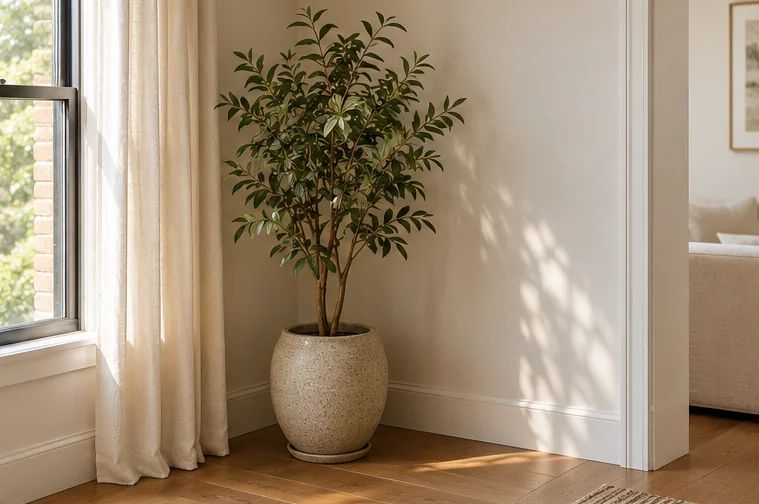
Leafy floor plant in a stable pot beside a corner window
A tall, relatively upright plant can give a blank corner a clear vertical shape without a broad piece of furniture. Choose it after assessing the light. The Royal Horticultural Society recommends matching houseplants to the location's light, temperature and humidity; decorative suitability cannot compensate for unsuitable growing conditions.
Observe how daylight reaches the corner across the day. A spot that looks bright to your eyes may be substantially dimmer than the windowsill. Read the care requirements for the exact plant, and allow for its mature spread. A broad-leaved specimen may eventually occupy the route even when its pot fits neatly today.
Use a stable container and protect the floor from water. Keep the nursery pot's drainage functional, empty collected water as appropriate for the plant and avoid leaving a damp saucer against timber. A stand should support the loaded pot securely, including during watering.
Check plant suitability in a household with pets or young children before buying. If there is too little light or you cannot provide the necessary care, use a large unplanted vessel, a sculptural lamp or artwork instead. A healthy plant in the right location is more attractive than an aspirational plant in the wrong one.
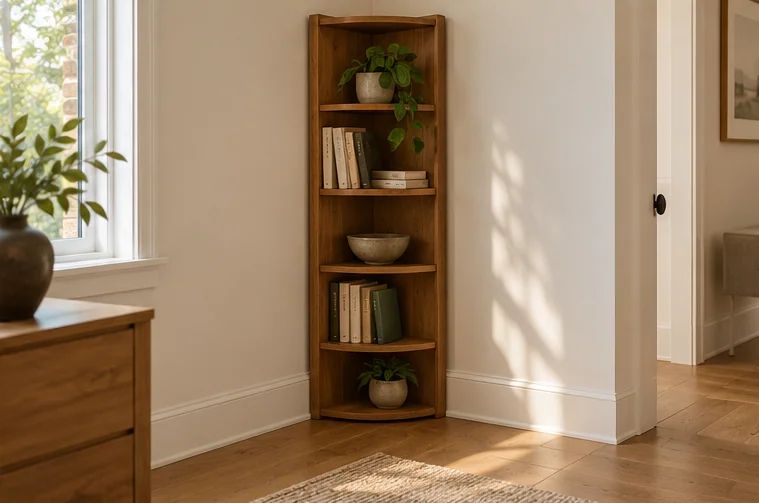
Slim corner bookcase with books and one ceramic bowl
A run of shallow shelves can turn a corner into useful book or display space without the depth of a cabinet. Start by measuring the objects. A shelf around 20–25 cm deep may suit many paperbacks, but large books need more support. Choose the depth and spacing from your collection rather than a symmetrical diagram.
Keep the lowest shelf accessible and the upper ones for lighter, less frequently handled objects. Allow room above a book to grasp it comfortably. Avoid placing heavy unsecured objects over a seat or bed, and check that projecting corners do not sit at face height beside a passage.
Use fixings suited to the wall and combined load. Freestanding shelving also needs the anchoring required by its instructions; the CPSC's Anchor It! guidance highlights tip-over prevention for furniture with shelves, doors and drawers. Permission to drill may need to be resolved in a rental before choosing the piece.
Leave some space unfilled. A shelf that accepts every miscellaneous object becomes overflow storage very quickly. Mix a useful row of books with one or two objects you enjoy, and give the remaining possessions a more appropriate home through a small-space organization system.
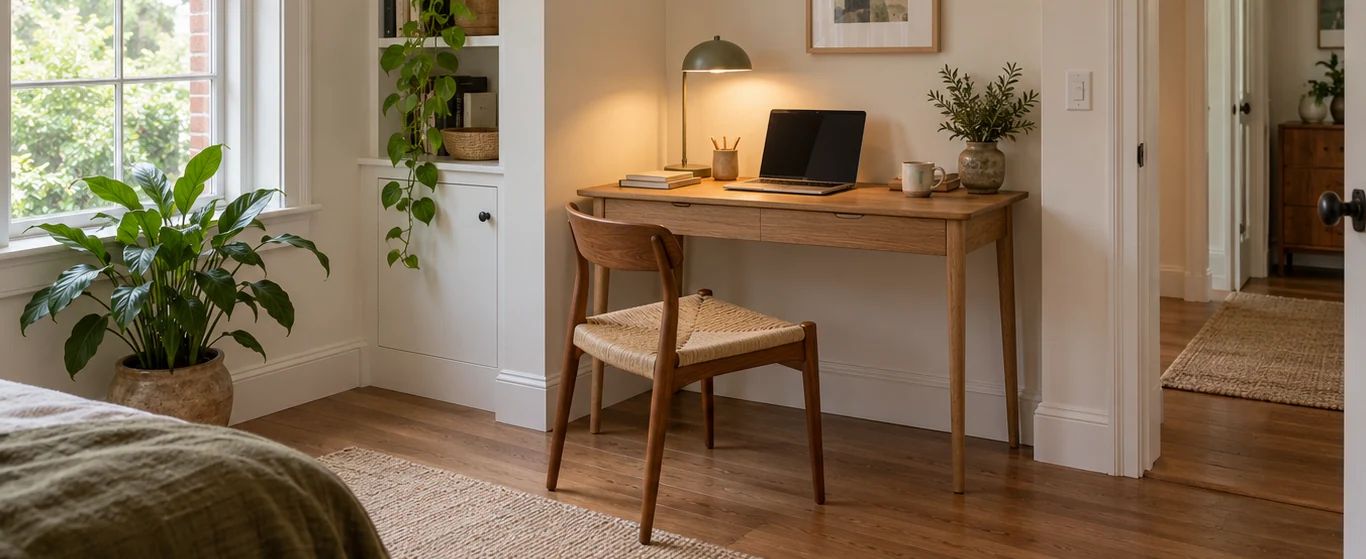
Corner work desk with chair pulled back and ample circulation space behind.
A shallow desk can make a corner useful for occasional writing or laptop work. A surface around 80 cm wide and 45–50 cm deep is a possible compact shopping example, not an ergonomic prescription. A large monitor, separate keyboard, paperwork or accessibility needs may require substantially more room.
Mock up the surface and put a real chair in front. Sit down, pull the chair out and stand up. Check whether another person can pass in the room's normal use and whether the desk blocks a door or storage. A tabletop that technically fits is not a workstation until the person fits too.
Choose a comfortable working position and adequate task lighting. Keep the lamp out of the main screen reflection and route cables safely to a suitable outlet. Do not use a stack of unstable decorative objects to achieve the right screen or seat height.
For very occasional work, an existing dining table may be a better choice than a cramped corner desk. You can still use the corner for a shallow closed cabinet holding the work kit. The useful outcome is easier work and simpler clearing away, rather than a permanently furnished office in insufficient space.
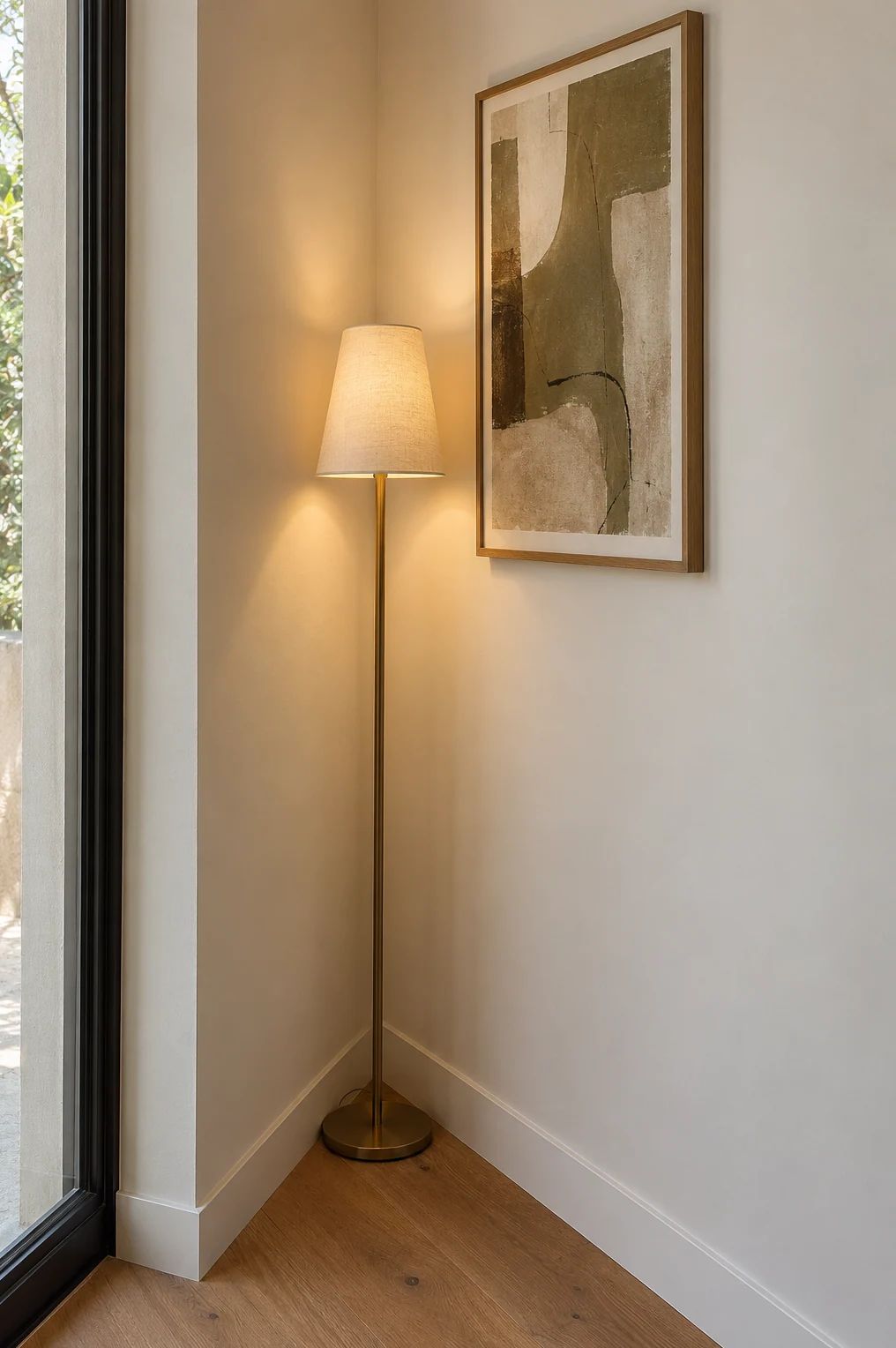
Slender floor lamp beneath a securely mounted abstract artwork in an extremely narrow empty corner.
Some corners need visual balance without another footprint. Place a slim lamp on an adjacent stable surface and hang one artwork where it relates to the furniture already in the room. The light can wash the blank wall or illuminate the picture, depending on the fitting, creating a focal point while the floor remains open.
If a floor lamp is suitable, measure its base rather than judging the narrow stem. A broad base can interfere with a door or chair even when the lamp looks delicate. Check stability and route the cord beside the wall, avoiding the crossing point between rooms. Use a fitting intended for the location.
Choose artwork large enough to read as one clear shape from the doorway. A paper template helps test the size before buying a frame. Hang it securely with hardware appropriate to the wall and weight, and keep valuable or heavy pieces away from precarious leaning positions.
Avoid compensating for the empty floor with several tiny decorations at different heights. One image and a controlled pool of light can finish the corner. This solution is particularly useful when the room already has adequate seats and storage, and the missing element is simply a visual pause.
Choose the corner's role from the room's unmet need, then test the footprint before shopping. A successful corner is easy to approach, easy to maintain and clearly connected to the rest of the room. It can also be successful with very little in it.
Find room to read with seven compact nook layouts, from a window-side chair to a bedroom corner, with clear advice on seating, shelves and task lighting.
Find useful storage under the bed, inside the wardrobe and beside the mattress, with seven ideas that protect access, keep items visible and reduce clutter.
Seven small space organization ideas built for everyday use, with practical storage choices, access rules and simple ways to prevent clutter returning.
May we use Google Analytics cookies to understand visits and which ideas readers find useful? It is optional. You can change your choice below at any time. Privacy details