6 Small Christmas Porch Ideas with Distinct Color Schemes
Style a small Christmas porch with six distinct schemes, including tartan, blue-and-white pots, citrus, vintage sleds and layered evening lantern light.
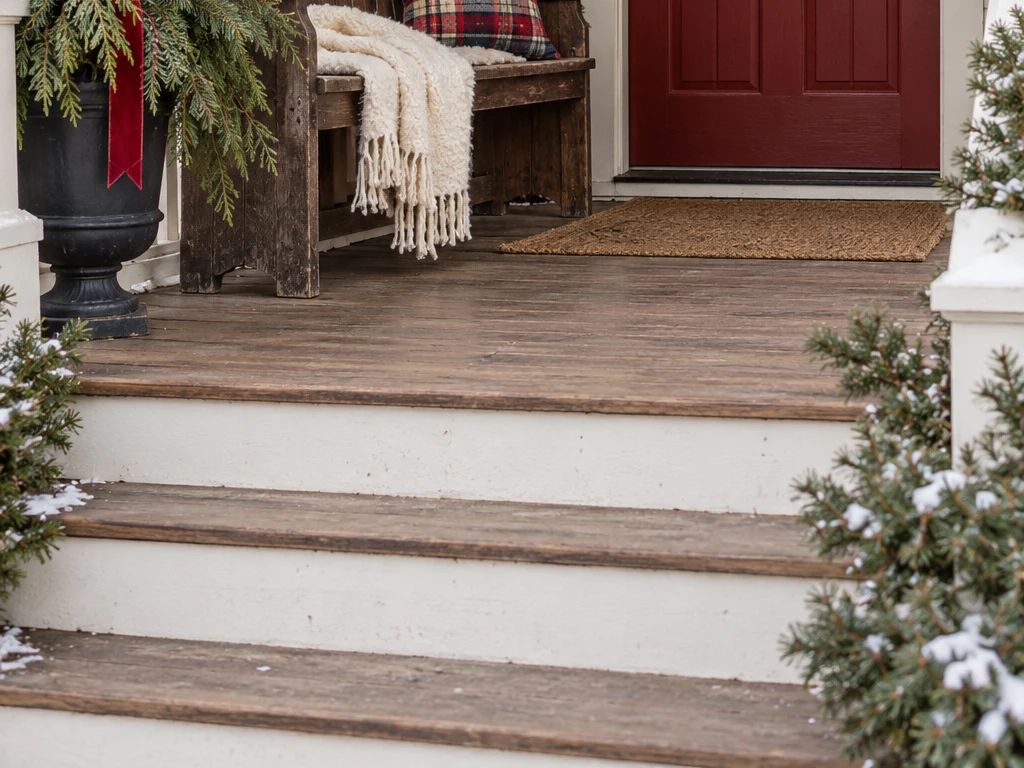
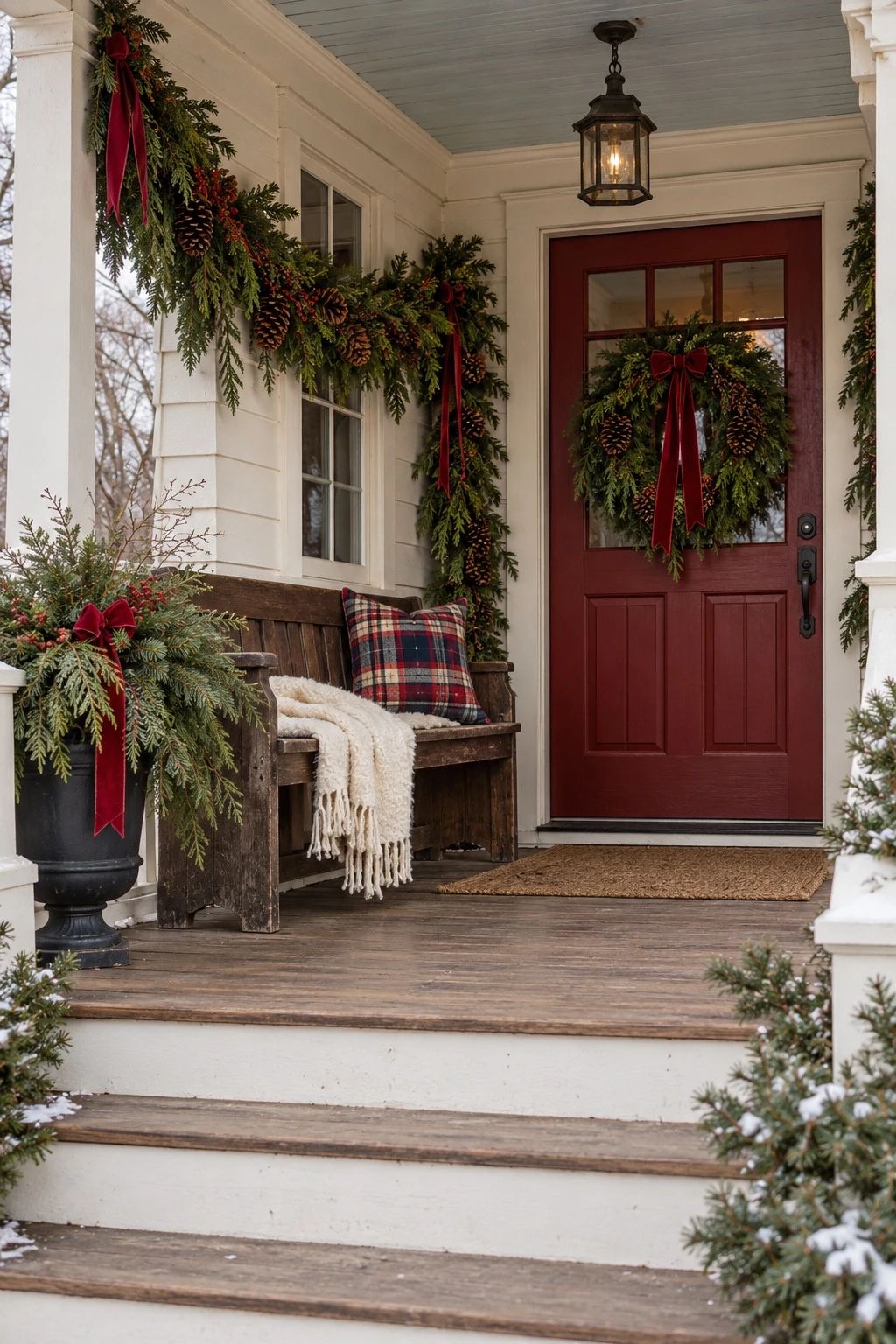
A covered porch combines a red door, checked bench textiles and cedar for a collected Christmas welcome.
A porch can look festive in several completely different ways: red tartan against dark wood, blue-and-white pottery beside pale siding, amber citrus with sage, or warm lanterns against a plum wall at dusk. Choosing a scheme makes small Christmas porch decorating easier because the colors and materials start making decisions for you.
The six schemes below are alternatives, not six layers to add to one porch. Each has a main focal point, a supporting material and a way to adapt the idea to a smaller entrance. Some use furniture; others put almost all the decoration on the door or frame. Start with the architecture and pieces you already have, then borrow the elements that make the chosen scheme recognizable.
Photograph the empty porch from the path, then identify the main surface you can use: door, wall, bench, planter corner or ledge. Keep a usable route through the composition. Choose one lead color and one supporting finish before opening every decoration box.
Check weather exposure, stable placement and permitted attachments. Use lighting and textiles suitable for the actual location, keep required steps and handrails available, and follow product limits. The styling notes below describe appearance and arrangement; a photograph cannot establish weather ratings.
A deep-red door, checked bench cushion and cedar garland create a layered traditional porch.
Tartan works best as a bridge between existing colors. A red door, aged wood bench and dark greenery already share a traditional mood; a checked cushion can pull those tones together without requiring every accessory to match. Give the bench one plain throw as a quieter companion so the patterned fabric stays legible from the path.
Keep the biggest gestures in separate places: a short cedar garland above the sheltered bench, the check on the seat, and one evergreen planter at the other side of the entry. Repeat red in a small ribbon instead of adding several more patterned objects. The result has layers at wall, furniture and planting height, rather than a collection lined up along the floor.
Use the bench you own if it fits; this scheme does not justify squeezing in new furniture. On a porch without seating, transfer the check to a permitted sheltered hanging textile or omit it and use striped ribbon to introduce pattern. Bring non-weatherproof fabric indoors when conditions require it. The palette should survive that practical edit.
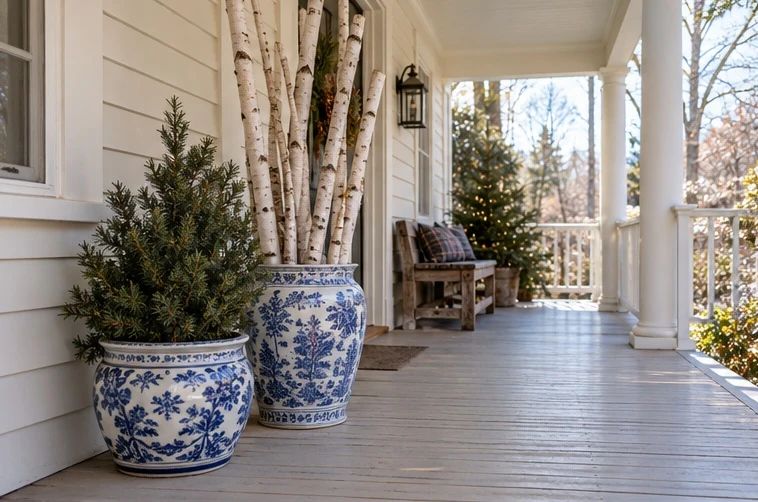
Blue-and-white outdoor pots with birch stems and evergreens brighten a pale porch.
Cobalt pottery and white birch create a crisp winter scheme that needs little red. Against pale siding, the blue pattern provides detail at close range while the upright stems create a clear silhouette from farther away. Two different but related pots feel more collected than a perfectly matched set, provided their scale works together.
Place the larger pot in the available corner and the smaller one beside it, outside the route. Arrange a few sturdy stems with compatible evergreen material around their bases. Leave the pot patterns visible instead of hiding every rim under cascading foliage. If the porch is narrow, one patterned pot can be the entire lower display; repeat the blue in a ribbon or a small door detail above.
Use containers suitable for your winter conditions. Attractive indoor ceramics are not automatically frost-safe, and filled pots become much heavier. If you only own a plain outdoor container, a blue-and-white door ribbon can supply the color story without buying pottery. The useful feature is the cobalt-and-white relationship, not a specific collectible brand.
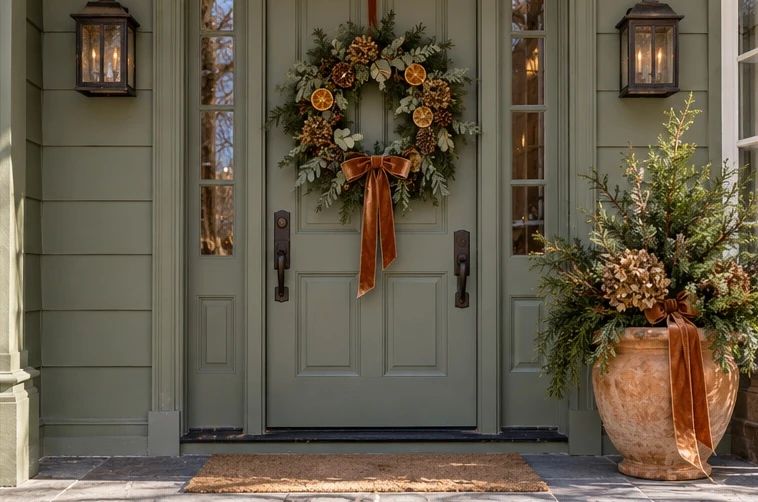
A sage door, copper-toned container and citrus wreath create a warmer botanical porch.
Orange, sage and copper make a festive palette without relying on scarlet. Use citrus on the door where the slices can be seen, then repeat the warm color once in a copper-toned vessel or terracotta container. A few leaves with gray-green surfaces soften the contrast between orange fruit and dark evergreen needles.
Let the wreath be the detailed element. Keep the planter simpler, using an open arrangement of greens rather than more orange slices tied to every branch. A plain mat and an undecorated wall stop the palette becoming busy. If the door is not sage, look for the same warm-cool balance against blue-gray, cream or dark wood.
Protect dried decorative fruit from unsuitable exposure and inspect it as the season progresses. Keep containers stable and maintain living plants according to their own needs. This scheme connects naturally to the citrus door treatment, but the porch remains a complete composition rather than a second copy of its wreath.
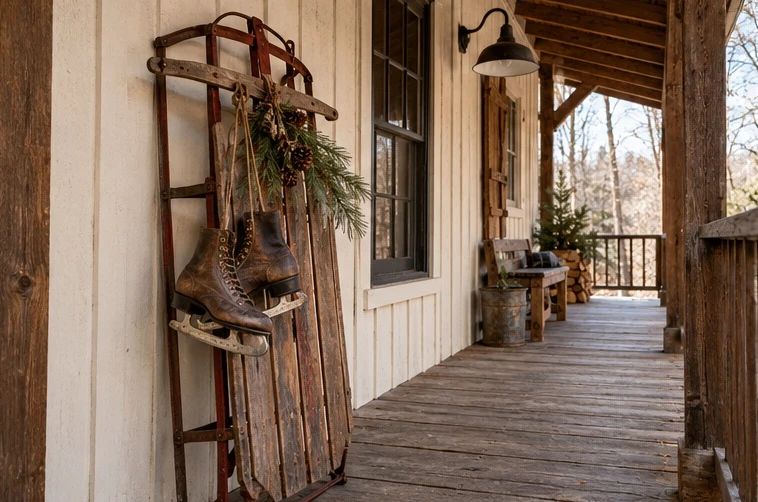
A secured vintage sled and worn ice skates give a sheltered porch a nostalgic winter scene.
A vintage sled or a pair of old skates has a story and a shape that a box of matching ornaments cannot supply. Use one main object, then soften it with a small evergreen tie and a plain wool-colored ribbon. Weathered wood, old metal and natural greenery provide enough variation; extra signs, crates and gift boxes usually weaken the scene.
Place a sled at an appropriate sheltered side wall only where it can be secured and remain outside the route. Arrange skates as a decorative cluster on a suitable stable support, with blades protected and inaccessible to children. This is a display of retired sporting objects, not a suggestion to suspend usable equipment from an improvised hook.
If you do not own a meaningful vintage piece, skip buying a replica solely for the photograph. An old wooden snowshoe or another suitable family object can serve the same visual role, but not every object belongs outdoors. Use the palette and sense of history as the starting point; the actual item should make sense for your household and the available mounting.
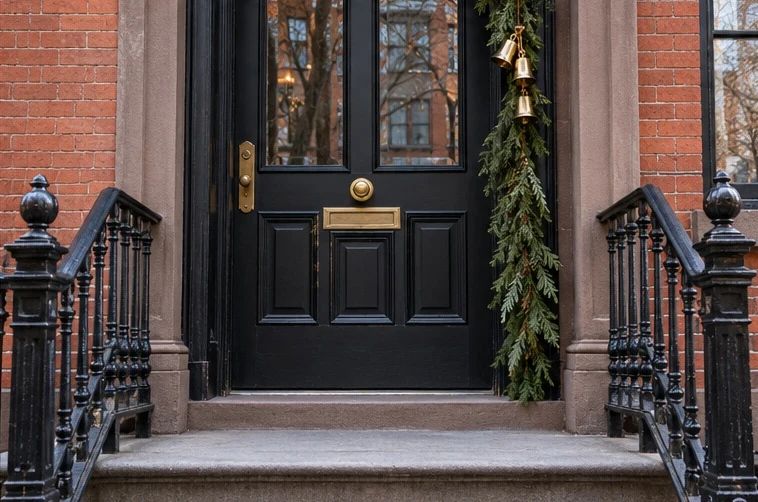
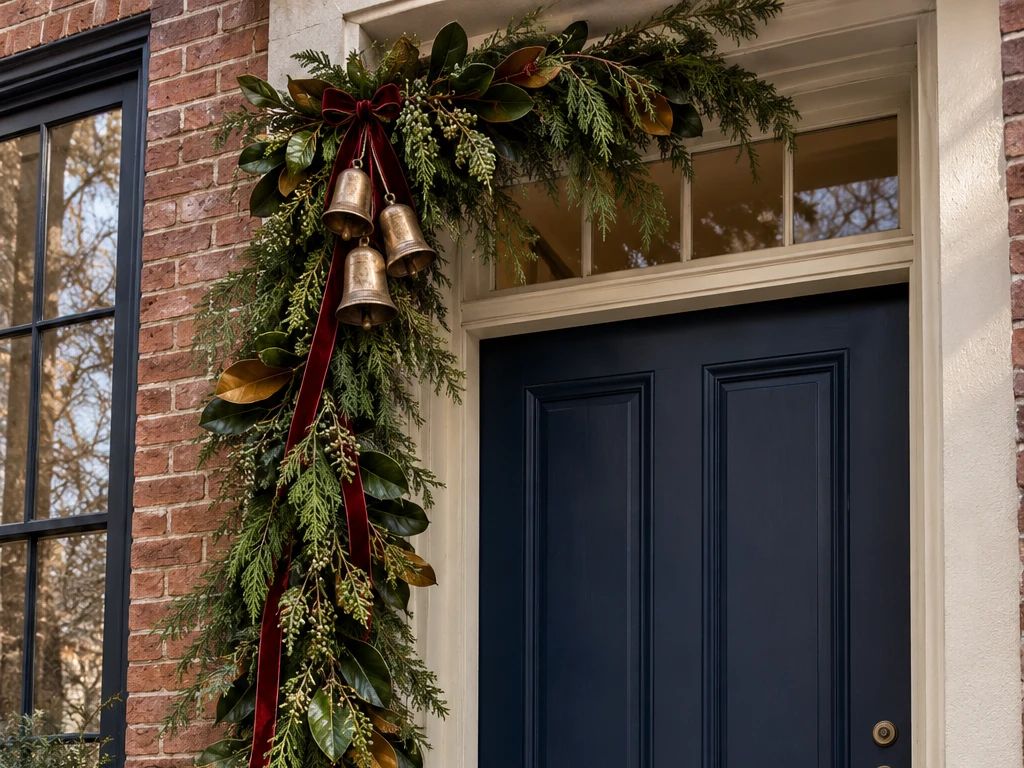
A narrow entrance uses one vertical garland, a high bell cluster and a dark painted door.
Where a porch is barely deeper than the doorstep, the most interesting scheme may have no decorative floor objects. Put the visual weight above the handle and along one side of the frame. A slim garland and high cluster of bells draw the eye upward, while a dark door gives the greens a strong background.
Choose the overall line before adding detail. A vertical drop should taper rather than finish in a heavy ball at hip height. Keep the ornament group near the upper section and use a narrow ribbon to repeat its color once. Dark green, bronze and a little plum give this scheme a city-door character without needing symmetrical columns or a broad landing.
Appropriate secure attachment is essential, and shared building rules may rule out frame decorations altogether. In that case, use a single permitted door-mounted silhouette from the door decoration collection and leave the frame plain. The useful design lesson is to spend attention on a vertical line, not to force a large-house display into a small opening.
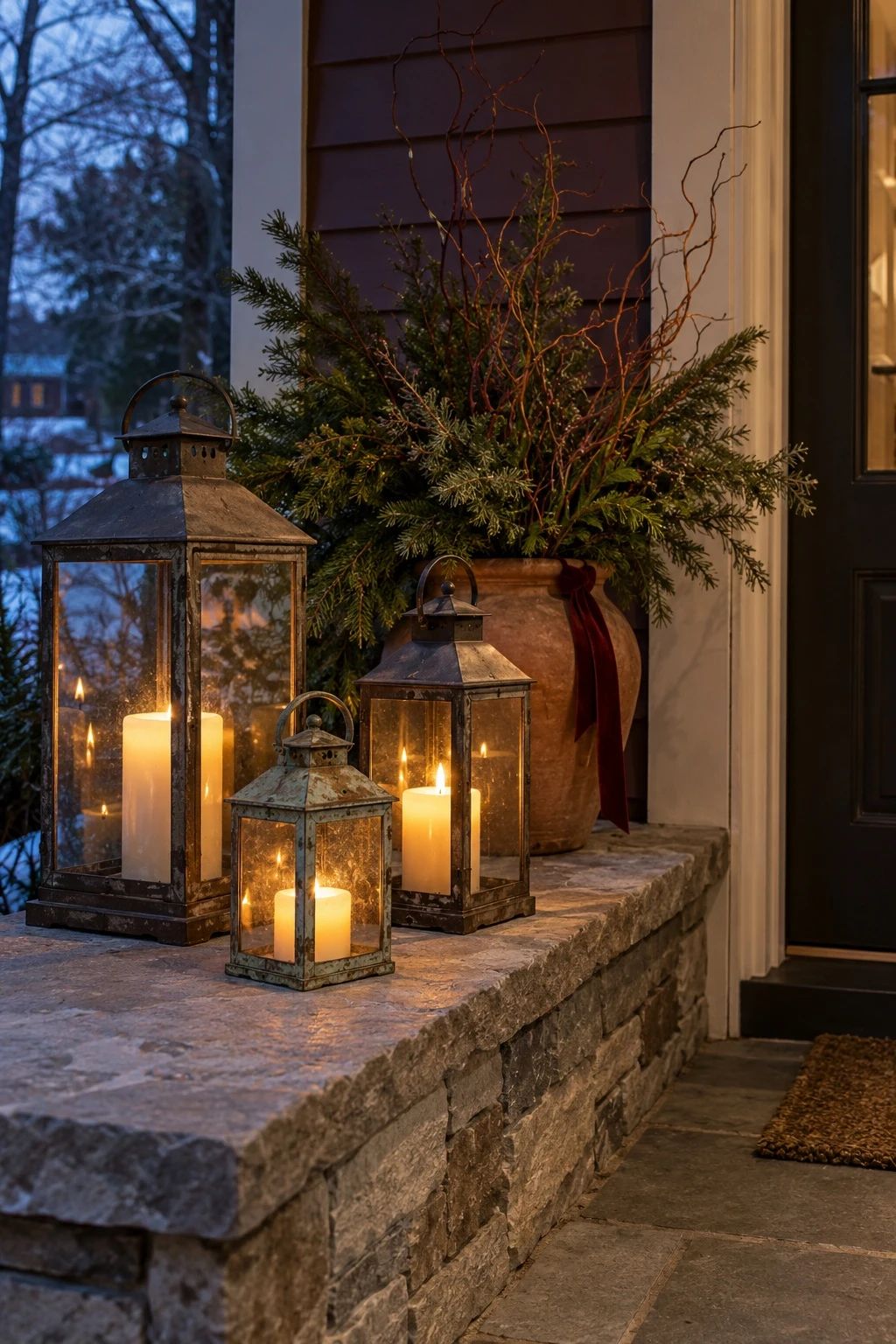
Three lanterns of different heights sit on a broad sheltered ledge near dried botanical stems.
A richer evening display can come from a group of three lanterns rather than one very bright light. Vary their heights and keep the finishes related: dark bronze, blackened metal or aged brass. Against a muted plum wall or door, modest amber LED light feels warm without turning the entire porch orange.
Group the lanterns on a broad existing stable side surface, leaving space around each. Place the tallest slightly back, the smaller one forward, and a separate vessel of suitable botanical stems nearby. Their silhouettes should overlap a little from the path but remain distinct. Avoid filling lantern interiors with dry foliage or using a live flame beside the arrangement.
Every light and lantern component must suit the exposure, with secure battery compartments and product instructions followed. If you do not have a suitable ledge, choose another scheme rather than putting the group on steps. Let the functional entry light keep doing its job. The decoration is an evening focal point, not a substitute for seeing the threshold.
Pick the scheme whose main material you already like: tartan, patterned pottery, citrus, a vintage object, a strong vertical line or a small group of lanterns. Repeat its colors with restraint and give the focal point a supporting element. A small porch can have real character without becoming a storage place for every holiday prop.
Explore six distinctive Christmas door decorations, from copper-bell garlands to citrus wreaths, woven baskets and twig stars, with recipes for each look.
Create a tree-free Christmas with jewel-tone paper decorations, citrus garlands, vintage tableware, a paper village, a card display and an ornament branch.
May we use Google Analytics cookies to understand visits and which ideas readers find useful? It is optional. You can change your choice below at any time. Privacy details